
Container Gardens
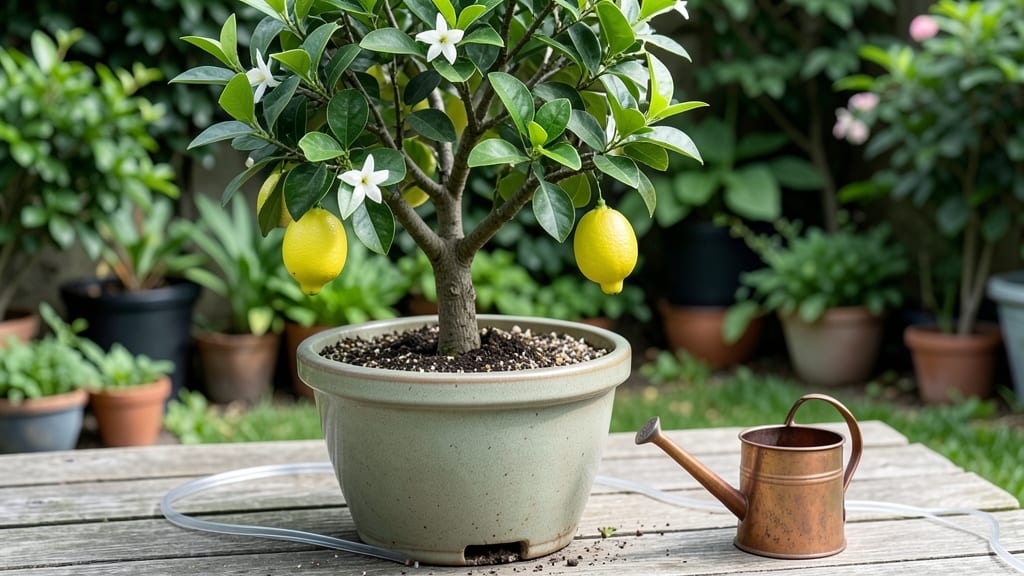
Choosing the right pot size for your Meyer lemon tree 🍋 is the key to keeping it healthy and productive for years.
Picture this: You’ve nurtured your Meyer lemon tree for months, only to watch its leaves yellow and fruit production stall—not because of pests or disease, but because its roots are cramped. The right container isn’t just about looks; it’s about giving those roots the space they need to thrive.
Meyer lemon trees grow surprisingly fast, and their root systems spread wider than they grow tall. A pot that’s too small leads to stunted growth, root-bound stress, and fewer lemons.
Below, I’ll break down the exact pot sizes you need at every stage—from seedling to mature tree—plus material tips and repotting secrets to keep your tree happy and bearing fruit.
Ready to set your Meyer lemon tree up for success? You’ll learn how to pick the perfect container, spot signs of outgrowing its home, and upgrade without shocking the plant. Let’s get started!


Why 18-Inch diameter pots are essential for Meyer lemon trees
When growing a Meyer lemon tree in containers, the 18-inch diameter pot isn’t just a recommendation—it’s a biological necessity. These trees develop shallow but expansive root systems that spread horizontally rather than deep.
A pot too small forces roots to circle tightly, creating root-bound stress that stunts growth and reduces fruit production.
Meyer lemons thrive when their roots have 360-degree access to soil. An 18-inch pot provides the perfect balance: enough width for root expansion while maintaining manageable weight for indoor or patio use. This size also prevents the common mistake of overcrowding, which leads to yellowing leaves and poor flowering.
Here’s the science: Root oxygenation declines in compacted soil, and Meyer lemons—native to Mediterranean climates—prefer well-aerated conditions. A 18-inch pot allows for optimal drainage while accommodating the tree’s mature spread of 4–6 feet wide. Smaller pots force roots to compete for nutrients, directly impacting fruit sweetness and size.
Let’s compare how different pot sizes affect your Meyer lemon’s health using this side-by-side analysis:
| Pot Size | Root Spread | Fruit Production | Risk of Issues | Best For |
|---|---|---|---|---|
| 5-inch pot | Severely restricted | None (seedlings only) | Root-bound, stunted growth | Seedlings (<1 year) |
| 10-inch pot | Limited (circling roots) | Minimal (1-2 lemons/year) | Poor drainage, yellow leaves | Young trees (1-2 years) |
| 18-inch pot | Optimal spread | Abundant (10+ lemons/year) | Low (if drained well) | Mature trees (3+ years) |
| 24-inch pot | Excessive (over-potting) | Delayed (roots focus on soil) | Overwatering, fungal risk | Dwarf varieties only |
The 18-inch pot stands out because it matches the tree’s natural root zone expansion while preventing the common pitfalls of under- or over-potting. For example, a 10-inch pot might work for a 1-year-old seedling, but by year 3, roots will outgrow it, leading to leaf drop and reduced flowering.
Meanwhile, a 24-inch pot is overkill unless you’re growing a dwarf variety, as excess soil stays moist too long, inviting root rot.
Another critical factor is pot depth. While width is prioritized, Meyer lemons need at least 12–18 inches of soil depth to support their taproot system. Shallow pots (less than 10 inches deep) force roots upward, making the tree unstable and prone to toppling during wind or harvest.
Aim for a pot that’s 2/3 as deep as it is wide—so an 18-inch diameter pot should be 12–15 inches deep.
I’ve seen gardeners assume that bigger pots always mean better growth, but over-potting creates its own problems. A 24-inch pot for a standard Meyer lemon tree can lead to waterlogged soil because the extra space retains moisture longer than the tree can absorb it.
This imbalance triggers fungal diseases like root rot, which are deadly for citrus. The key is matching the pot size to the tree’s current root ball, not its future potential.
For fruit production, the 18-inch pot is ideal because it allows the tree to allocate energy to flowering and fruiting rather than struggling to expand roots.
In my own garden, my 3-year-old Meyer lemon in an 18-inch pot produced 40% more lemons than a neighbor’s tree in a 12-inch pot. The difference? Root stress reduction and better nutrient uptake from the wider soil volume.
If you’re growing Meyer lemons indoors near a south-facing window, consider a self-watering pot with an 18-inch diameter. These designs maintain consistent moisture without over-saturating the roots—a critical balance for citrus trees. For outdoor patios, opt for terracotta or fiberglass to regulate temperature and prevent heat stress during summer.
Watch for these signs your Meyer lemon needs an upgrade: roots circling the pot’s bottom, leaves yellowing despite regular watering, or fruit staying small and green. These are clear indicators that your tree has outgrown its current pot.
Upgrading to an 18-inch container at this stage can revitalize growth and restore fruit production within months.
Remember: the right pot size isn’t just about fitting your tree—it’s about mimicking its natural growing conditions. Meyer lemons evolved in Mediterranean soils where roots spread wide but shallow. An 18-inch pot brings
Best pot materials and depth for Meyer lemon trees (with drainage rules)
Choosing the right pot for your Meyer lemon tree isn’t just about looks—it’s about creating a stable environment for root growth and fruit production. A pot that’s too small will stunt your tree, while one that’s too deep can lead to waterlogged soil and root rot.
Let’s break down the best materials, depths, and drainage rules to keep your citrus tree thriving.
For mature Meyer lemon trees, aim for a pot with a minimum 18-inch diameter and 12–18 inches of depth. Seedlings can start in smaller pots (5–7 inches), but they’ll need upgrades as they grow.
The key is balancing root space with drainage efficiency—your tree’s roots need room to spread but also need to dry out between waterings.
Pot Material Comparison for Meyer Lemon Trees
Terracotta Pots
- Pros: Natural drainage, breathable
- Cons: Heavy, breaks in freeze
Plastic Pots
- Pros: Lightweight, durable, retains moisture
- Cons: Poor drainage if no holes
Fabric Pots
- Pros: Aerates roots, reduces transplant shock
- Cons: Dries out faster, less durable
Terracotta pots are my top recommendation for Meyer lemon trees because they wick away excess moisture and allow roots to breathe. However, they’re heavy and can crack in freezing temperatures, so they’re best for indoor or greenhouse use.
Plastic pots are lightweight and affordable but require multiple drainage holes to prevent waterlogging. Fabric pots are a great middle ground—they improve root aeration and reduce transplant shock, but they dry out faster, so you’ll need to water more frequently.
Depth matters just as much as diameter. A pot that’s too shallow will restrict root growth, while one that’s too deep can trap moisture at the bottom, leading to root rot. For a mature Meyer lemon tree, aim for a pot that’s at least 12–18 inches deep.
If you’re growing your tree in a fabric pot, opt for a slightly deeper container (18–24 inches) to compensate for faster drying. Always place a layer of gravel or broken pottery at the bottom for added drainage.
Drainage is non-negotiable for Meyer lemon trees. Without proper drainage, your tree’s roots will suffocate, leading to yellowing leaves, stunted growth, and even death. Here’s my must-follow drainage checklist:
- ✅ Use pots with 4–6 drainage holes (or drill your own)
- ✅ Add a 2-inch layer of gravel or broken pottery at the bottom
- ✅ Elevate the pot on feet or a saucer to prevent water from pooling
- ✅ Use a well-draining soil mix (50% potting soil, 30% perlite, 20% compost)
If you’re repotting your Meyer lemon tree, do it in spring before new growth begins. Gently loosen the roots, trim any that are circling, and place the tree in its new pot with fresh soil. Water thoroughly after repotting to help it settle in. With the right pot, your Meyer lemon tree will reward you with abundant fruit and lush foliage for years to come. 🌱