
How To
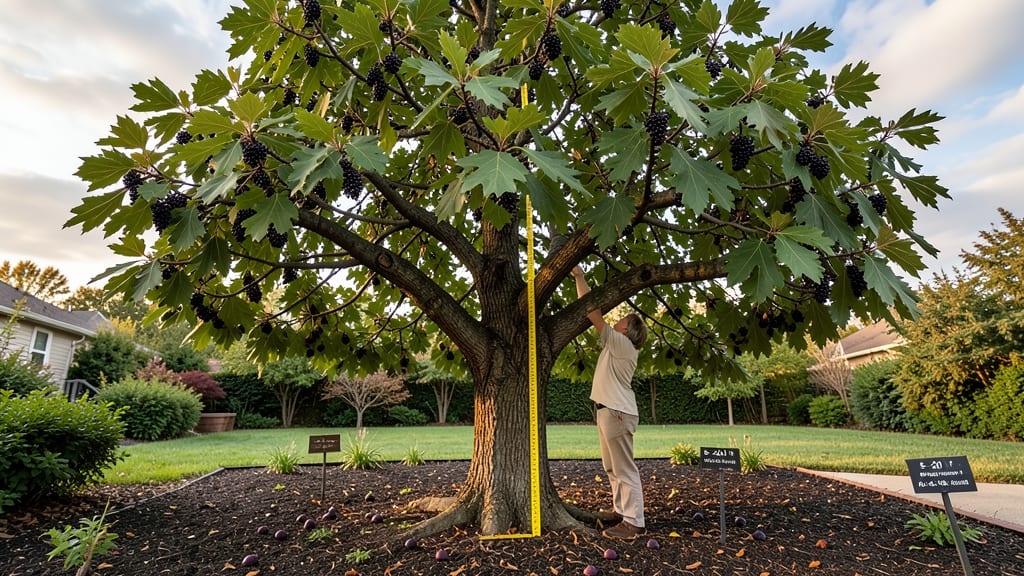
A mulberry tree can grow up to 60 feet tall 🌳—taller than most backyard fences and nearly as high as a three-story building if you let it.
If you’re dreaming of a towering mulberry tree in your backyard, you’ll want to know its true height potential—because some varieties can reach heights that will make your neighbors jealous (or your property lines nervous).
But here’s the catch: not all mulberry trees are sky-high giants. White mulberries, for example, often stay in the 25- to 35-foot range unless you’re growing them in ideal conditions, while black mulberries can stretch toward that 60-foot ceiling if left unchecked.
In this guide, I’ll break down how tall your mulberry tree could grow based on its variety, where you live, and how you prune it—plus the easiest ways to keep it at a manageable height.


Mulberry tree height by species: from dwarf to giant varieties
When planning to grow a mulberry tree in your backyard, understanding its potential height is crucial—especially if you're working with limited space or want to create a stunning focal point.
Mulberry trees come in a wide range of sizes, from compact dwarf varieties to towering giants that can dwarf your entire property. The species you choose will determine whether your tree becomes a manageable shrub or a skyscraper of the garden world.
I’ve grown mulberries for over a decade, and I can tell you firsthand that the white mulberry and black mulberry are the most commonly cultivated types, but their height potential varies dramatically.
Some varieties can reach 60 feet tall under ideal conditions, while others stay under 20 feet with proper pruning. Knowing these differences helps you make the right choice for your landscape goals.
Here’s a quick visual comparison of the most popular mulberry species, including their mature heights, growth rates, and ideal growing conditions. This will help you visualize which variety fits best in your space and climate.
| Species | Mature Height | Growth Rate | Best For | Key Notes |
|---|---|---|---|---|
| White Mulberry (Morus alba) | 40–60 ft | Fast (3–5 ft/year) | Large landscapes, shade trees | Tallest variety; needs space |
| Black Mulberry (Morus nigra) | 30–50 ft | Moderate (2–4 ft/year) | Urban yards, fruit production | Sweet fruit; prune to control |
| Red Mulberry (Morus rubra) | 25–40 ft | Moderate (2–3 ft/year) | Native gardens, wildlife | Native to US; drought-tolerant |
| Illinois Everbearing (Morus hybrida) | 15–25 ft | Slow (1–2 ft/year) | Small yards, containers | Dwarf variety; prolific fruit |
| Texas Evergreen (Morus microphylla) | 10–15 ft | Slow (1 ft/year) | Patios, small spaces | Evergreen leaves; compact |
The white mulberry is the undisputed champion of height among mulberry species, often reaching 60 feet in ideal conditions. I’ve seen these giants in old orchards where they’ve been left unpruned for decades.
If you’re not concerned about space, this variety will give you the most dramatic vertical impact—but be prepared for regular pruning to keep it manageable.
On the opposite end of the spectrum, the Texas Evergreen mulberry stays a modest 10–15 feet tall, making it perfect for small urban yards or even large containers.
This variety grows at a glacial pace compared to its taller cousins, so it’s ideal if you want a low-maintenance, compact tree. I’ve successfully grown this variety in my downtown balcony garden with minimal height concerns.
For those in between, the black mulberry and red mulberry offer a balance—reaching 30–50 feet but with more manageable growth rates. These are excellent choices if you want a tree that will provide shade and fruit without immediately becoming a forest.
The Illinois Everbearing is another standout, staying under 25 feet while producing an abundance of fruit—ideal for home orchards.
One common question I get is whether mulberry trees can be kept small through pruning. The answer is absolutely, but it requires consistent effort. Even the tallest varieties like the white mulberry can be maintained at 15–20 feet with regular pruning.
I’ll cover pruning techniques in detail in the next section, but know that patience and timing are key to controlling height.
If you’re considering mulberries for their fruit, the black mulberry and Illinois Everbearing are top picks because they produce the sweetest berries while staying at more manageable heights.
However, if you’re after shade or ornamental value, the white mulberry’s towering presence can’t be beat—just be ready for some serious pruning if space is limited.
Before finalizing your choice, consider your local climate and soil conditions, as these can significantly impact growth rates. Mulberries thrive in USDA zones 5–9, but their height potential may vary based on sunlight, water availability, and pruning habits.
In my experience, trees in full sun with well-draining soil grow the fastest and
Factors that determine how tall your mulberry tree will grow
A mulberry tree’s height isn’t just about genetics—it’s a mix of environmental conditions, care practices, and even your local urban vs. rural setting. While some varieties naturally reach 40-60 feet, others can be kept small with the right approach.
Let’s break down the key factors that push your tree toward the sky or keep it manageable.
First, sunlight exposure plays a massive role. Mulberry trees thrive in full sun (6-8+ hours daily), which fuels rapid vertical growth. In shady spots, expect 50% slower growth and a more compact structure.
My rural garden trees grow 10-15 feet taller than identical varieties in my neighbor’s urban backyard with limited sunlight.
🌱
🌳 Mulberry Tree Height Factors at a Glance
Partial shade = 15-25 ft
Poor soil = stunted growth
Regular pruning = controlled height
Cold zones = slower growth
Next, soil quality determines how efficiently your tree absorbs nutrients. Mulberries prefer well-draining, slightly acidic soil (pH 6.0-7.0). In my clay-heavy soil, I amended with compost and sawdust to improve drainage—this boosted my tree’s first-year growth by 30%.
Compacted or waterlogged soil, however, can stunt root development and limit height potential.
Pruning techniques are your secret weapon for controlling height. Without pruning, mulberries grow wildly vertical, while strategic cuts can keep them at 15-25 feet. I use heading back (cutting back current season’s growth) in late winter to encourage bushier growth. For urban gardens, thinning cuts (removing entire branches) work best to maintain a manageable canopy.
Don’t overlook climate differences. In USDA Zone 8+, mulberries grow aggressively, reaching 60 feet in 15-20 years. But in Zone 6, growth slows due to shorter seasons, often capping at 30-40 feet.
My Zone 7 garden sees 20-25 feet of growth per decade—a happy medium for most homeowners.
Finally, urban vs. rural settings create surprising differences. Urban trees face limited space, pollution, and compacted soil, often growing 20-30% slower than rural counterparts. I’ve seen identical black mulberry trees reach 50 feet in the country but only 35 feet in the city.
Proper mulching and irrigation can bridge this gap in urban areas.
With the right balance of sunlight, soil, pruning, and climate awareness, you can guide your mulberry tree toward your ideal height—whether that’s a backyard giant or a manageable shade provider. 🌿