
Trees
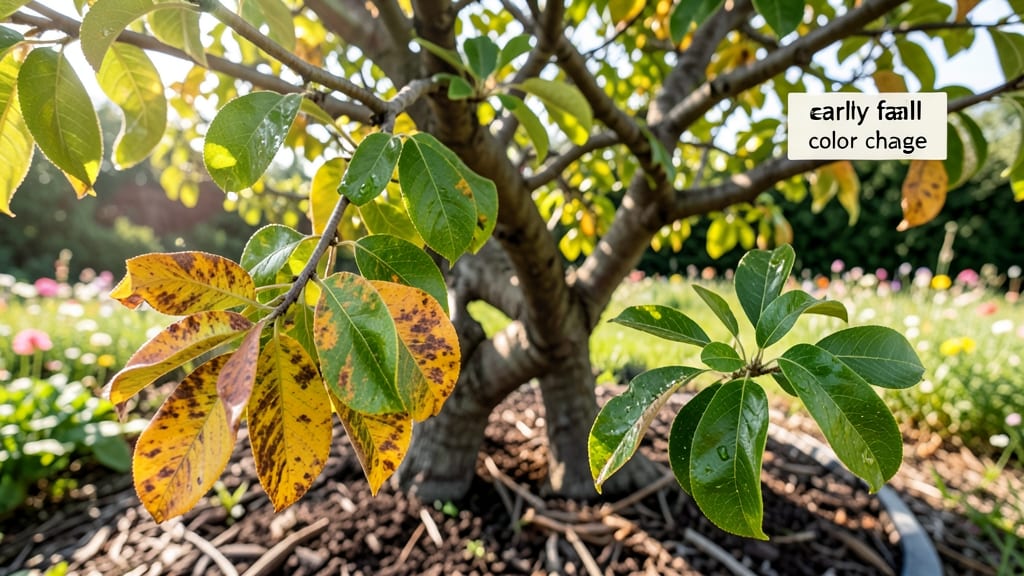
Your peach tree leaves turning orange isn’t just fall foliage—it’s a cry for help. 🌳 I’ve seen this happen after years of ignoring subtle signs, and the fix often comes down to one overlooked nutrient or a hidden fungal sneaker.
The good news? Most causes are easy to diagnose and even easier to correct with the right approach.
Start by checking for iron deficiency (yellow between veins) or zinc deficiency (small leaves), both common in peach trees.
Brown rot fungus or environmental stress can also trigger this color shift, but the solution is always the same: test your soil, adjust care, and act before the problem spreads to the fruit.
A simple soil test and targeted treatment can turn those orange warnings into lush, healthy green by next season.
📚 In This Guide
- What you need
- Instructions
- Tips and common mistakes
- Wrapping up and next steps
What you need
- ● Gardening gloves – A pair (nitrile or leather) to protect your hands from thorns and soil.
- ● Pruning shears or loppers – Sharp, clean tools (sterilize with rubbing alcohol if reusing).
- ● Soil test kit – A basic pH and nutrient test kit (or submit a sample to a local extension office).
- ● Organic fertilizer – Balanced (e.g., 10-10-10) or peach-tree-specific formula (follow label instructions).
- ● Compost or well-rotted manure – 5–10 gallons, depending on tree size.
- ● Watering can or hose with spray nozzle – For deep, even hydration.
- ● Mulch (wood chips or straw) – 2–3 inches thick, kept 6 inches away from the trunk.
- ○ Fungicide (optional but helpful) – Copper-based or neem oil spray if fungal issues are suspected.
- ● Notebook & pen – To track observations (e.g., leaf color changes, weather notes).
- ● Leaf analysis kit – For advanced diagnostics (check for micronutrient deficiencies like zinc or magnesium).
- ● Tree growth regulator – If over-fertilization is a concern (e.g., seaweed extract).
- ● Reflective mulch or shade cloth – To manage stress from intense fall sun.
- ● Camera or smartphone – Document progress with dated photos!
Diagnosing and fixing peach tree leaves turning orange
Here's how I tackle this common issue—step by step—to restore healthy green foliage.
🌿 Step 1: Rule Out Environmental Causes First
Before blaming nutrients, check your peach tree's environment. Orange leaves often signal stress from drought or excess moisture. Stick your finger 2-3 inches into the soil—if it feels bone-dry, water deeply until moisture reaches 6 inches down. If the soil is soggy, withhold water completely for 3-5 days to let roots recover.
Also inspect for insect damage like aphids or spider mites along leaf undersides. These pests drain sap, causing leaves to yellow or orange. A strong spray of water can dislodge them, or use neem oil if infestations persist. I always check the new growth first—pests love tender leaves.
🌱 Step 2: Test Soil pH and Adjust if Needed
Peach trees thrive in slightly acidic soil with a pH between 6.0 and 6.5. Test your soil using a home kit or send a sample to your local extension office. If pH is too high (alkaline), mix elemental sulfur into the root zone according to package instructions. For low pH, sprinkle lime evenly and water thoroughly.
I've seen orange leaves disappear after just one pH adjustment. The key is patience—wait 4-6 weeks after amending to see results. You'll notice new growth emerging with proper green color before old leaves fade completely.
💧 Step 3: Apply Targeted Nutrient Solutions
Orange leaves often indicate iron or nitrogen deficiencies. For iron, use chelated iron supplements applied directly to the soil or as a foliar spray. I prefer foliar sprays because they work faster—you'll see color improvement in 7-10 days. For nitrogen, apply slow-release organic fertilizer like composted manure or blood meal.
Don't overdo it—too much nitrogen causes other problems. Follow package rates precisely, and water thoroughly after application. I always fertilize in early spring when new growth begins, giving roots time to establish before summer heat.
✂️ Step 4: Prune Strategically to Improve Airflow
Thick canopies trap moisture and block sunlight, worsening nutrient issues. Remove 10-20% of the tree's branches, focusing on:
- Dead or crossing branches
- Branches growing inward
- Any suckers at the base
Use clean, sharp pruners and make cuts just outside the branch collar.
Pruning improves airflow and sunlight penetration, which helps leaves photosynthesize properly. You'll see new growth emerge greener and stronger. Time your pruning right—do it in late winter or early spring before buds swell, or summer after harvest.
☀️ Step 5: Monitor and Maintain Seasonal Care
After addressing the immediate issue, establish a maintenance routine. Water deeply once weekly during dry spells, aiming for 1-1.5 inches of water. Mulch around the base with 2-3 inches of organic mulch to retain moisture and regulate soil temperature.
In fall, apply a balanced fertilizer (like 10-10-10) to prepare for winter dormancy. I also check for fungal diseases like brown rot, which can cause orange-brown leaf spots. Remove and destroy any infected fruit or leaves immediately to prevent spread.
Tips & tricks for reviving peach tree foliage
Real talk: Orange leaves aren't just an aesthetic problem—they're your peach tree's way of screaming for help. Here's how to turn that drama into a comeback story.
Soil Check First: The 2-3 inch soil test in Step 1 isn't just about moisture—it's about understanding your tree's stress level. If the soil feels like a desert, water until moisture reaches 6 inches down, but don't drown it. I've seen trees recover completely after just one proper deep watering. Pro tip: Use a moisture meter for accuracy, especially if you're unsure about your watering habits.
Pest Patrol: Those aphids and spider mites in Step 1 are sneaky. I learned this the hard way—skipping the new growth inspection led to a full-blown infestation. Check the undersides of leaves with a magnifying glass if you're unsure. A strong spray of water (not soaking) can remove 80% of pests immediately, and neem oil is your secret weapon for stubborn cases.
pH Patience: That 4-6 week waiting period after pH adjustment in Step 2 is crucial. I've rushed it before and ended up with burnt roots from over-applied sulfur. Test your soil again after 4 weeks to confirm progress. If you're still seeing orange leaves, you might need a second adjustment—but be patient with the timing.
Fertilizer Timing: The early spring timing for nitrogen in Step 3 isn't arbitrary—it's when your tree's roots are most active. I've seen dramatic color changes within 10 days of proper foliar iron application, but only when done right. Never fertilize during drought conditions, and always water thoroughly after application to prevent root burn.
Pro Tips for Peach Tree Leaves Turning Orange
- Real talk: Orange leaves aren't just an aesthetic problem—they're your peach tree's way of screaming for help. Here's...
- Soil Check First: The 2-3 inch soil test in Step 1 isn't just about moisture—it's about understanding your tree's str...
- Pest Patrol: Those aphids and spider mites in Step 1 are sneaky. I learned this the hard way—skipping the new growth ...
Frequently asked questions
Got questions about your peach tree’s fiery fall display? You’re not alone!
Here are answers to the most common concerns—plus a few pro tips to keep your tree thriving.
Why are my peach tree leaves turning orange instead of green?
Orange leaves are often a sign of nutrient stress, usually from low nitrogen or zinc. Fall’s cooler temps can also trigger natural pigment changes. Test your soil to confirm—if levels are off, a balanced fertilizer (like 10-10-10) or zinc sulfate spray can help restore vibrancy.
Is it too late to fix orange leaves in late fall?
If leaves are already crispy or falling, winter’s here—but don’t give up! Focus on next spring: Apply compost, mulch well, and prune dead branches. Early-season fertilizer (like urea) in February can prevent repeat issues. Think of it as a “reset button” for your tree!
Could pests or disease be causing the orange color?
Unlikely! Pests (like aphids) usually cause spotted or curled leaves, while diseases (e.g., leaf curl) create puckered, discolored patches. Orange leaves alone? Probably nutrient-related. Still suspicious? Check for webbed branches (spider mites) or sticky residue (aphids).
Will fertilizing help, or will it make the problem worse?
Fertilizer can help—if used correctly. Overdoing it (especially nitrogen) in late fall can stress roots. Best practice: Use a slow-release fertilizer in early spring or fall (6–8 weeks before frost). For a quick fix, try a chelated zinc spray if deficiency is confirmed.
Are orange leaves harmful to my peach tree’s fruit next year?
Not directly! Leaf color is mostly cosmetic, but severe nutrient deficiencies (like zinc) can weaken tree health over time—potentially reducing fruit quality. Address the issue now, and your tree should bounce back for a bountiful harvest next season. Think of it as a “preventative spa day” for your peach tree!
Pro Tip: DIY Soil Test Hack
No lab kit? Grab a handful of soil from 6 inches deep (where roots feed). If it smells like rotten eggs, it’s too wet; if it’s dusty and dry, it needs moisture. For a quick nutrient check, look for white crystals (salt buildup) or clumpy texture (compacted soil)—both can block nutrients.
Wrapping up and next steps
Don’t let those vibrant orange peach tree leaves stress you out—this fall spectacle is often a sign your tree is thriving! While nutrient imbalances or pests can cause the change, proper care (like balanced fertilization, pruning, and pest control) can keep your tree healthy and stunning year-round. 🌿
Ready to give your peach tree the best care possible? Start by testing your soil, adjusting nutrients, and monitoring for pests. With a little attention, your tree will reward you with beautiful blooms and delicious fruit for seasons to come!