
Diseases
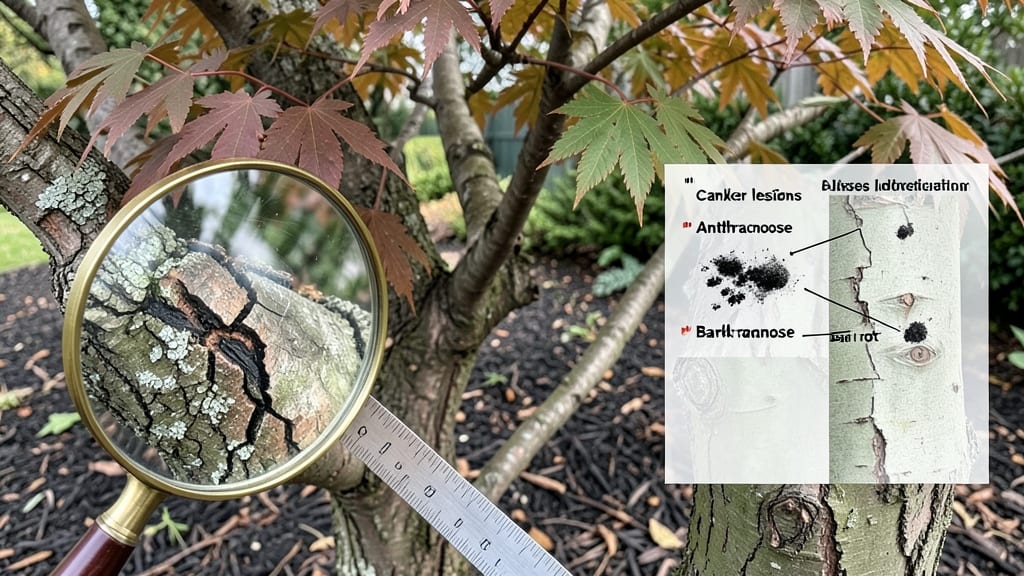
The moment you spot black streaks or crusty patches on the Japanese maple tree bark diseases pictures you’ve gathered, panic sets in—until you know which disease you’re dealing with. 🌿 I’ve spent years tracking these fungal threats, and the difference between a saved tree and a lost one often comes down to spotting symptoms early.
This guide shows you exactly what to look for, from tar spot’s velvety black spots to anthracnose’s sunken cankers, so you can act before the damage spreads.
Most of these diseases thrive in damp, shady conditions, which is why Japanese maples—with their delicate bark and slow growth—are especially vulnerable. The good news? Organic treatments like copper fungicide sprays, neem oil, and proper pruning can turn the tide if you catch them in time.
I’ve seen trees recover completely when treated within the first few weeks of symptoms appearing.
You’ll learn to distinguish between harmless bark texture changes and serious threats like bacterial leaf scorch or canker diseases. Each condition has a distinct visual signature—think raised blisters, oozing sores, or premature leaf drop—and knowing these differences means you’ll never waste time on the wrong fix again.
Whether you’re dealing with a young sapling or a mature specimen, this visual guide gives you the confidence to diagnose and treat before the problem becomes permanent. Early action isn’t just about saving the tree—it’s about preserving the stunning color and structure that makes Japanese maples so special.
Root Causes Of Bark Issues
Japanese maple trees (Acer palmatum) are prized for their stunning foliage and delicate bark—but their thin, sensitive bark makes them vulnerable to diseases. Understanding why these issues arise helps you prevent them before they take hold.
Below, we break down the key culprits behind bark diseases, from fungal invaders to environmental stressors.
Fungi are the #1 cause of bark diseases in Japanese maples. These microscopic organisms thrive in moist, shaded conditions and exploit weak spots in the bark.
- 🔬 Cryptostroma corticale (Canker Disease)
This aggressive fungus enters through wounds (like pruning cuts or storm damage) and spreads under the bark, creating sunken, oozing cankers. It thrives in humid climates with poor air circulation, where spores linger on infected leaves or nearby mulch.
Why it happens: Fungal spores germinate when bark moisture stays above 20% for prolonged periods—common in rainy seasons or after overhead watering.
- 🍂 Valsa spp. (Valsa Canker)
This fungus targets stressed trees, often entering through pruning wounds. It creates black, elongated cankers that ooze gum-like sap, weakening the tree’s vascular system.
Why it happens: Valsa spreads via spore-laden rain or contaminated tools. Trees under nutritional stress (low nitrogen/phosphorus) or physical trauma are prime targets.
- 🌧️ Rhytisma spp. (Tar Spot)
While primarily a leaf disease, severe tar spot can weaken bark resilience by reducing photosynthesis. Dark, tarry spots on leaves drop spores onto the bark, creating entry points for secondary infections.
Why it happens: High humidity (70%+) and frequent leaf wetness (e.g., morning dew or sprinklers) trigger spore germination.
Japanese maples have thin bark—just 1/16-inch thick in mature trees—which makes them susceptible to environmental damage that invites disease.
- ☀️ Sun Scorch & Temperature Fluctuations
Rapid temperature swings (e.g., hot days followed by cold nights) cause bark to crack or blister, creating entry points for fungi. Young trees or those in full-sun, urban heat islands are most at risk.
Why it happens: Bark cells expand and contract with temperature changes, leading to micro-fractures. Drought stress exacerbates this by reducing bark elasticity.
- 💦 Overwatering & Poor Drainage
Soggy soil leads to root rot, which starves the tree of nutrients and weakens its bark. Waterlogged conditions also soften bark tissue, making it easier for fungi to penetrate.
Why it happens: Japanese maples prefer well-draining, slightly acidic soil (pH 5.0–6.5). Compacted or clay-heavy soil traps moisture, while overhead irrigation keeps bark damp for extended periods.
- 🌬️ Wind & Physical Damage
Strong winds or hail can abrade bark, while improper pruning (cutting too close to the trunk) creates wounds that heal poorly. These injuries expose xylem tissue, inviting fungal colonization.
Why it happens: Japanese maples have shallow root systems, making them top-heavy. Without support, bark tears during storms, and pruning cuts wider than ¼-inch fail to seal properly.
Insects and mites don’t cause bark diseases directly—but their damage opens the door for fungal infections.
- 🐜 Scale Insects & Aphids
These sap-sucking pests weaken bark cells by injecting toxins and leaving behind honeydew (a sugary film that fosters sooty mold). Sooty mold isn’t the disease itself, but it blocks sunlight and stresses the tree further.
Why it happens: Scale thrive in dry, hot conditions and poorly ventilated areas. Their sticky residue traps moisture, creating a fungal-friendly environment.
- 🐛 Bark Beetles & Borers
While less common in Japanese maples, beetles can tunnel under bark, creating galleries that disrupt nutrient flow. Their frass (wood shavings) also traps moisture, accelerating rot.
Why it happens: Stressed trees (from drought or disease) emit volatiles that attract beetles. Once inside, their larvae block water-conducting vessels, leading to bark death.
💡 Pro Tip: Most bark diseases start with a single stressor—whether it’s fungal spores, environmental abuse, or pest damage. The key to prevention? Reduce moisture on bark (avoid overhead watering), prune correctly (use sterilized tools, make clean cuts), and monitor soil health (test for compaction or nutrient deficiencies).
Fixing Japanese Maple Bark Issues
Japanese maple trees are stunning, but their bark can fall victim to fungal infections, pests, or environmental stress. The good news? Most problems have straightforward fixes—if you act early. Below, we’ve mapped out practical solutions for each common cause, along with prevention tips to keep your tree thriving.
🔥 Step 1: Identify & Remove Affected Areas
- Use sterilized pruning shears to cut out infected bark, branches, or leaves. Dispose of them in a sealed bag (not your compost).
- Pro Tip: 💡 Work on dry days—wet conditions spread spores faster.*
🍳 Step 2: Apply Fungicide
- Copper-based fungicides (like Bordeaux mixture) or neem oil are effective for anthracnose and tar spot.
- Powdery mildew? Try sulfur spray or baking soda solution (1 tbsp baking soda + 1 quart water + a drop of dish soap).
- Reapply every 7–14 days until new growth appears.
🌡️ Prevention Tips
- Improve airflow by thinning dense foliage.
- Water at the base (avoid overhead spraying).
- Clean up fallen leaves—they harbor spores!
👨🍳 Step 1: Manual Removal (For Scale & Mites)
- Scale insects? Scrape them off with a soft brush dipped in rubbing alcohol.
- Spider mites? Blast them off with a strong spray of water (repeat weekly).
🔪 Step 2: Targeted Treatments
- Neem oil (1% solution) works for soft-bodied pests like mites and young borers.
- Systemic insecticides (like imidacloprid) for stubborn borers—apply to the soil.
- Pro Tip: 🎯 For borers, inject permethrin directly into tunnels if possible.
⏰ Prevention Tips
- Inspect trees regularly (especially new growth).
- Encourage natural predators (ladybugs, lacewings) with beneficial nematodes.
- Avoid over-fertilizing—weak trees attract pests!
🥘 Step 1: Protect from Elements
- Sun scorch? Provide afternoon shade with a lightweight shade cloth (30–50% coverage).
- Cracked bark? Seal minor splits with tree wound sealant (but never use paint—it traps moisture).
- Frost damage? Wrap the trunk with burlap in late fall/early winter.
🌿 Step 2: Boost Tree Health
- Water deeply (1–2 inches per week) during dry spells.
- Mulch properly (2–3 inches of organic mulch, keep it 6 inches from the trunk).
- Avoid over-pruning—stress weakens recovery.
💡 Prevention Tips
- Gradually acclimate young trees to sun exposure.
- Prune in late winter/early spring (avoid summer stress).
- Monitor soil moisture—drought-stressed trees crack easier.
If you spot: ✅ Large, oozing cankers (sign of advanced fungal rot). ✅ Hollow-sounding wood (borer infestation). ✅ Widespread dieback (possible systemic disease).
A certified arborist can assess whether root treatments, deep pruning, or tree removal is needed.
Final Thought: Most bark issues are manageable with early action—so stay vigilant, keep your tree healthy, and enjoy that stunning foliage for years! 🌳✨
Frequently asked questions about Japanese maple bark diseases
How can I tell if dark spots on my Japanese maple bark are just natural texture or a disease?
Natural bark patterns on Japanese maples often appear as raised lenticels or peeling layers that look like cracked paint. Disease spots, however, usually appear as black, velvety patches (tar spot) or sunken, oozing cankers (canker disease). Run your finger gently over the area—if it feels rough or sticky, it’s likely a fungal infection.
Can I save my Japanese maple if the bark is already peeling off in large patches?
It depends on how deep the damage goes. If the bark is peeling but the underlying tissue is still firm and green, the tree may recover with proper care. Remove all loose bark, apply a copper fungicide, and keep the area dry. If you see dark streaks under the bark or hollow-sounding wood, the damage may be too severe, and you should consult an arborist.
Why does my Japanese maple develop bark diseases more in wet springs than dry ones?
Fungal spores thrive in high humidity (70%+) and prolonged leaf wetness, which is why wet springs create perfect conditions. Japanese maples have thin bark that stays damp longer, making them vulnerable to diseases like anthracnose and tar spot. To prevent this, water at the base (not overhead), improve airflow by pruning dense branches, and avoid mulching too close to the trunk.
Is it safe to use homemade remedies like baking soda or vinegar on Japanese maple bark?
A diluted baking soda solution (1 tbsp per gallon of water) can help prevent powdery mildew, but it won’t treat advanced fungal infections like canker disease. Vinegar is too harsh and can damage the bark. For serious issues, stick to copper fungicides or neem oil, which are safer and more effective. Always test remedies on a small area first.
How often should I inspect my Japanese maple for bark diseases?
Check your tree every 2–4 weeks during growing season (spring to fall), focusing on new growth and areas where branches meet the trunk. Early detection is key—most bark diseases spread slowly, so catching them in the first few weeks gives you the best chance of treatment. In winter, a quick monthly check will help you spot any lingering issues before spring.