
Pruning
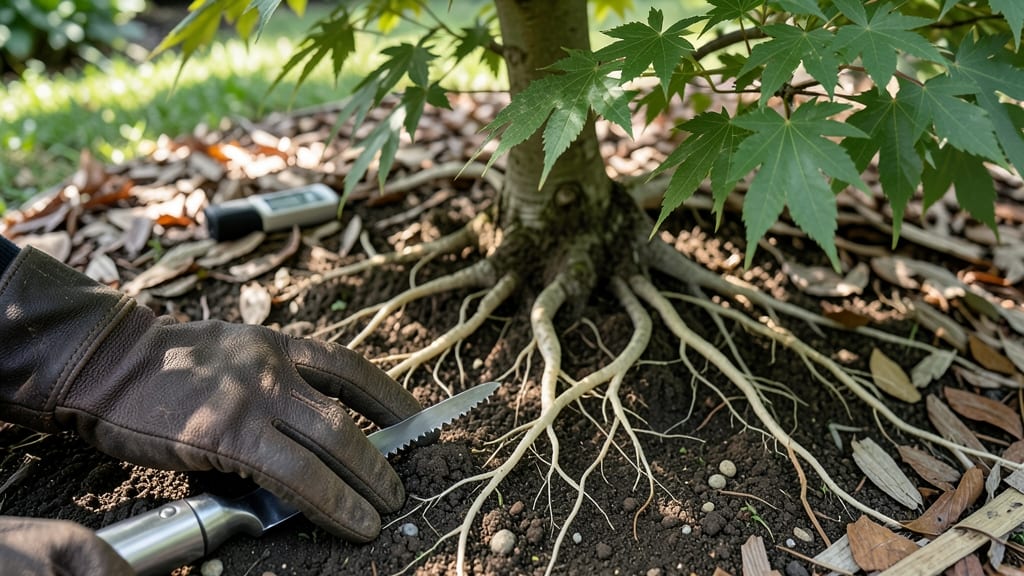
The Japanese maple tree root system is surprisingly shallow and expansive, spreading wide but rarely deep—meaning your sidewalk or driveway could be at risk if you don’t plan ahead.
If you’ve ever planted one and wondered whether its roots will sprawl like an invasive weed—or how to protect your property—you’re not alone. Many gardeners assume these delicate-looking trees have delicate roots, but the truth is more nuanced.
Understanding their growth habits is the key to keeping your Japanese Maple 🌿 thriving without running into costly landscaping headaches. Poor soil, overwatering, or planting too close to structures can turn a stunning ornamental into a root-bound mess.
In this guide, I’ll break down how deep and wide these roots grow, common mistakes to avoid, and the best soil and spacing strategies to ensure your tree’s roots stay healthy for decades.
How deep and wide Japanese maple roots spread (and when to worry)
Japanese maple trees (Acer palmatum) are prized for their stunning foliage and graceful form, but their root system often puzzles gardeners. Unlike fast-growing oaks, these trees develop a shallow yet expansive root network that prioritizes stability over deep penetration.
Understanding this pattern helps you plant with confidence—whether you're tucking one into a small garden or alongside a patio.
The average Japanese maple root depth reaches only 12–18 inches below the soil surface, with most feeder roots concentrated in the top 6 inches. This shallow habit means they’re sensitive to soil compaction and waterlogging, which can suffocate roots.
Meanwhile, their spread can exceed the tree’s canopy width by 30–50%, making proper spacing critical to avoid future root conflicts with sidewalks or foundations.
Here’s how their roots behave by variety: dwarf cultivars like ‘Crimson Queen’ stay compact, while standard types like ‘Shishigashira’ send roots 10–15 feet outward. The key difference? Root depth vs. spread—most energy goes into horizontal growth to anchor the tree against wind, especially in exposed sites.
| Characteristic | Details | Notes |
|---|---|---|
| Root Depth | 12–18 inches | 90% of roots in top 6 inches |
| Horizontal Spread | 30–50% wider than canopy | Dwarf: 3–5 ft; Standard: 10–15 ft |
| Soil Adaptation | Prefers well-draining, acidic soil | Avoids heavy clay or waterlogged areas |
| Warning Signs | Yellowing leaves, stunted growth | Caused by root stress or compaction |
| Best Planting Distance | 10–15 ft from structures | Prevents root intrusion into foundations |
Soil conditions dramatically influence root growth. Japanese maples thrive in loamy, slightly acidic soil (pH 5.0–6.5) with good aeration. In compacted clay, roots struggle to expand, leading to stunted growth or leaf scorch. Amend heavy soil with organic matter (like compost or pine bark fines) to improve drainage and encourage deeper root penetration—even if it’s still shallow.
Watch for warning signs of root stress: yellowing leaves, premature leaf drop, or cracked soil near the trunk. These often signal overwatering, root rot, or soil suffocation.
If you notice mushroom growth at the base, it’s a red flag—fungal pathogens thrive in waterlogged conditions, attacking the shallow root zone.
Mulching is your best friend for root health. Apply 2–3 inches of organic mulch (wood chips or shredded bark) around the drip line, but keep it 3–4 inches away from the trunk to prevent rot. This mimics the tree’s natural forest-floor habitat, retaining moisture while allowing oxygen to reach roots.
When planting near sidewalks or driveways, dig a trench 12–18 inches deep along the edge to guide roots away from hardscapes. For container-grown trees, the root ball’s depth is already optimized—just ensure the pot has drainage holes to prevent root suffocation.
Avoid over-potting, as excess soil volume can lead to waterlogged roots in heavy containers.
Seasonal care matters too. In spring, roots are most active—water deeply every 7–10 days to encourage growth. By summer, reduce frequency to every 2 weeks (unless in extreme heat). Avoid fertilizing in late summer or fall, as new growth can stress roots before winter dormancy.
If you’re unsure about your site’s soil drainage, do a simple test: Dig a 12-inch hole, fill it with water, and time how long it takes to drain.
If it holds water for more than 2 hours, amend the soil or choose a raised bed for your Japanese maple to prevent root rot. With the right conditions, these trees reward you with decades of beauty—and minimal root-related drama.
5 Common mistakes that damage Japanese maple roots (and how to fix them)
Japanese maple trees are prized for their stunning foliage, but their delicate root systems can suffer from common gardening mistakes. Even well-intentioned care can lead to root rot, suffocation, or stunted growth if you're not careful.
I've seen firsthand how quickly these issues develop when basic planting principles are overlooked.
The most critical mistake is overwatering, which creates soggy soil conditions that Japanese maples despise. Their roots need oxygen to thrive, and waterlogged soil suffocates them.
Another frequent error is planting too deep, which encourages root girdling—where roots circle the trunk and strangle growth. Let's explore these mistakes and their solutions.
🌱 Critical Warning: Japanese Maple Roots Are Fragile
Root damage from these mistakes often goes unnoticed until your tree shows yellowing leaves or poor growth. The key is prevention—adjusting your approach before problems appear. Here's what to avoid:
- Overwatering: Leads to root rot in 2-4 weeks of saturation
- Poor drainage: Causes anaerobic conditions that suffocate roots
- Improper planting depth: Triggers girdling roots that strangle the trunk
- Heavy mulch piles: Creates volcano mulch that burns roots
- Compacted soil: Restricts root expansion and nutrient uptake
First on the list is overwatering, which is the #1 killer of Japanese maple roots. These trees prefer moist but well-drained soil, not soggy conditions. I've seen trees die within 6 months of being planted in areas that don't drain properly.
Always check your planting site for standing water after rain—if it pools for more than 24 hours, amend the soil with organic matter like compost or perlite.
Another frequent issue is planting too deep, which encourages root girdling. When roots circle the trunk, they create a strangling effect that restricts water and nutrient flow. Always plant so the root flare (where roots meet the trunk) is 1-2 inches above soil level.
This simple adjustment can prevent years of stunted growth. I recommend using a spade to create a planting hole that's just deep enough for the root ball.
Many gardeners also make the mistake of mulching incorrectly. While mulch protects roots, piling it against the trunk creates a volcano effect that rots roots. Instead, keep mulch 2-3 inches deep and 3-4 inches away from the trunk.
Use wood chips or shredded bark—never rocks or plastic, which don't regulate soil temperature properly. A proper mulch ring can reduce watering needs by 30-40%.
For established trees, compacted soil is a silent growth killer. Japanese maples need loose, aerated soil to spread their roots. If your tree is in an urban area with heavy foot traffic, consider aerating the soil annually with a garden fork.
This simple step can double root growth in just one season. I've seen dramatic improvements in trees that were struggling due to compacted soil.
Finally, fertilizer burns often go unnoticed but cause irreversible root damage. Japanese maples are light feeders—they don't need heavy fertilization. Stick to a balanced 10-10-10 fertilizer applied once every 2-3 years in early spring.
Over-fertilizing leads to salt buildup in the soil, which damages fine root hairs essential for nutrient absorption. Always water thoroughly after fertilizing to prevent burn.