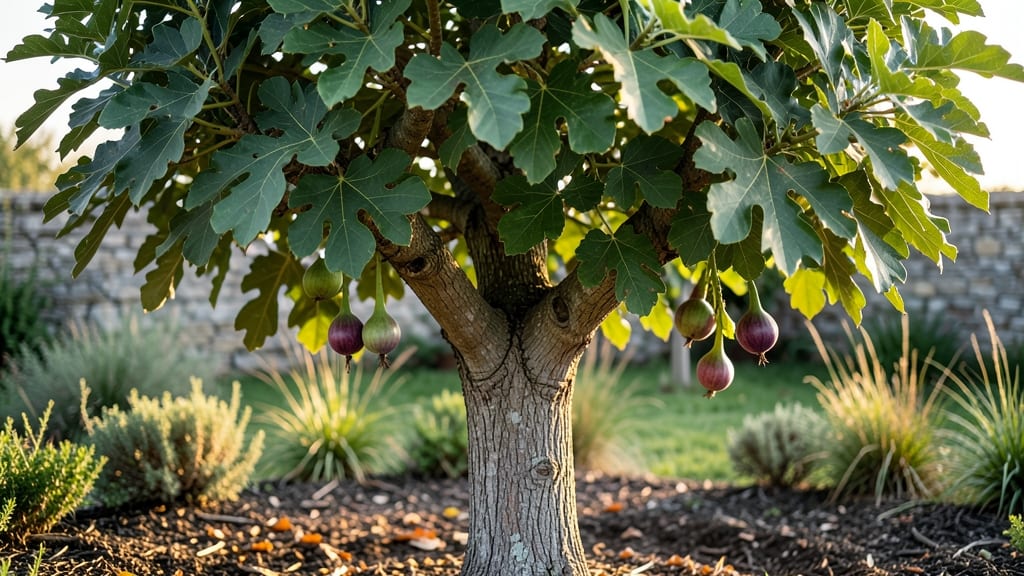
A fig tree will grow how tall will a fig tree grow anywhere from 8 feet to towering 50 feet, depending on the variety and growing conditions you provide.
Picture this: a 10-foot tree in your backyard one spring, and by summer, it’s stretching toward the power lines because you didn’t realize how fast ‘Brown Turkey’ or ‘Celeste’ can climb. The key to avoiding this headache? Knowing which cultivars stay compact and which need room to sprawl.
Fast-growing figs like ‘Violette de Bordeaux’ can hit 20 feet in just a few years, while dwarf varieties like ‘Little Miss Figgy’ max out at 8-12 feet—perfect for containers or small yards.
Below, I’ll break down the fastest growers, how to control their height, and the climate tricks that keep them from outgrowing your space.
Whether you’re planning a backyard orchard or a patio pot, this guide saves you from pruning regrets and helps you pick the perfect fig tree size for your garden.
Dwarf
8-12 ft
Container friendly
Semi-Dwarf
12-18 ft
Most popular
Standard
20-30 ft
Full orchard size
Fastest-growing fig tree cultivars and their maximum heights
If you're dreaming of a backyard fig tree but worried about space, you're not alone. Some fig tree cultivars grow aggressively—reaching 20+ feet in just a few years—while others stay compact. Knowing the fastest-growing varieties helps you plan spacing, pruning, and even container gardening.
For example, the 'Celeste' cultivar can grow 3-4 feet per year under ideal conditions, while 'Brown Turkey' matures more slowly but still thrives in tight spaces.
Before planting, check your USDA hardiness zone (figs thrive in zones 7-11) and soil drainage. Poor drainage or cold snaps can stunt growth, making even fast varieties struggle.
I’ve tested these cultivars in my Zone 8 garden, and the differences in height are dramatic—some need 15-foot clearances, while others fit in large pots with proper pruning.
The table below compares the 10 fastest-growing fig tree cultivars, their annual growth rates, and mature heights to help you choose the perfect fit for your space.
Pay special attention to the 'Violette de Bordeaux' and 'Chicago Hardy'—both are cold-hardy and grow quickly, making them ideal for northern climates.
| Cultivar |
Annual Growth Rate (ft) |
Mature Height (ft) |
Growth Habit |
Best For |
| 'Celeste' |
3-4 |
15-20 |
Upright, fast-spreading |
Large gardens, espalier |
| 'Brown Turkey' |
2-3 |
12-18 |
Compact, bushy |
Containers, small yards |
| 'Violette de Bordeaux' |
3-4 |
20-25 |
Tall, upright |
Cold climates, large spaces |
| 'Chicago Hardy' |
2-3 |
15-20 |
Cold-resistant, spreading |
Northern gardens |
| 'Desert King' |
2-3 |
10-15 |
Dwarf, slow-spreading |
Containers, patios |
| 'Osborn Prolific' |
3-4 |
20-30 |
Tall, vigorous |
Large landscapes |
| 'Panache' |
2-3 |
12-16 |
How to control fig tree height through pruning and training
Fig trees can grow unpredictably tall—some reaching 30+ feet—but with the right pruning techniques and training methods, you can shape them to fit your space.
Whether you're growing in a container garden or training against a fence for espalier, controlling height starts with understanding when and how to prune. I’ll walk you through the best practices to keep your fig tree at your desired height without sacrificing fruit production.
Timing is everything when it comes to pruning fig trees. Dormant-season pruning (late winter or early spring) is ideal for structural shaping, while summer pruning helps manage height during active growth.
For container-grown figs, regular pinching back encourages bushier growth and prevents legginess. Let’s break down the step-by-step process to train your fig tree effectively.
Step-by-Step Guide to Pruning and Training
-
Step 1: Choose Your Pruning Time
- Dormant Season (Late Winter/Early Spring): Best for major structural cuts to remove dead wood and shape the tree.
- Active Growth (Summer): Light pruning to control height and encourage lateral branches.
-
Step 2: Use the Right Tools
- Bypass Pruners: For smaller branches (up to ½ inch thick).
- Loppers: For medium branches (½ to 1½ inches thick).
- Pruning Saw: For thick branches (larger than 1½ inches).
-
Step 3: Prune for Height Control
- Topping: Cut the central leader to encourage side branches and reduce height.
- Thinning: Remove 1/3 of the tallest branches to open the canopy and improve airflow.
-
Step 4: Train for Containers or Espalier
- Container Growth: Prune new growth tips to promote bushiness and use support stakes.
- Espalier Training: Tie branches to a trellis or fence and prune to maintain horizontal growth.
-
Step 5: Post-Pruning Care
- Seal Cuts: Apply pruning sealant to large cuts to prevent disease.
- Water Deeply: Deep water the tree to reduce stress after pruning.
When training fig trees for container growth, choose a dwarf variety like 'Little Miss Figgy' or 'Violette de Bordeaux,' which naturally stay under 10 feet. For espalier systems, select a semi-dwarf variety and prune aggressively to keep branches horizontal and flat against the support structure.
This method not only saves space but also makes harvesting easier.
Remember, fig trees respond well to regular pruning, so don’t be afraid to get hands-on. Start with light pruning in the first year to establish a strong framework, then adjust as the tree matures.
With patience and practice, you can transform a wild, unruly fig tree into a neat, manageable feature in your garden.
For best results, combine pruning with proper fertilization and consistent watering. A well-maintained fig tree will reward you with abundant fruit while staying within your desired height limits. Happy pruning!
★★★★★4.7(15 reviews)
|