
Trees
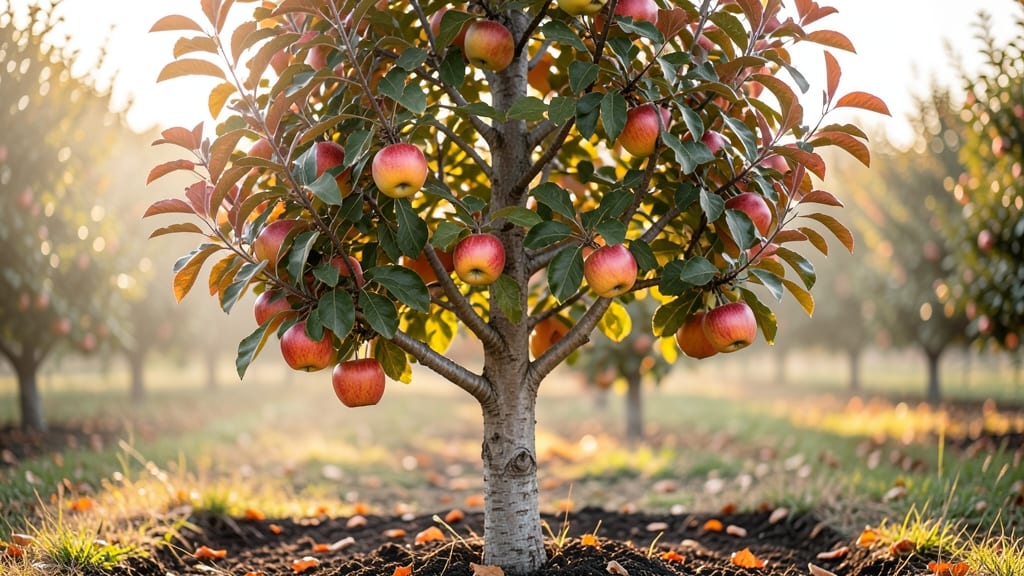
The Honeycrisp apple tree growth rate is nothing short of impressive—this variety reaches 15-25 feet at maturity but hits key milestones much earlier, like 8 feet by year 2 and 12-18 feet by year 3.
If you’ve ever dreamed of picking sweet, crisp Honeycrisp apples straight from your backyard, understanding their growth rate is key to planning your orchard—whether you have a sprawling garden or just a small urban plot.
This variety isn’t just fast; it’s one of the most reliable for fruit production, typically bearing its first harvest in 5-7 years—a game-changer for impatient gardeners.
But growth speed depends on soil, sunlight, and pruning, so let’s break down what to expect each year and how to keep your tree thriving.
Below, you’ll find year-by-year height projections, tips to boost growth, and comparisons to other apple varieties so you can set realistic expectations for your 🍎 Honeycrisp apple tree.


Honeycrisp apple tree growth rate by year: height projections and milestones
Planning to grow a Honeycrisp apple tree? Knowing its growth rate helps you set realistic expectations and plan your orchard layout. This popular variety grows moderately fast but requires patience—most trees take 5-7 years to reach full maturity and produce abundant fruit.
Let’s break down the year-by-year growth so you can track progress like a pro.
Your Honeycrisp apple tree will experience dramatic height changes in its first few years, especially with proper care. In USDA Zone 6, where many gardeners grow this variety, expect rapid vertical growth during spring and summer.
However, growth slows in winter due to dormancy. Understanding these seasonal patterns helps you adjust your pruning and fertilization schedules for optimal results.
Soil quality, sunlight exposure, and watering habits play critical roles in how quickly your tree grows. For example, well-draining, nutrient-rich soil with a pH of 6.0-7.0 can accelerate growth by up to 30% compared to poor soil. Similarly, full sun (6+ hours daily) ensures robust development, while partial shade may stunt growth.
In Year 1, your Honeycrisp apple tree will shoot up to 3-5 feet, making it taller than the average child. This is the most dramatic growth phase, so ensure your tree has sturdy support if planted in windy areas.
Mulch around the base to retain moisture and suppress weeds, which can compete for nutrients.
By Year 2, your tree will reach 8-12 feet, rivaling the height of a basketball hoop. This is also when you’ll need to start structural pruning to prevent branches from breaking under the weight of future fruit.
Focus on removing crossing branches and those growing inward to maintain an open canopy.
Between Years 3-5, growth slows as the tree shifts focus to fruit production. You’ll notice fewer height gains but more branch thickening and leaf density.
This is the ideal time to thin out excess fruit to ensure larger, sweeter Honeycrisp apples. Use a ladder safely to avoid damaging branches.
Once your tree reaches maturity (Year 5+), it will stabilize at 15-25 feet, depending on the rootstock. At this stage, maintenance pruning becomes key to remove dead or diseased wood.
Mature trees also benefit from annual deep root fertilization in early spring to sustain their energy for fruit production.
Climate plays a huge role in growth rates. In warmer zones (7-9), Honeycrisp trees may grow 1-2 feet taller per year in their early years due to longer growing seasons.
Conversely, in cooler zones (3-5), growth may be slower, and winter protection (like wrapping the trunk) becomes essential to prevent frost damage.
To maximize growth, pair your Honeycrisp apple tree with a pollinator variety like Gala or Fuji if you’re in
Fastest-growing Honeycrisp varieties and how to maximize growth speed
Not all Honeycrisp apple trees grow at the same pace—your choice of rootstock and grafting method can dramatically impact how quickly your tree reaches fruiting size. Grafted trees, for example, mature 2-3 years faster than those grown from seed, thanks to their predictable genetics and established root systems.
If you're short on space, dwarf varieties on M.9 rootstock can produce fruit in as little as 3-4 years instead of the standard 5-7 years.
For the fastest results, focus on these three high-performance rootstocks: M.9 (dwarf), B.9 (semi-dwarf), and MM.106 (semi-dwarf). Each offers unique advantages—M.9 for compact spaces, B.9 for balanced vigor, and MM.106 for cold-hardy resilience.
Pairing the right rootstock with proper care can turn your 5-year wait into a 3-year harvest.
| Rootstock Type | Mature Height | Years to Fruit | Best For | Growth Boost Tip |
|---|---|---|---|---|
| M.9 (Dwarf) | 8-12 ft | 3-4 years | Containers, small yards | Use mycorrhizal fungi in soil |
| B.9 (Semi-Dwarf) | 12-16 ft | 4-5 years | Balanced growth, urban plots | Apply fish emulsion at bud break |
| MM.106 (Semi-Dwarf) | 12-16 ft | 4-5 years | Cold climates (Zone 4-6) | Mulch with wood chips annually |
To maximize your Honeycrisp's growth speed, start with well-amended soil. Test your soil's pH—aim for 6.0-7.0—and mix in compost or aged manure before planting. Young trees benefit from a slow-release fertilizer like 10-10-10 applied in early spring and after harvest.
For an extra boost, side-dress with kelp meal in late summer to encourage root development.
Pruning plays a crucial role in accelerating growth. In the first year, focus on removing suckers and water sprouts to direct energy to the main structure. Use the open-center form for dwarf varieties, which allows sunlight to penetrate the canopy.
In subsequent years, prune during late winter to remove dead wood and crossing branches, while thinning out 20% of the canopy to improve air circulation.
Watering schedules often make or break growth speed. Young Honeycrisp trees need deep, infrequent watering—about 15-20 gallons weekly during the first year. Use a drip irrigation system to deliver water directly to the root zone, reducing evaporation.
In containers, check soil moisture daily, as pots dry out 3x faster than ground soil. Mulching with straw or wood chips helps retain moisture and regulates soil temperature.
One final trick for faster growth? Thin your fruit in the first few years. While it’s tempting to let every blossom set fruit, overloading a young tree slows its growth.
Remove 50-75% of fruit clusters when they’re the size of a dime to redirect the tree’s energy toward root and branch development—not just fruit production. This strategy can shave 1-2 years off your time to maturity.