
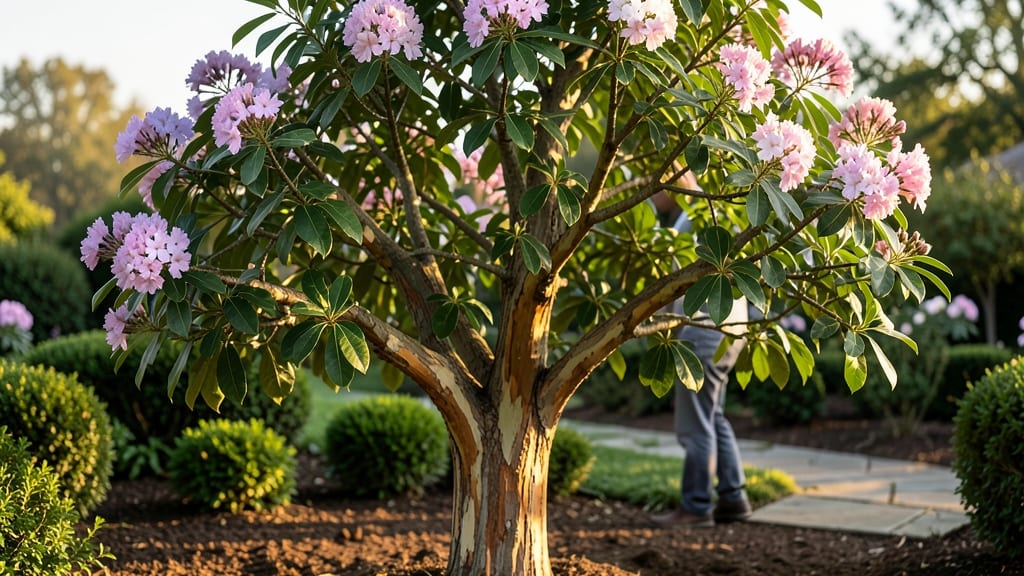
How Tall Do Crape Myrtle Trees Grow: Height Ranges by Variety and Growth Habits

How To

How Tall Do Crape Myrtle Trees Grow: Height Ranges by Variety and Growth Habits

How tall does a crape myrtle tree grow? It can range anywhere from 6 feet to a towering 30 feet, depending on the variety you choose 🌸.

If you're dreaming of adding a crape myrtle to your landscape but wondering whether it’ll dwarf your patio or soar like a small oak, the answer depends entirely on the variety—and we’re breaking down the exact height ranges you need to know before planting.

Dwarf varieties like ‘Arapaho’ stay compact at 6-8 feet, perfect for small yards or as accent plants near walkways. On the other end, standard types like ‘Natchez’ can reach 30-40 feet, making them statement trees for large properties or urban streetscapes.

Below, we’ll cover how growth habits change with pruning, soil conditions, and climate—plus the 3 key steps to keep your crape myrtle at your ideal height, whether you want a shrub-like look or a full-sized shade tree.

Dwarf
6-12 ft
Container friendly
Semi-Dwarf
12-18 ft
Most popular
Standard
20-30 ft
Full orchard size

Crape myrtle height ranges by variety: dwarf to giant sizes explained

Choosing the right crape myrtle variety is key to matching your landscape vision—whether you want a compact accent plant or a towering shade provider. These trees grow from 6 feet tall (like the ‘Arapaho’ dwarf variety) to 40 feet (like the ‘Natchez’ giant).

Understanding these height ranges helps you plan spacing, pruning needs, and even utility line clearance.

Most crape myrtles reach 50-75% of their mature height within the first 3-5 years, so early planning prevents overcrowding. For example, a 12-foot ‘Centennial’ planted near a mailbox could outgrow its space in just 4 years without pruning.

Let’s break down the exact height ranges you’ll see in nurseries, along with real-world comparisons to help visualize their scale.

🌳 Visual Size Comparison: Imagine a standard garage door (8 feet)—most dwarf varieties top out below this, while standard types dwarf a two-story house (20+ feet). The ‘Tonto’ (10-12 ft) fits perfectly as a small tree for patios, while ‘Muskogee’ (25-30 ft) needs room like a large oak. Your yard’s layout will determine which variety thrives.

Variety Mature Height (ft) Growth Rate (in/yr) Best For Size Comparison
‘Arapaho’ 6-8 ft 12-18 in Small gardens, containers Taller than a mailbox
‘Centennial’ 10-12 ft 18-24 in Patios, foundation plantings Slightly taller than garage door
‘Tonto’ 10-12 ft 15-20 in Small yards, urban landscapes Matches a tall lamp post
‘Sioux’ 12-15 ft 20-24 in Medium-sized yards Taller than a carport
‘Catawba’ 15-20 ft 24-30 in Shade trees, large patios Taller than a standard door
‘Muskogee’ 20-25 ft 24-36 in Large yards, street trees Taller than a 2-story window
‘Natchez’ 30-40 ft 30-48 in Park-like settings, large estates Taller than a two-story house
‘Tif ‘n’ Tan’ 12-15 ft 18

How fast do crape myrtles grow? Annual height increase by age and pruning needs

Crape myrtles are famous for their vibrant blooms, but their growth speed can surprise even seasoned gardeners. On average, standard varieties like 'Natchez' or 'Tonto' grow 12-24 inches per year during their juvenile phase (first 3-5 years).

This rapid growth slows as they mature, with some varieties adding just 6-12 inches annually after reaching full height. The key to managing this growth lies in understanding their two distinct phases: juvenile (fast growth) and mature (slower, steady expansion).

Your crape myrtle’s root system plays a huge role in vertical expansion. Deep, fibrous roots anchor the tree while competing for nutrients, which directly impacts how quickly it reaches for the sky. In ideal conditions—full sun, well-draining soil, and consistent moisture—you’ll see the most dramatic height increases.

However, even the fastest-growing varieties won’t outpace their genetic potential, making pruning a critical tool for height management.

Here’s what you need to know about their growth timeline, including how pruning can shape their final height:

1
Year 1-3 (Juvenile Phase): Expect 1-2 feet of growth annually as the tree establishes its root system and trunk. This is when they grow the fastest, often adding 12-24 inches per year if conditions are optimal.
2
Year 4-7 (Transition Phase): Growth slows to 6-12 inches per year as the tree shifts focus from height to canopy development. Pruning now can redirect energy toward bushier growth rather than vertical expansion.
3
Year 8+ (Mature Phase): Height increases stabilize at 3-6 inches annually or may halt entirely. At this stage, pruning focuses on maintaining health and shape rather than controlling height.
4
Pruning Impact: Late winter pruning (just before buds swell) can reduce annual height gain by 30-50% if you cut back 1/3 of the current year’s growth. This is ideal for dwarf varieties like 'Arapaho' (6-8 ft) or semi-dwarf 'Muskogee' (12-15 ft).

Pruning timing is everything. If you prune too late in the season, you risk encouraging suckering (excessive new shoots) or even dieback in cold climates. The best time to prune for height control is late winter, just as the tree begins to wake up from dormancy.

This ensures you’re shaping the tree before it puts all its energy into vertical growth. For standard varieties, aim to prune once every 1-2 years to maintain your desired height.

One common misconception is that crape myrtles grow indefinitely. In reality, their mature height is largely predetermined by genetics. For example, the 'Tonto' variety typically tops out at 20-25 feet, while 'Natchez' can reach 30-40 feet without intervention.

If you’re planting near power lines or structures, choose a dwarf variety and commit to regular pruning to keep it in check. Even a few inches of annual height reduction can make a 10-year difference in your tree’s final size.

Remember, the faster a crape myrtle grows, the more it needs your attention. Regular pruning isn’t just about height—it’s about air circulation, which reduces the risk of powdery mildew and crape myrtle bark scale.

Thin out crowded branches annually to let sunlight penetrate the canopy, and always use clean, sharp tools to avoid damaging the tree. With the right care, you can enjoy your crape myrtle’s stunning blooms without it becoming an unmanageable giant.

★★★★★5.0(11 reviews)
Categories How To