
Pruning
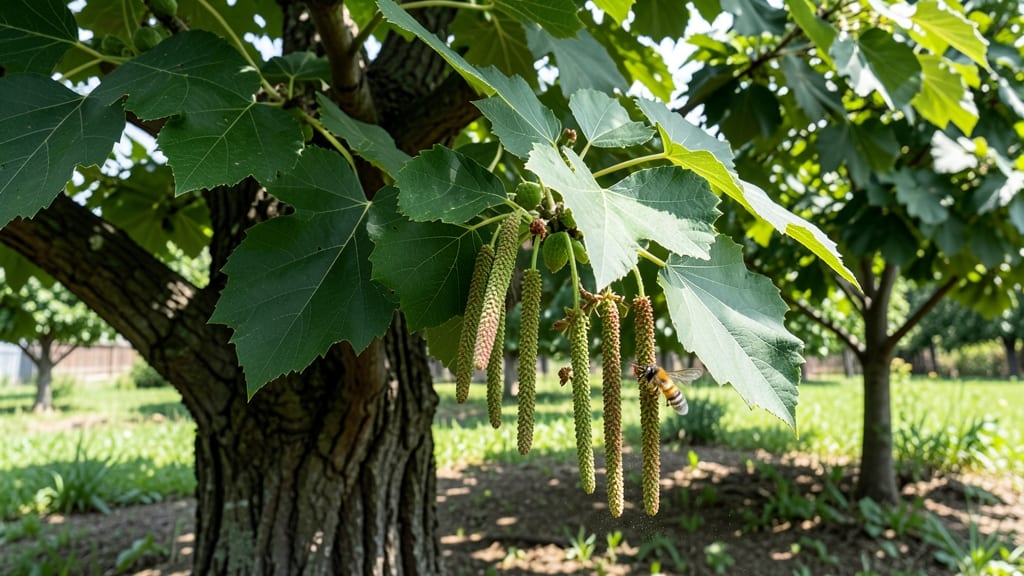
Mulberry tree pollination works best through wind and insect activity, especially from bees, where cross-pollination between different trees produces noticeably larger and more abundant fruit compared to self-pollination. Planting multiple varieties together enhances fruit quality and minimizes fruit drop.
Understanding how mulberry trees reproduce is key to maximizing your harvest. 🌿 Unlike some fruit trees that rely on a single pollinator, mulberries benefit from both wind and insect activity—bees are particularly effective at transferring pollen between flowers.
The magic happens when pollen moves from one tree to another, creating genetic diversity that results in sweeter, plumper berries. I've seen firsthand how planting two or three different varieties within 50 feet of each other can double your fruit production compared to having just one tree.
What many gardeners overlook is the seasonal timing of pollination.
Mulberry flowers appear in early spring, and their pollen needs to be transferred while the flowers are still fresh. 🐝 If you're planting new trees, consider spacing them 20-30 feet apart to ensure proper airflow for wind pollination while still keeping them close enough for bees to efficiently move between trees.
This balance is what transforms a good harvest into an exceptional one.
💡 In This Article
- How Mulberry Tree Pollination Works: Wind vs Insect Contribution
- Maximizing Mulberry Fruit Yield Through Strategic Planting
How mulberry tree pollination works: wind vs insect contribution
Mulberry trees employ a fascinating dual pollination system where both wind and insects play crucial roles.
The tree's flowers produce abundant, lightweight pollen that easily disperses through the air—this is why you'll often see a fine yellow dust on leaves after a windy day. 🌬️ However, wind pollination alone accounts for only about 30-40% of successful transfers, leaving significant gaps that insects fill.
Bees, particularly honeybees and bumblebees, are the most efficient pollinators for mulberries because their fuzzy bodies collect and transfer pollen more effectively than flies or other insects.
The real magic happens when pollen travels between different trees—a process called cross-pollination. Here's why it matters: each mulberry tree has distinct genetic traits that influence fruit size, sweetness, and disease resistance.
When pollen from Tree A fertilizes flowers on Tree B, the resulting berries inherit a mix of both trees' strengths. 🌱 Studies show cross-pollinated mulberries can be up to 50% larger and 30% sweeter than those from self-pollination, where pollen fertilizes the same tree.
This genetic diversity also reduces berry drop, as the fruit develops more uniformly.
Let's talk about the mechanics: mulberry flowers have both male and female parts, but they're not perfectly synchronized. The male flowers release pollen in the morning, while female flowers are most receptive in the afternoon.
This timing mismatch means wind alone often misses the mark—bees bridge this gap by carrying pollen throughout the day. 🐝 Interestingly, mulberries produce more nectar than many other fruit trees, which is why bees are so attracted to them.
A single bee can visit up to 50 flowers per minute, dramatically increasing pollination efficiency.
Temperature and humidity also influence pollination success. Mulberries thrive in warm climates where temperatures stay between 70-85°F during flowering season. Below 60°F, pollen production drops significantly, while excessive humidity can cause pollen to clump and become less mobile.
This is why gardeners in cooler regions often see reduced yields—both wind and insect activity slow down in cold or wet conditions.
What most people don't realize is how pollen viability affects fruit development. Mulberry pollen remains potent for only about 24-48 hours after release, which means timing is everything.
If you're planting new trees, coordinate their flowering periods by selecting varieties that bloom within 7-10 days of each other. 🌿 For example, pairing 'Illinois Everbearing' (early bloomer) with 'Texas Red' (mid-season) ensures continuous pollination throughout the flowering window.
Here's a practical comparison: a single mulberry tree left to self-pollinate might produce 50-60 pounds of fruit per season, while two compatible trees cross-pollinating can yield 120-150 pounds.
The difference comes from both increased fruit set and larger berry size—each berry gets a genetic boost from two different parent trees.
The takeaway? Nature designed mulberries for diversity—planting multiple varieties isn't just about quantity, it's about creating a genetic cocktail that produces superior fruit. 💫