
How To
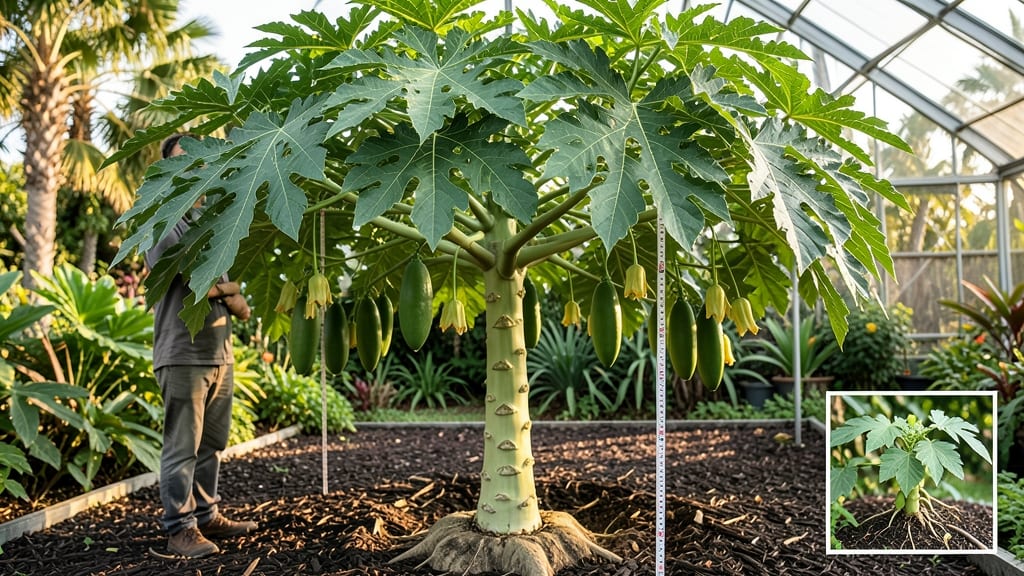
A papaya tree can grow up to 30 feet tall 🥝—taller than most two-story homes—if given the right conditions, variety, and care. But here’s the catch: that towering height isn’t for everyone.
Whether you’re eyeing a dwarf variety for a balcony or a standard type for a tropical backyard, the height of your papaya tree depends on more than just its genes.
If you’re dreaming of a tropical paradise in your backyard, the papaya tree could be your star player—but how tall can it really grow?
From dwarf varieties perfect for containers to towering giants reaching skyward, the height of a papaya tree depends on its variety, growing conditions, and a little extra care. Some varieties stay compact, while others shoot up like a jungle giant.
Understanding the height range isn’t just about aesthetics—it impacts how you plant, prune, and even harvest. A 10-foot dwarf might thrive in a pot, while a 30-foot standard needs space, trellising, or strategic pruning.
The good news? With the right approach, you can control the growth to fit your space—whether that’s a patio, greenhouse, or full sun garden.
In this guide, I’ll break down the height differences by variety, the factors that push a papaya tree toward the sky (or keep it grounded), and how to manage its growth for the best fruit yield. Ready to grow your own tropical giant—or a compact container friend?


Papaya tree height by variety: dwarf to giant growth comparisons
If you're planning to grow a papaya tree, understanding its mature height is crucial for space planning and care. Some varieties can grow taller than a two-story house, while others stay compact enough for containers.
The SunUp variety, for example, typically reaches 10-15 feet at maturity, making it ideal for larger gardens. Meanwhile, dwarf varieties like 'Solo' stay between 6-10 feet, perfect for urban balconies or patios.
Papaya trees are fast growers, with some varieties reaching their full height within 12-18 months under ideal conditions. However, their growth rate and final height depend heavily on the variety, climate, and pruning practices.
In tropical climates, papaya trees thrive and can grow much taller than in cooler regions. Below, we break down the height ranges of popular varieties to help you choose the best fit for your space.
Comparison Table: Papaya Tree Heights by Variety
The Red Maradol variety is the tallest, often reaching 20-30 feet in ideal tropical conditions. This makes it a stunning centerpiece for large gardens but requires ample space. If you're working with limited room, the Solo or Hawaiian Solo varieties are excellent choices, staying between 6-12 feet tall.
These dwarf varieties are also more manageable for pruning and harvesting.
For home gardeners with moderate space, the SunUp variety strikes a balance, typically growing to 10-15 feet. It’s also known for its disease resistance and consistent fruit production, making it a favorite among growers.
If you're growing papaya in containers, opt for the Solo or Hawaiian Solo varieties, as their smaller stature makes them easier to manage in pots.
One key factor influencing height is pruning. Regular pruning can help control the size of your papaya tree, especially if you're growing it in a small space. Pruning also encourages fruit production by redirecting energy toward fruiting rather than excessive growth.
For tall varieties like Red Maradol, pruning can help manage height while maintaining a manageable canopy.
In tropical climates, papaya trees grow much faster and taller due to year-round warmth and abundant sunlight. In cooler regions, growth may slow, and the tree may not reach its full potential height.
If you're growing papaya in USDA Zone 10 or higher, expect faster growth and taller mature trees. For those in cooler zones, consider growing dwarf varieties or using greenhouse cultivation to extend the growing season.
When selecting a variety, also consider the fruit size and yield. Tall varieties like Red Maradol produce large, sweet fruits but require more space. Smaller varieties like Solo may produce fewer but still delicious fruits, making them ideal for small-scale harvesting.
Always choose a variety that aligns with your garden size and climate conditions for the best results.
If you're new to growing papaya trees, start with a dwarf variety like 'Solo' to get a feel for their care requirements. Once you're comfortable, you can experiment with taller varieties like 'SunUp' or 'Red Maradol' for a more dramatic tropical effect in your garden.
With the right variety and care, your papaya tree can thrive and provide a bountiful harvest for years to come.
🌱
Factors that influence papaya tree height: climate, pruning & care
Your papaya tree's height isn't just about genetics—it's a mix of climate conditions, soil quality, and care practices. In tropical zones like USDA 10-12, papayas thrive and can reach 20-30 feet tall, while cooler climates limit growth to 8-12 feet.
Even within ideal zones, pruning techniques and container size can dramatically alter your tree's stature.
Let's break down the key factors that determine whether your papaya tree will become a towering tropical giant or a compact container-friendly plant. Understanding these elements lets you control growth for your space while maximizing fruit production.
🌡️ Climate Zone
Papayas need warmth year-round—below 50°F (10°C) stunts growth. In USDA 10-12, they reach 20-30 ft tall, while in USDA 9, expect 10-15 ft max.
☀️ Sunlight Exposure
Full sun (6-8+ hours daily) fuels rapid growth. Shade reduces height by 30-50%—ideal for dwarf varieties but limits fruit production in taller types.
🪴 Soil & Nutrition
Rich, well-draining soil with pH 6.0-7.0 supports faster growth. Poor soil or nutrient deficits can shrink mature height by up to 40%.
✂️ Pruning Practices
Regular pruning can reduce height by 50% or more. Remove suckers and lower branches to encourage upward growth, while top-pruning keeps trees compact for containers.
🪴 Container vs. Ground
Container-grown papayas max out at 8-12 ft due to root restriction. Use 15+ gallon pots for dwarf varieties like 'Solo' to prevent stunted growth.
For maximum height, prioritize warm climates, full sun, and rich soil. If space is limited, prune aggressively and choose dwarf varieties like 'SunUp' (8-10 ft) or 'Hawaiian Solo' (6-8 ft). Even in containers, proper care can keep your papaya productive while controlling its stature.
Remember: Pruning isn't just about size—it also improves airflow, reducing disease risk and boosting fruit quality. A well-pruned papaya tree, whether tall or small, will reward you with sweeter, larger fruit and a healthier plant overall.
Start with the right variety for your space, then adjust light, soil, and pruning to guide your papaya tree's growth. With these factors in balance, you'll have the perfect tropical tree—whether it's a skyscraper in your backyard or a compact container star on your patio! 🌿