
How To
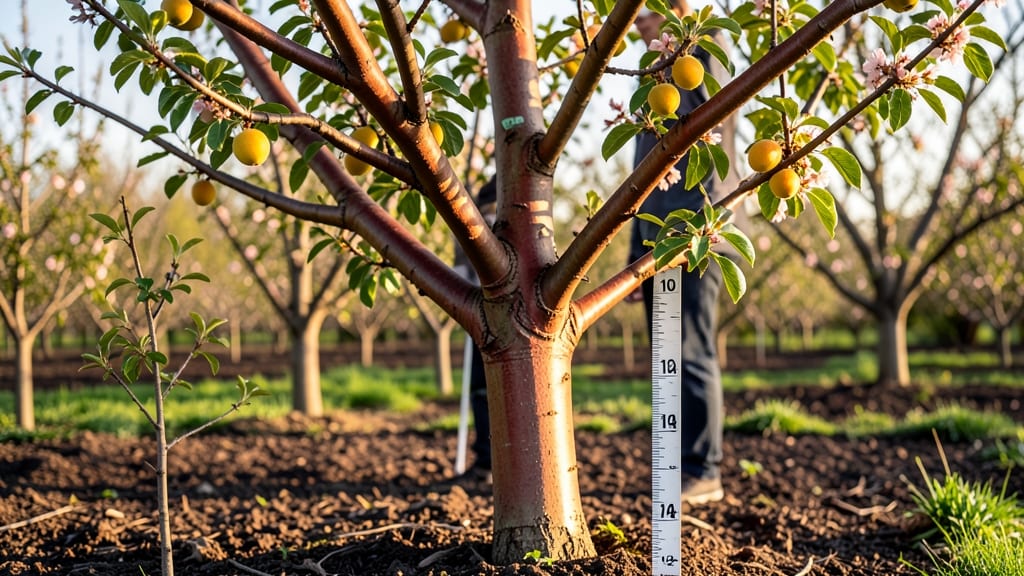
Apricot tree height by variety: dwarf to standard size comparison
Choosing an apricot tree variety isn’t just about flavor—it’s about space planning. Some varieties stay compact enough for container growing, while others reach heights that require yard-clearing pruning. The right choice depends on your backyard dimensions and climate zone.
For example, 'Moongold' stays under 10 feet, while 'Tilton' can soar to 25 feet or taller if unchecked. Let’s break down the height spectrum of popular apricot varieties so you can pick the perfect fit for your garden.
Height isn’t the only factor—growth habits matter too. Some apricot trees grow narrow and upright, while others spread wide and bushy. This affects not just spacing requirements but also how much pruning maintenance you’ll face.
For instance, 'BlazeGold' grows taller but narrower, making it ideal for small backyards, whereas 'Royal' spreads 15 feet wide, needing ample room to thrive. Always check the mature canopy width alongside height to avoid crowding issues.
Cold-hardy varieties tend to grow slightly shorter than subtropical types, thanks to shorter growing seasons. For example, 'Harvest Gold' (USDA Zone 5) stays under 12 feet, while 'Crimson Snow' (Zone 7+) can reach 20 feet.
If you’re in a cooler climate, prioritize dwarf or semi-dwarf rootstock to limit winter damage from heavy snow or ice. In warmer regions, you might opt for taller, faster-growing varieties like 'Sungold' to maximize fruit production.
Here’s a quick comparison of 12 apricot varieties, ranked from dwarf to standard, including their ideal spacing and growth habits:
| Variety | Mature Height | Canopy Width | Spacing Needed | Growth Habit | Cold Hardiness |
|---|---|---|---|---|---|
| Moongold | 8–10 ft | 6–8 ft | 10x10 ft | Compact, upright | Zone 5–9 |
| Tilton | 10–12 ft | 8–10 ft | 12x12 ft | Semi-dwarf, spreading | Zone 6–9 |
| BlazeGold | 12–15 ft | 8–10 ft | 12x12 ft | Narrow, upright | Zone 6–10 |
| Harvest Gold | 12–14 ft | 10–12 ft | 15x15 ft | Bushy, spreading | Zone 5–8 |
| Royal | 15–18 ft | 15–20 ft | 20x20 ft | Wide, spreading | Zone 6–9 |
| Crimson Snow | 18–22 ft | 12–15 ft | 18x18 ft | Tall, upright | Zone 7–10 |
| Sungold | 20–25 ft | 15–20 ft | 25x25 ft | Vigorous
How climate affects apricot tree height: warm vs. cold regionsApricot trees thrive in warm climates but shrink dramatically in cold regions—a fact that can dramatically alter your tree's mature height. In USDA zones 8-10 (like California or Arizona), apricots grow 20-30 feet tall with vigorous, upright growth. But in USDA zones 5-7 (such as Colorado or New York), the same varieties often max out at 12-18 feet due to winter stress. This climate-driven height difference forces gardeners to adjust spacing and care strategies entirely. Temperature isn't the only factor—elevation also plays a role. High-altitude gardens (like those in Denver or Utah) experience cooler nights, which slows growth and reduces mature height by 30-50% compared to coastal regions. Even within the same zone, a tree at 5,000 feet elevation may stay 10 feet shorter than one planted at sea level. Understanding these patterns helps you choose the right variety and plan your orchard layout. Dwarfing rootstock can counteract climate limitations. Even in USDA zone 5, grafting apricot scions onto Marianna 2624 or Siberian C rootstock reduces mature height to 8-12 feet while improving cold hardiness. This technique lets you grow apricots in Colorado or Michigan without sacrificing fruit production. The trade-off? Slightly smaller fruit and reduced yield compared to standard trees in warm climates. Another key adjustment for cold climates is planting location. Apricots need full sun, but in high-elevation areas, afternoon shade can prevent sunburn on young leaves. Position trees near a south-facing wall or fence to capture reflected heat, which can boost growth by 15-20% in marginal zones. Mulching with 4-6 inches of wood chips also helps insulate roots during winter, encouraging taller growth over time. If you're in a transition zone (USDA 6-7), consider semi-dwarf varieties like 'Tilton' or 'BlazeGold', which balance height (12-18 feet) with cold tolerance. These grow 30-50% taller than dwarf varieties but stay manageable for home gardens. Always check the chilling hour requirements—most apricots need 400-800 hours below 45°F, which high-desert areas often lack. Remember: pruning for height control works differently in cold vs. warm climates. In warm zones, aggressive summer pruning encourages vertical growth, while in cold zones, winter pruning (after dormancy) prevents dieback. Always prune 1-2 feet above bud unions to maintain tree health and encourage upward growth where your climate allows. |