
Pruning
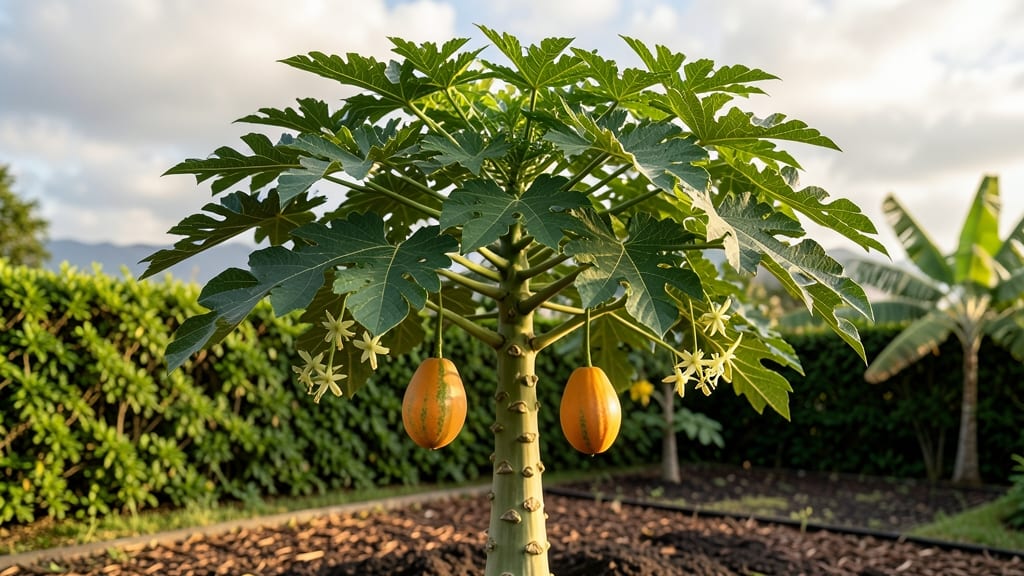
Growing papaya trees in California requires selecting cold-hardy varieties like 'SunUp' or 'Red Maradol' and providing frost protection, well-draining soil, and full sun exposure. California’s Mediterranean climate suits papayas in coastal or warm inland regions with consistent warmth above 60°F.
California’s diverse climate zones create unique opportunities for papaya cultivation, but success hinges on choosing the right varieties and adapting care techniques. 🌱 The 'SunUp' variety thrives in coastal areas where temperatures stay mild year-round, while 'Red Maradol' adapts better to inland regions with hotter summers.
Unlike tropical climates, California’s occasional cold snaps mean you’ll need to protect young trees with frost cloths or move potted specimens indoors during 32°F nights.
What sets California apart is its drought-prone summers, which demand deep but infrequent watering—about 1-2 inches per week—to encourage strong root development. In frost-prone areas like the Central Valley, planting near south-facing walls or using black plastic mulch can add 5-10°F of warmth to the soil.
Pruning in late winter (after frost risk passes) promotes bushier growth, but avoid heavy cuts that stress the tree during its critical fruiting season.
💡 In This Article
- Best Papaya Varieties for California’s Climate Zones
- California-Specific Papaya Tree Care Tips
Best papaya varieties for California’s climate zones
California’s Mediterranean climate creates distinct microclimates where certain papaya varieties excel. The 'SunUp' variety, for example, thrives in coastal regions like San Diego or Santa Barbara where daytime temperatures hover around 75-85°F and nighttime dips rarely fall below 50°F.
Its compact growth habit (typically 8-10 feet tall) makes it ideal for home gardens with limited space, while its semi-dwarf stature reduces wind damage in exposed coastal areas. 🌊 The key advantage is its moderate cold tolerance—it can withstand brief exposures to 30°F without permanent damage, making it perfect for coastal areas where foggy nights create localized frost pockets.
Inland regions like the Central Valley or desert areas near Palm Springs demand hardier varieties. 'Red Maradol' stands out here because its thicker skin and denser flesh help it endure 95-105°F daytime highs while still producing fruit.
This variety’s larger size (12-15 feet tall) also makes it more resilient to heat stress through deeper root systems that access groundwater. The trade-off? It requires more space and benefits from afternoon shade during peak summer months to prevent sunscald on developing fruits.
For high-desert zones like Death Valley’s outskirts, consider 'Solo' papayas—they’ve been bred to tolerate brief 25°F temperatures and produce fruit in just 9-11 months, nearly half the time of tropical varieties.
What most gardeners overlook is how soil type interacts with variety selection. Coastal areas with sandy loam benefit from 'SunUp's' preference for slightly acidic soil (pH 6.0-6.8), while inland alkaline soils (pH 7.5-8.5) suit 'Red Maradol' better. The reason?
Alkaline soils contain more calcium, which strengthens cell walls in papaya fruits, reducing the risk of blossom-end rot—a common problem in California’s dry summers. 🌱 For container growing (ideal for frost-prone zones), 'SunUp' thrives in 15-gallon pots with a 60/40 peat-perlite mix, while 'Red Maradol' needs 25-gallon containers to support its heavier fruit load.
Seasonal timing matters too. In coastal regions, papayas fruit year-round with peaks in spring and fall, while inland varieties produce primarily in summer. This aligns with California’s natural rainfall patterns—coastal areas get 10-20 inches annually, while inland zones receive 3-8 inches.
The solution? Mulching with 4-6 inches of wood chips retains moisture in dry areas, while drip irrigation systems deliver water directly to roots at 0.5-1 gallon per hour to prevent fungal issues from overhead watering.
One advanced technique California growers use is strategic planting dates. For 'SunUp', start seeds indoors 8-10 weeks before last frost (typically late February in coastal areas) to establish roots before transplanting. Inland growers delay planting until April 15-May 1 to avoid early spring frosts that can blacken leaves.
The payoff? Earlier fruiting cycles that avoid summer’s peak heat stress when fruits are most vulnerable to sunscald. 🌿
Consider these variety-specific care factors:
- Coastal (e.g., 'SunUp'): Needs afternoon shade in summer; prune to remove crossing branches that block sunlight
- Inland (e.g., 'Red Maradol'): Requires deeper watering (1.5-2 inches per week) during summer; stake trees at 3-4 feet to prevent windthrow
- Desert (e.g., 'Solo'): Use reflective mulch to reduce soil temperatures; harvest fruits when they reach 7-8 inches in length for optimal sweetness