
Pruning
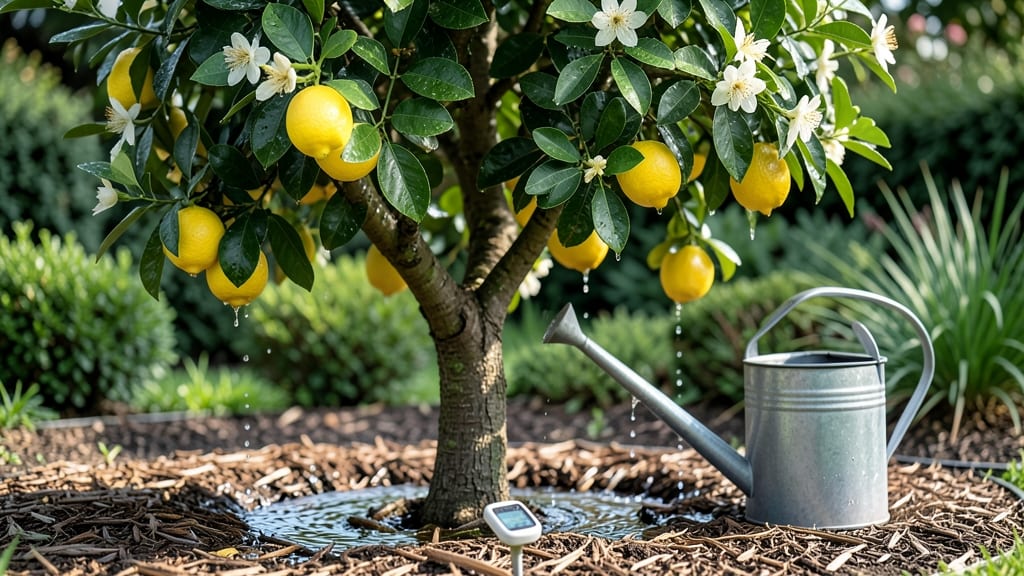
Mastering citrus tree irrigation is the difference between a bountiful harvest and a struggling plant 🍊 — and most gardeners get it wrong, either drowning roots or leaving them parched.
Here’s the truth: citrus trees need consistent moisture but hate soggy soil, and the seasonal shift from summer heat to winter dormancy changes everything. Too much water? Root rot. Too little? Leaf drop and bitter fruit. The key lies in deep, infrequent watering paired with soil checks, not guesswork.
In this guide, I’ll break down the exact schedule for your zone, how to tell if your tree is thirsty or drowning, and the one irrigation hack that cuts water waste by 40%. Whether you’re growing in pots or the ground, these science-backed tips will keep your tree thriving year-round.
Skip the trial-and-error: learn how to water for healthier roots, sweeter fruit, and a tree that lives for decades—not just a season.
The science of citrus tree watering: root depth & soil moisture rules
Citrus trees thrive on a delicate balance of water—too little causes stress, while too much drowns their shallow yet extensive root systems. Unlike deep-rooted fruit trees, citrus roots spread horizontally within a 18-24-inch zone, making soil moisture management critical.
I’ve learned the hard way that ignoring this root zone leads to root rot or stunted growth.
Your irrigation strategy must prioritize deep, infrequent watering rather than shallow, frequent sprinkles. This mimics natural rainfall patterns and encourages roots to grow deeper for stability. For example, a 5-year-old lemon tree needs 1-2 gallons per week, while a mature orange tree may require 3-5 gallons during peak summer.
Here’s the science: Citrus trees absorb 90% of their water within the top 24 inches of soil. The remaining 10% comes from deeper layers, which is why consistent moisture at this depth is non-negotiable.
Skipping this rule often results in leaf drop or bitter-tasting fruit—both signs of water stress.
| Citrus Variety | Root Depth | Water Needs | Drought Tolerance | Soil Moisture Test |
|---|---|---|---|---|
| Lemons (Eureka, Meyer) | 18-24" | High (1-2 gal/week) | Moderate | Finger test: Dry at 3" |
| Oranges (Valencia, Navel) | 20-24" | High (2-3 gal/week) | Low | Soil probe: Dry at 4" |
| Grapefruits (Ruby Red) | 18-22" | Moderate (1-1.5 gal/week) | Moderate-High | Finger test: Dry at 2" |
| Limes (Bearss) | 16-20" | High (1.5-2 gal/week) | Low | Soil probe: Dry at 3" |
| Kumquats (Meiwa) | 12-16" | Moderate (0.5-1 gal/week) | High | Finger test: Dry at 1-2" |
💧 Pro Tip: Use a soil probe or trowel to check moisture at 3-4" depth before watering.
Testing soil moisture is simpler than you think. Stick your finger 3-4 inches deep—if the soil feels dry, it’s time to water. For a more precise read, use a soil moisture meter or a simple screwdriver.
I prefer the finger method for small trees because it’s free and reliable. Over time, you’ll develop a feel for when your citrus tree needs hydration.
Citrus trees like Meyer lemons or Satsuma mandarins are more drought-tolerant than Valencia oranges or Eureka lemons. This difference stems from their native climates—drought-resistant varieties evolved in arid regions, while others prefer consistent moisture. Always match your watering schedule to the specific variety you’re growing.
One common mistake? Watering based on a fixed schedule rather than soil conditions. In my Zone 9b garden, summer afternoons can dry out the topsoil in just 2-3 hours, while winter rains might require no supplemental watering for weeks.
Adjust your approach based on weather patterns, not a calendar.
Container-grown citrus trees dry out 3x faster than in-ground plants because pots have limited soil volume. If your tree is in a 15-gallon pot, water it every 3-5 days during summer, even if the soil feels damp at the surface.
Always check moisture at the bottom of the pot—that’s where roots seek water.
Overwatering is just as deadly as underwatering. Citrus roots rot within 48 hours of sitting in soggy soil. To prevent this, ensure your tree’s pot or soil has adequate drainage.
I’ve seen root rot turn a healthy lemon tree into a sad, wilting mess in under two weeks—don’t let that happen to your tree!
For established trees, focus on deep watering sessions rather than light sprinkles. Use a soaker hose or drip irrigation to deliver water slowly to the root zone. This method reduces runoff and ensures moisture penetrates 18-24 inches deep, where your citrus tree’s roots are actively growing.
🌱 Remember: The key to citrus irrigation is consistency. Whether you’re growing sweet oranges
Seasonal citrus irrigation schedule: when, how much, and what to avoid
Citrus trees thrive on consistency, but their water needs shift dramatically with the seasons. Too much water in winter can rot roots, while summer drought causes fruit drop.
The key is understanding hour-specific watering windows and seasonal root activity—your lemon tree’s needs in July aren’t the same as in December.
I’ve watered citrus for over a decade, and I’ve learned the hard way that evening watering invites fungal diseases, while midday soaking wastes precious moisture. Let’s break down the science-backed schedule that keeps your tree hydrated without drowning its roots.
- 1 Spring (March-May): Water every 5-7 days at 6-8 AM for deep root penetration. Young trees need 1-2 gallons; mature trees 3-5 gallons. Watch for new leaf flush—this signals active growth.
- 2 Summer (June-August): Increase to every 3-5 days with 2-4 gallons per tree. Water before 7 AM to prevent evaporation loss. Mulch heavily (3-4 inches) to retain moisture. Yellowing leaves = overwatering; drooping fruit = underwatering.
- 3 Fall (September-November): Reduce to every 10-14 days. Water by 9 AM only if soil is bone-dry 3 inches down. Fertilize lightly in early fall to prep for winter. Brown leaf edges often mean overwatering in cool weather.
- 4 Winter (December-February): Water monthly only if no rain for 4+ weeks. Use drip irrigation at 10 AM to avoid frost damage. No watering if temps drop below 40°F. Peeling bark or leaf drop = winter stress from moisture.
- 5 Emergency Drought: If soil is cracked and dry, soak roots for 30-60 minutes with a slow drip. Repeat every 3 days until soil softens. Never use overhead sprinklers—they waste 50%+ water to evaporation.
Pro tip: Use a soil probe or your finger to check moisture 3 inches down. If it’s dry, water; if damp, wait. I’ve seen container citrus dry out in 3 days in summer heat—double-check their soil daily.
Overwatering is just as deadly as drought, so always let the top 2 inches dry between waterings.
Watch for these red flags: Yellowing leaves (overwatering), fruit drop (underwatering), or mushy roots (root rot). If you spot these, adjust immediately—citrus trees recover faster from underwatering than overwatering. For container trees, raise pots off the ground to prevent waterlogging.
Remember, citrus trees hate soggy roots but love deep hydration. Stick to these seasonal rules, and you’ll see healthier foliage and bigger fruit by next harvest. The key is patience and precision—your tree will thank you with a bounty of oranges, lemons, or limes! 🍊🌱