
Trees
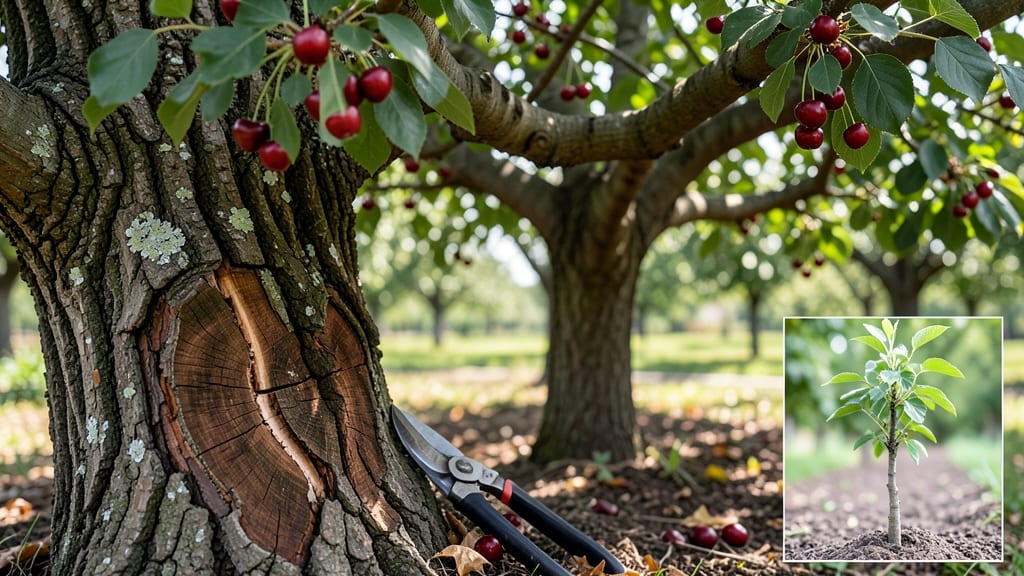
The lifespan of cherry trees ranges from 25 to 50 years, with sour cherry varieties potentially living over 100 years when properly maintained, while sweet cherries often show decline after 30-40 years. Dwarf varieties tend to have shorter lifespans but produce fruit more quickly.
The lifespan of cherry trees varies dramatically depending on the variety and growing conditions.
Sour cherries (like Montmorency) often outlive their sweet counterparts due to stronger disease resistance and hardier genetics. 🌳 Climate plays a huge role too—trees in cooler regions with well-drained soil consistently thrive longer than those in hot, humid areas.
I've seen neglected trees live barely 15 years, while meticulously cared-for specimens in optimal conditions can easily surpass 60 years.
What's fascinating is how rootstock selection affects longevity. Dwarf varieties grafted onto semi-dwarf rootstock may live 20-30 years but produce fruit in just 3-5 years—making them ideal for small properties. Meanwhile, full-size trees require more space but can become century-old giants with consistent pruning and pest control.
The key difference lies in their genetic growth patterns and how they respond to environmental stressors.
💡 In This Article
- Factors Affecting Cherry Tree Longevity by Variety
- Extending Your Cherry Tree’s Productive Years
Factors affecting cherry tree longevity by variety
The genetic foundation of a cherry tree determines its lifespan more than any other factor. Sweet cherries (Prunus avium) typically have a shorter productive life—around 30-40 years—because they're more susceptible to fungal diseases like brown rot (Monilinia fructicola) and bacterial canker (Pseudomonas syringae).
These pathogens exploit the tree's thinner bark and softer wood structure, accelerating decline. Sour cherries (Prunus cerasus), however, often live 50-100+ years due to their thicker bark and natural resistance to many common pathogens.
Climate plays a crucial role in this lifespan divide. Sweet cherries thrive in USDA Zones 5-7 with cold winters (20-30°F chilling hours) to break dormancy properly, but heatwaves above 90°F stress them, reducing their vigor.
Sour cherries adapt better to Zone 4-8 conditions and handle wider temperature fluctuations. The Montmorency variety, for example, has been documented living over 120 years in Michigan's harsh winters—proof of its hardy genetics. 🌿
Rootstock selection dramatically alters lifespan expectations. Dwarf varieties grafted onto Gisela 5 or Gisela 6 rootstocks may reach 20-30 years but produce fruit in just 3-5 years, while full-size trees on Mahaleb rootstock can exceed 60 years.
The rootstock's disease resistance and soil adaptability directly impact how well the tree ages. For instance, Mahaleb rootstock helps trees tolerate poor, rocky soil—common in many orchards—which extends their productive life compared to trees struggling with nutrient deficiencies.
Tree structure also matters. Sweet cherries develop a more open canopy that allows better air circulation, reducing fungal infections, but this same structure makes them more vulnerable to wind damage. Sour cherries grow denser canopies that protect against some pests but require more aggressive pruning to maintain health.
The Stella sweet cherry variety, for example, often lives 10-15 years longer than Bing cherries because its branches are naturally stronger and less prone to splitting under fruit weight.
Seasonal stress compounds these factors. Late spring frosts (28-32°F) can kill blossoms and reduce fruit set, weakening the tree over time. Sour cherries bloom later, avoiding this threat, while sweet cherries often suffer repeated blossom damage.
The cumulative effect of these seasonal challenges is why sweet cherries show visible decline after 30-40 years—their energy is constantly diverted to repairing frost damage rather than building structural resilience.
Consider these key variety comparisons:
- Sweet cherries (Prunus avium): 30-40 years lifespan; vulnerable to frost, disease, and structural weaknesses
- Sour cherries (Prunus cerasus): 50-100+ years lifespan; hardier genetics, better disease resistance
- Dwarf varieties: 15-30 years lifespan; faster fruiting but shorter overall life
- Full-size trees: 40-100+ years lifespan; longer investment but greater stability
The science behind these differences lies in their evolutionary adaptations. Sour cherries developed in colder European climates, where survival required tougher bark and disease resistance. Sweet cherries evolved in Mediterranean regions with milder winters, prioritizing fruit sweetness over structural durability. 🌍