
Trees
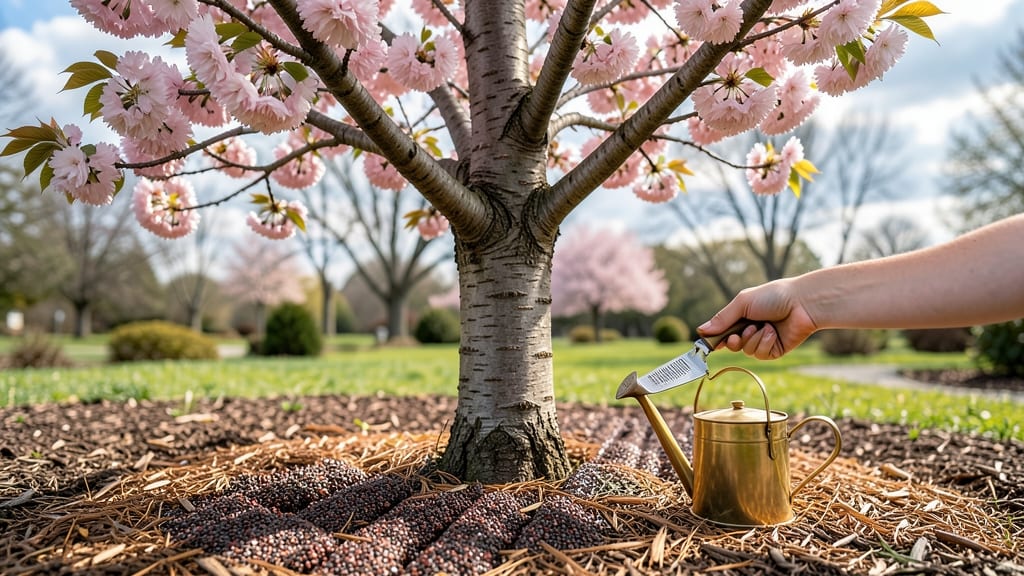
Yoshino cherry trees need a strategic fertilizer approach using balanced blends like 10-10-10 in early spring, then phosphorus-focused options like 5-10-5 in late spring to encourage vibrant blooms. Organic alternatives such as compost or fish emulsion work well when applied thoughtfully to prevent over-fertilization.
Yoshino cherry trees are heavy feeders, especially during their blooming season, so understanding their nutrient requirements is key. 🌸 The early spring feeding focuses on balanced growth, while the late spring shift to phosphorus supports flower development.
I've learned that overdoing it can lead to excessive leaf growth at the expense of blossoms—something I discovered the hard way with my first Yoshino tree! Organic options like compost or fish emulsion provide slow-release nutrients, which help maintain steady growth without the risk of burning roots.
Timing matters just as much as the fertilizer type. Applying nutrients too early can delay flowering, while waiting too long might limit the tree's ability to produce vibrant blooms.
I always mark my calendar for late winter to early spring for the first feeding, then again after the flowers fade but before new growth starts. This schedule aligns with the tree's natural cycle and ensures it gets the energy it needs when it needs it most.
💡 In This Article
- Understanding Yoshino Cherry Tree N-P-K Needs
- Seasonal Fertilizer Schedule for Yoshino Cherry Trees
Understanding Yoshino cherry tree N-P-K needs
The Yoshino cherry tree's nutrient needs are all about balance—especially between nitrogen, phosphorus, and potassium (N-P-K). Nitrogen is the growth engine, fueling those lush green leaves that make Yoshino trees so visually striking.
Without enough nitrogen, your tree might look pale or stunted, but too much can lead to excessive foliage at the expense of flowers.
Phosphorus, on the other hand, is the bloom booster—it helps develop strong roots and vibrant blossoms, which is why we prioritize it in late spring when the tree is preparing for its spectacular floral display.
Potassium plays a supporting role by enhancing disease resistance and overall tree vigor. A balanced 10-10-10 ratio provides equal parts of all three nutrients, which is ideal for early spring when the tree needs a general growth kickstart.
However, the real magic happens when we shift to a 5-10-5 blend in late spring. This phosphorus-heavy formula helps the tree allocate energy toward flower production rather than just leaf growth.
Think of it like giving your tree a "bloom budget"—it tells the plant, "Hey, let's make those flowers instead of just more leaves!" 🌸
What most people don't realize is how these nutrients work together at the cellular level. Nitrogen helps build chlorophyll, which is essential for photosynthesis—the process that converts sunlight into energy.
Phosphorus then takes that energy and directs it toward reproductive growth (flowers and fruit), while potassium acts as a quality control, ensuring the tree can handle stress from weather or pests.
This is why a sudden shift in fertilizer ratios can sometimes cause confusion in the tree—it's like changing the rules mid-game without explaining the new strategy.
For organic gardeners, compost or well-aged manure provides a slow-release version of these nutrients, mimicking nature's timing. The microbes in compost also help break down nutrients into forms the tree can absorb more easily.
I've found that a 2-3 inch layer of compost spread around the root zone in early spring gives my Yoshino tree a steady supply of nutrients without the risk of overfeeding. The key is consistency—Yoshino trees respond best to predictable nutrient availability rather than sudden spikes.
One common mistake is assuming more fertilizer equals better results. Over-fertilizing can lead to "fertilizer burn," where the roots become damaged from too much salt concentration in the soil.
This is why I always recommend following package instructions and splitting applications into two or three smaller doses rather than one big one. For example, instead of applying all 10 pounds of 10-10-10 fertilizer at once, I'll divide it into two 5-pound applications spaced two weeks apart.
This gives the tree time to absorb nutrients without overwhelming its system.
Here's a quick breakdown of what each nutrient does for your Yoshino cherry tree:
- Nitrogen (N): Promotes leaf and stem growth (think of it as the "green juice" for foliage)
- Phosphorus (P): Supports root development and flower production (the "bloom catalyst")
- Potassium (K): Enhances disease resistance and stress tolerance (the "bodyguard" nutrient)
The beauty of Yoshino cherry trees is how they reward careful attention to these ratios. When you get the N-P-K balance right, you'll see not just more flowers, but healthier trees that can handle seasonal changes with ease.
It's like giving your tree the perfect mix of vitamins and minerals—it shows in every leaf and blossom! 🌿