
Pests and Diseases
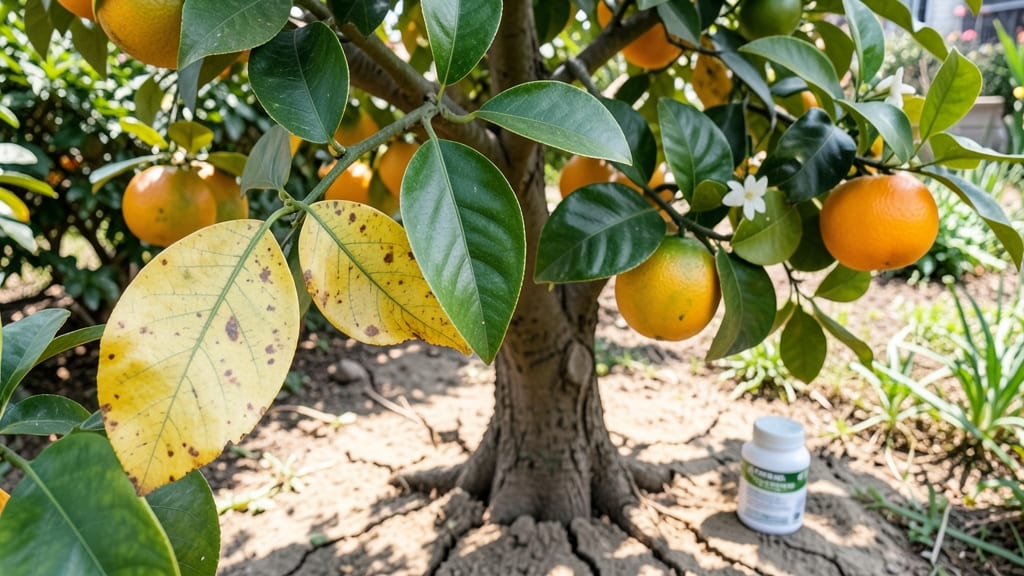
Your orange tree’s leaves turning yellow could mean three months of lost harvest if ignored—but it’s usually fixable fast. 🌱 The first step is identifying the pattern: are the yellow leaves clustered at the bottom, creeping upward, or appearing randomly?
That tells you exactly what’s wrong, from overwatering to nutrient starvation. Most people overwater without realizing it. Check the soil: if it’s soggy or smells like rot, you’re drowning the roots. Healthy soil should crumble when dry and hold moisture like a damp sponge—not a swamp.
A simple fix is adjusting your watering schedule to only when the top 2-3 inches feel dry. Nutrient deficiencies show up next. Yellowing between leaf veins? That’s classic iron deficiency (chlorosis), common in alkaline soils. A chelated iron supplement or compost tea works wonders within 4-6 weeks.
For pests, look for tiny webs or holes—aphids and spider mites love citrus and leave yellowed patches behind. Prevention is easier than cleanup: mulch to retain moisture, test your soil’s pH, and prune for airflow. The key is acting before the yellow spreads to new growth.
Let’s diagnose yours step by step.
Root Causes Behind Yellowing Leaves
When your orange tree’s leaves start turning yellow, it’s often a cry for help—whether from an unseen pest, a hidden nutrient deficiency, or environmental stress. Understanding the why behind the yellowing is the first step to saving your citrus tree.
Below, we break down the most common culprits, backed by science, so you can diagnose the issue like a pro.
Oranges thrive in well-draining soil, but when roots sit in soggy conditions, they suffocate. Yellowing leaves—especially on lower branches—are a classic sign of root rot, caused by fungal infections like Phytophthora. Overwatering also leaches nutrients, starving the tree of essential minerals.
Why it happens:
- Oxygen deprivation: Roots need air to breathe. Compacted or waterlogged soil blocks oxygen, triggering anaerobic bacteria that release toxic byproducts.
- Nutrient runoff: Excess water washes away nitrogen, potassium, and magnesium—key players in leaf chlorophyll production.
- Fungal growth: Fungi like Phytophthora thrive in wet conditions, clogging root pores and preventing water/nutrient uptake.
Actionable fix: Test your soil’s drainage by digging a hole—if water pools after 30 minutes, amend with perlite or sand. Water deeply but infrequently, and ensure pots have drainage holes.
While orange trees love sunlight, intense heat waves or sudden exposure (like moving a potted tree outdoors) can scorch leaves. Yellowing often starts as bronzing or crispy edges, especially on leaves facing west or south.
Why it happens:
- Photosynthesis overload: Too much UV radiation damages chloroplasts (the leaf’s energy factories), halting chlorophyll production.
- Water loss spike: Heat increases transpiration (water evaporation), causing cellular dehydration and leaf death.
- Oxidative stress: Excess light generates harmful free radicals, breaking down leaf pigments.
Actionable fix: Provide afternoon shade (30–50% shade cloth works) during heatwaves. Mulch the root zone to retain moisture, and avoid fertilizing during extreme heat—it accelerates stress.
Yellowing leaves with spots, lesions, or a greasy sheen often signal fungal or bacterial invaders. Common offenders include:
- Citrus greening (HLB): A bacterial disease spread by psyllids, causing mottled yellowing and stunted growth.
- Anthracnose: Fungal spots with yellow halos, thriving in humid conditions.
- Root rot (Fusarium or Verticillium): Yellowing spreads upward as roots decay.
Why it happens:
- Pathogen invasion: Microbes enter through leaf wounds or roots, disrupting nutrient transport.
- Clogged xylem: Fungi like Phytophthora block water-conducting vessels, causing wilting and yellowing.
- Toxin release: Bacteria like Xylella fastidiosa (citrus greening) produce toxins that scramble leaf function.
Actionable fix: Prune infected branches 1 inch below lesions, sterilize tools with rubbing alcohol, and apply copper fungicide (for bacterial issues) or neem oil (for fungal spots). For citrus greening, consult a local extension office—there’s no cure, but early removal limits spread.
Yellowing leaves often reveal what’s missing from your tree’s diet. Here’s how to decode the clues:
| Symptom | Likely Deficiency | Why It Causes Yellowing |
|---|---|---|
| Yellow between veins (older leaves first) | Nitrogen (N) | Chlorophyll production halts; leaves can’t photosynthesize. |
| Yellow edges or tips (young leaves) | Potassium (K) | Cell membrane integrity weakens; leaves lose water and nutrients. |
| Yellow veins with green patches | Magnesium (Mg) | Chlorophyll breakdown in older leaves; Mg is central to chlorophyll. |
| Yellow new growth with stunted shoots | Iron (Fe) or Zinc (Zn) | Micronutrients block chlorophyll synthesis in young leaves. |
Actionable fix: Test soil pH (citrus prefers 6.0–7.0; deficiencies worsen in alkaline soil). Amend with:
- Nitrogen: Blood meal or fish emulsion (sprinkle around roots).
- Potassium/Magnesium: Epsom salt (1 tbsp/gallon water) or greensand.
- Iron/Zinc: Chelated micronutrients (apply foliarly if soil pH is high).
Tiny invaders like aphids, scale, or citrus leaf miners sap sap directly from leaves, causing yellowing, curling, or stippling. Their damage weakens the tree’s ability to transport nutrients.
Why it happens:
- Sap extraction: Pests like Diaphorina citri (psyllids) inject toxins while feeding, disrupting leaf metabolism.
- Honeydew buildup: Sticky residue from aphids blocks sunlight, encouraging sooty mold (a black fungal growth).
- Root feeding: Grubs or nematodes chew roots, reducing water/nutrient uptake.
Actionable fix:
- Blast pests off with water (aphids/scale).
- Apply neem oil or insecticidal soap (repeat every 7–10 days).
- Use systemic granules (like imidacloprid) for root pests—follow label rates.
- Introduce beneficial predators: Ladybugs (aphids) or nematodes (grubs).
Pro Tip: 💡 Yellowing leaves on one side of the tree? Check for environmental stress (e.g., windburn) or pest clusters on that side. Uneven yellowing often points to localized issues.
Quick Fixes for Orange Tree
Now that you’ve pinpointed the likely cause behind your orange tree’s yellowing leaves, it’s time to take action! Here’s a straightforward, step-by-step guide to help you revive your tree and prevent future issues.
Signs: Yellowing leaves, soggy soil, or roots sitting in water.
How to Fix It: 🔥 Stop Watering Immediately – Let the soil dry out completely before watering again. 🍳 Check Your Pot’s Drainage – If your orange tree is in a container, ensure it has drainage holes. If not, repot it into one with proper drainage. 👨🍳 Improve Soil Aeration – Mix in perlite, sand, or compost to help water drain better. 🥘 Repot if Needed – If roots are waterlogged, gently remove the tree, trim any mushy roots, and repot in fresh, well-draining soil.
Prevention Tip: 💡 Water only when the top 1-2 inches of soil are dry, and avoid letting your tree sit in saucers of standing water.
Signs: Yellowing leaves with crispy edges, wilting, or sunburnt patches.
How to Fix It: 🔥 Provide Partial Shade – Move your tree to a spot with morning sun and afternoon shade, or use a sheer curtain to filter harsh rays. 🍳 Water Deeply & Frequently – During heatwaves, water in the early morning to reduce evaporation. 👨🍳 Mulch the Soil – Apply a 2-3 inch layer of mulch to retain moisture and cool the roots. 🥘 Avoid Fertilizing in Heat – Hold off on fertilizing until temperatures drop—it can stress the tree further.
Prevention Tip: 🌡️ Gradually acclimate young trees to full sun over a few weeks to avoid shock.
Signs: Yellowing leaves with holes, sticky residue, or fungal spots.
🔪 Pest Infestation (Aphids, Scale, Spider Mites)
How to Fix It: 🔥 Spray with Soapy Water – Mix 1 tsp mild dish soap in 1 quart of water and spray affected areas. 🍳 Introduce Beneficial Insects – Ladybugs or lacewings can help control pests naturally. 👨🍳 Use Neem Oil – Spray neem oil (1 tsp per quart of water) to suffocate pests and prevent regrowth. 🥘 Prune Infested Branches – Remove heavily damaged leaves and dispose of them away from the tree.
🍄 Fungal Issues (Root Rot, Leaf Spot)
How to Fix It: 🔥 Trim Affected Leaves – Cut off yellow or spotted leaves to stop the spread. 🍳 Apply Fungicide – Use a copper-based or sulfur fungicide as directed. 👨🍳 Improve Air Circulation – Thin out dense foliage to reduce humidity around the tree. 🥘 Sterilize Tools – Clean pruners with rubbing alcohol to prevent spreading spores.
Prevention Tip: ✨ Keep your tree’s environment clean—remove fallen leaves and debris regularly.
Signs: Yellowing leaves with green veins (iron/chlorosis) or stunted growth.
How to Fix It: 🔥 Test Your Soil – Use a soil test kit to confirm deficiencies (iron, nitrogen, magnesium). 🍳 Apply Chelated Iron – For chlorosis, use an iron supplement like iron sulfate or chelated iron. 👨🍳 Use Organic Fertilizer – Switch to a balanced citrus fertilizer (6-6-6 or 8-3-9) and apply every 4-6 weeks. 🥘 Add Epsom Salt – For magnesium deficiency, dissolve 1 tbsp of Epsom salt in a gallon of water and spray the leaves.
Prevention Tip: 📊 Fertilize in early spring and avoid overdoing it—too much can burn roots.
Signs: Sudden yellowing after cold snaps or drafts.
How to Fix It: 🔥 Move Indoors (Temporarily) – If your tree is in a pot, bring it inside near a sunny window. 🍳 Use Frost Cloth – Cover young trees with frost cloth if nighttime temps drop below 30°F. 👨🍳 Avoid Drafts – Keep potted trees away from AC vents, heaters, or open windows. 🥘 Water Before Cold Snaps – Hydrated trees handle cold better than dry ones.
Prevention Tip: 🎯 Gradually harden off trees before winter to build cold tolerance.
Final Thought: Most yellowing issues are fixable with the right care! Monitor your tree closely, and don’t hesitate to adjust your approach if symptoms persist. With patience and consistency, your orange tree will bounce back—and you’ll be rewarded with lush, green foliage and sweet fruit. 🍊✨
Frequently asked questions
Why do older leaves turn yellow first?
Older leaves yellow first because your orange tree prioritizes nutrients for new growth. When stressed, it "recycles" nutrients from older leaves to keep younger ones alive. This is normal aging, but if it spreads rapidly or affects new leaves, check for nutrient deficiencies like nitrogen or magnesium.
Can I save my tree if half the leaves are yellow?
Yes, but act fast! If only half are yellow and the tree still has green leaves, it’s likely recoverable. Focus on fixing the root cause (watering, pests, or nutrients). For severe cases, prune the worst yellowed branches to redirect energy to healthy growth. Most trees bounce back within 4-8 weeks with proper care.
Is yellowing normal in winter?
Some yellowing is normal in winter due to reduced sunlight, but excessive drop-off signals stress. Cold snaps can cause shock, while dry indoor air (for potted trees) accelerates leaf loss. Keep your tree in a bright, draft-free spot with consistent moisture—water when the top 1 inch of soil feels dry.
Why are my leaves yellow but still attached? Yellow leaves that stay attached (rather than falling) usually indicate nutrient deficiencies or pest damage. Check for:
- Yellow between veins: Likely iron or magnesium deficiency.
- Yellow edges/tips: Potassium deficiency or overwatering.
- Sticky residue: Aphids or scale insects.
Prune affected leaves to help the tree focus on new growth.
How do I know if my tree has root rot?
Look for these signs: yellowing leaves starting at the bottom, mushy black roots, and soil that smells foul. Gently dig near the base—healthy roots are firm and white, while rotten roots are slimy and brown. If confirmed, stop watering immediately, trim affected roots, and repot in fresh, well-draining soil.