
Plants
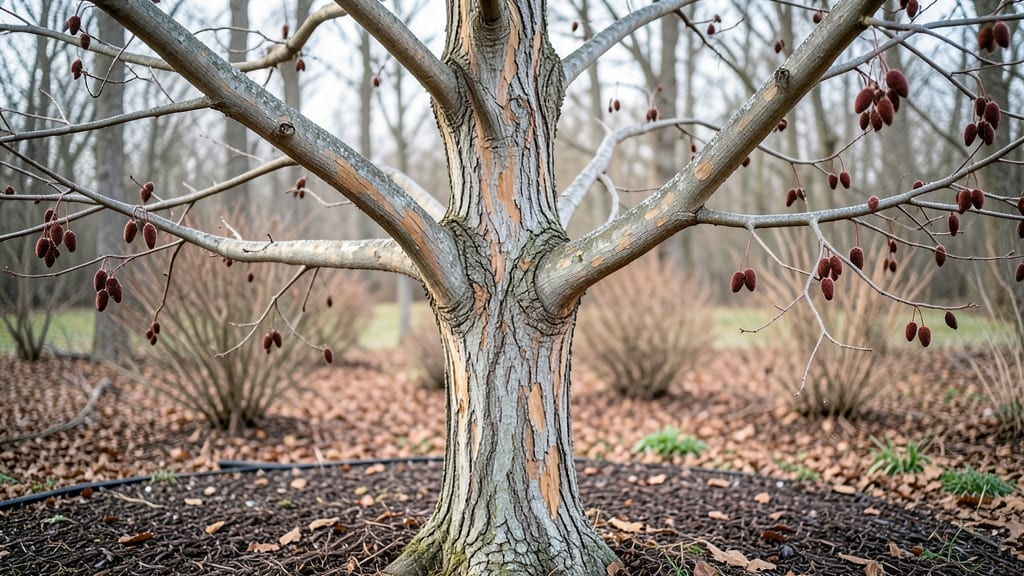
A dogwood tree in winter looks like it has sleek, grayish-brown bark with tiny diamond-shaped pores, paired with its signature zigzagging branches and tight clusters of buds. The horizontal spread of its limbs and bare branches make it stand out among other leafless trees.
A dogwood tree's winter appearance is all about its textured bark and branch architecture.
The bark's smooth surface with those distinctive diamond-shaped lenticels (tiny pores) acts like nature's fingerprint, while the buds appear in tight clusters along the branches. 🌳 What sets it apart from maples or serviceberries is how those branches zigzag outward in a horizontal pattern, creating that classic "spreading" shape even when bare.
This winter silhouette is so recognizable that experienced gardeners can often ID dogwoods just by looking at their bare branches.
In colder climates, the bark may darken slightly, but those lenticels and bud clusters remain the key identifiers. If you're comparing it to redbuds or hawthorns, watch for the dogwood's more slender branches and the way its buds sit close together rather than spaced out.
The absence of leaves in winter actually makes these features easier to spot!
💡 In This Article
- Identifying Dogwood Bark Patterns and Buds
- Winter Dogwood Tree Comparison Guide
Identifying dogwood bark patterns and buds
The dogwood's winter bark is one of its most distinctive features, with a smooth, grayish-brown surface that feels almost silky to the touch. Those tiny diamond-shaped lenticels—horizontal slits about 1/16-inch wide—are actually porous openings that allow gas exchange.
They form in a pattern that resembles a string of tiny diamonds along the trunk and branches, creating a visual texture that's unique among deciduous trees. 🌳 This bark pattern develops as the tree matures, becoming more pronounced after 5-10 years of growth.
What makes these lenticels so special is their arrangement: they follow the tree's horizontal growth rings, creating a subtle but consistent pattern. In contrast, maple trees have more irregular bark with deeper fissures, while serviceberries develop scaly bark that peels in thin layers.
The dogwood's smoothness persists even in harsh winters, though older specimens may develop slight ridges. These lenticels aren't just decorative—they're functional, helping the tree regulate moisture and temperature during cold months.
The buds are another key identifier, appearing in tight clusters of 2-5 buds per stem, often paired or in small groups. Each bud is oval-shaped, about 1/8-inch long, with a slightly pointed tip that gives them a distinctive look.
These buds sit close to the branch, unlike redbuds which have larger, more spaced-out buds. The zigzagging branch pattern emerges from these bud clusters, with each new growth segment creating that signature horizontal spread. This branching habit is what gives mature dogwoods their classic rounded shape.
Here's how to spot the differences in winter:
- Dogwood: Smooth bark with diamond lenticels, buds in tight clusters, branches zigzag horizontally
- Maple: Rougher bark with deeper fissures, buds spaced farther apart, branches more upright
- Serviceberry: Scaly bark that peels, buds more elongated, branches less horizontal
The combination of these features makes dogwoods instantly recognizable to trained eyes. Even without leaves, the bark's texture and the bud arrangement create a visual signature that's hard to confuse with other winter-bare trees. 🔍
What most people don't realize is how these features adapt to different climates. In colder regions, the lenticels may appear slightly more pronounced due to increased moisture regulation needs, while in warmer areas, the bark might maintain a more uniform grayish-brown color.
This adaptability is what helps dogwoods thrive across such diverse growing zones.