
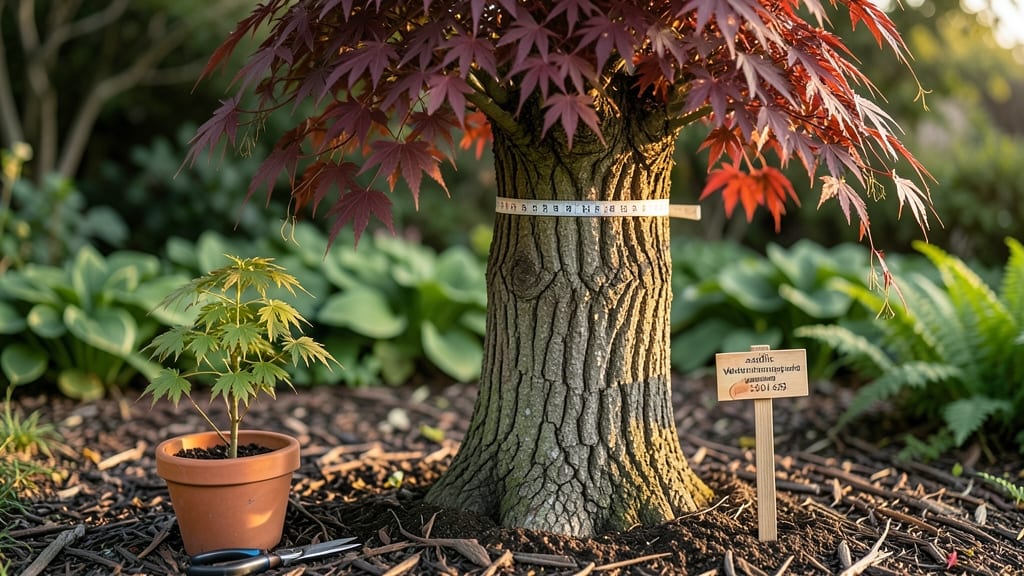
How Tall Japanese Maple Trees Grow: Height Ranges by Variety & Growth Habits

How To

How Tall Japanese Maple Trees Grow: Height Ranges by Variety & Growth Habits

A Japanese maple tree can grow how tall it does depending on the variety and growing conditions—ranging from 8 feet to towering 30 feet.

Wondering if a Japanese maple will dwarf your yard or become a towering shade giant? The height of these stunning trees varies dramatically by variety—some stay compact enough for containers, while others reach small-tree grandeur.

For example, the 'Bloodgood' variety typically matures around 20-25 feet, while the dwarf 'Seiryu' stays under 10 feet—perfect for small gardens or even large pots. The key to controlling height lies in pruning, sunlight exposure, and soil quality, all of which I’ll break down in detail.

Whether you’re planning a statement centerpiece or a delicate accent plant, understanding these growth habits will help you choose the right variety for your space—and keep it thriving for decades.

Dwarf
8-12 ft
Container friendly
Semi-Dwarf
12-18 ft
Most popular
Standard
20-30 ft
Full orchard size

Japanese maple height ranges by variety: dwarf to giant sizes explained

Japanese maples (Acer palmatum) are famous for their stunning foliage and graceful forms, but their mature heights can vary dramatically depending on the variety. Some stay small enough for containers or urban gardens, while others grow into small trees that dominate landscapes.

Choosing the right variety ensures your Japanese maple fits your space perfectly while meeting your design goals.

If you're planning your garden layout, knowing these height ranges helps you avoid overcrowding or wasted space. For example, a 'Bloodgood' can reach 20 feet tall, while a 'Shishigashira' stays under 6 feet.

Let’s break down the most popular varieties by size so you can pick the perfect fit for your yard.

⚠️ Pro Tip: Always check the mature height and spread of a variety before planting. Japanese maples grow slowly, but their final size is set by genetics—not pruning.

Variety Mature Height (ft) Spread (ft) Growth Rate Best For
'Bloodgood' 20-25 ft 15-20 ft Moderate Large gardens, focal points
'Emperor I' 15-20 ft 12-15 ft Slow Medium yards, shade trees
'Seiryu' 8-12 ft 6-8 ft Very slow Containers, small spaces
'Shishigashira' 6-8 ft 5-7 ft Slow Bonsai, patios, borders
'Crimson Queen' 15-20 ft 12-15 ft Moderate Specimen trees, shade
'Green Cascade' 6-10 ft 4-6 ft Slow Hanging baskets, vertical gardens
'Orangeola' 10-15 ft 8-10 ft Moderate Color accents, medium yards
'Viridis' 12-15 ft 10-12 ft Slow Shade gardens, woodland settings
'Koto-no-niwa' 6-8 ft 5-7 ft Very slow Containers, bonsai, small yards
'Sango-kaku' 15-20 ft 12-15 ft Slow Specimen trees, large landscapes
'Tamukeyama' 10-12 ft 8-10 ft Slow Small yards, patio trees
'Shishio' 8-10 ft 6-8 ft

Factors that control Japanese maple tree growth height (and how to manage them)

Your Japanese maple tree's height isn't just luck—it's a mix of genetics, sunlight exposure, pruning techniques, and even your soil composition. While some varieties naturally stay compact, others can soar to small-tree heights if given the right conditions.

Understanding these factors lets you guide your tree's growth, whether you want a container-friendly shrub or a statement landscape tree.

The first key factor is sunlight exposure. Japanese maples thrive in partial shade but can grow taller when exposed to morning sun. Too much harsh afternoon sun stresses them, slowing growth.

In shadier spots, they often stay smaller and bushier. For example, 'Bloodgood' may reach 20 feet in full sun but only 12 feet under tall shade trees.

Next, consider your pruning techniques. Strategic pruning isn't just for shaping—it controls height. Prune new growth in late winter to limit vertical expansion. Avoid heavy pruning in summer, as this can stimulate vigorous regrowth that makes your tree taller faster.

For container varieties like 'Seiryu', regular tip pruning keeps them at 6-8 feet even in pots.

Soil type plays a surprising role too. Well-draining, acidic soil (pH 5.0-6.0) promotes healthy growth, while clay-heavy or alkaline soil can stunt your tree's height. Amend with organic matter like compost to encourage strong root development, which supports upright growth.

In poor soil, Japanese maples often stay shorter and wider as they focus energy on survival.

🌱 Key Factors Controlling Japanese Maple Height

1 Variety: Dwarf types (e.g., 'Shishigashira') max at 8-12 ft; standard types (e.g., 'Bloodgood') reach 20-30 ft
2 Sunlight: Full sun = faster vertical growth; partial shade = compact shape
3 Pruning: Late-winter cuts limit height; avoid summer pruning
4 Soil: Acidic, well-draining soil = optimal growth; poor soil = stunted height
5 Climate: Warmer zones (USDA 7+) = faster growth; colder zones = slower height gain

Don't overlook climate zone considerations. Japanese maples grow fastest in USDA zones 6-8, where they can add 1-2 feet annually. In colder zones (5 or below), growth slows dramatically, keeping trees shorter and more compact.

For example, a 'Crimson Queen' in zone 7 might hit 15 feet in 10 years, while the same tree in zone 5 may only reach 10 feet in that time.

To manage height effectively, combine these factors. Plant dwarf varieties in partial shade with regular pruning and amended soil to keep them at your desired size. For standard types, use selective pruning to encourage horizontal branching rather than vertical growth.

Remember, the goal isn't to stunt your tree—it's to guide its natural growth while maintaining its health and beauty.

With the right approach, you can enjoy a Japanese maple that fits your space perfectly—whether that's a container on your patio or a graceful centerpiece in your garden. The key is patience and consistent care tailored to your tree's specific needs.

★★★★★4.9(10 reviews)
Categories How To