
Diseases
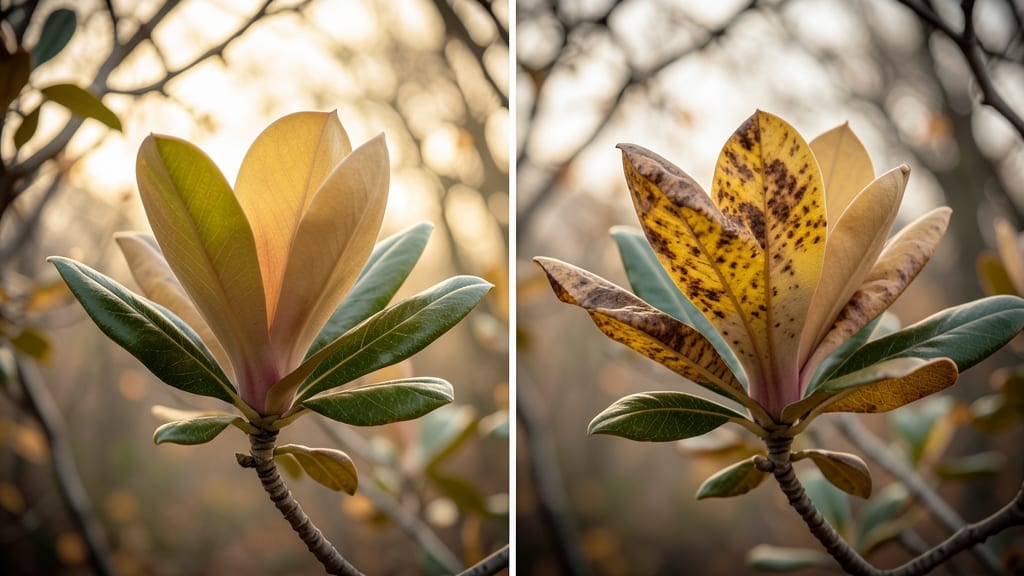
Fall is the perfect time to inspect your magnolia tree for early signs of disease before winter sets in. These 10 distinct leaf patterns—some healthy, some warning signs—will help you identify problems before they spread, ensuring your tree thrives for years.
Healthy Magnolia Leaves in Autumn
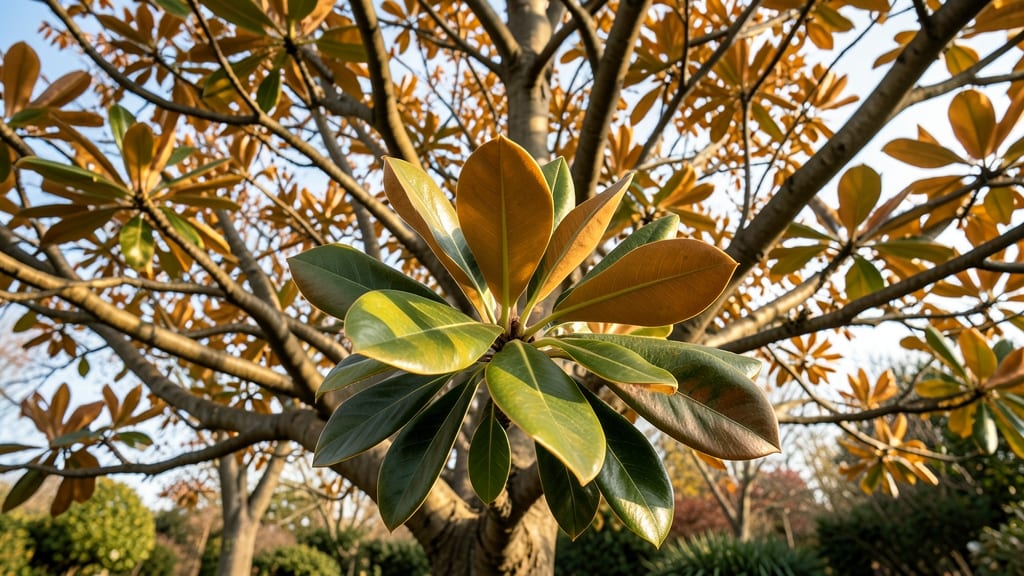
When your magnolia tree leaves turn a rich golden-brown in autumn, that’s not just seasonal beauty—it’s the healthy benchmark you should compare everything else to. These leaves should feel firm to the touch, with no soft spots or discoloration, and only transition from deep green to warm hues without blemishes.
This natural color shift happens as chlorophyll breaks down, revealing the anthocyanins and carotenoids that create those stunning fall tones. A healthy leaf will also retain its glossy texture and crisp edges, even as it prepares to drop. Use this as your baseline: any deviations—like spots, curling, or premature yellowing—could signal disease or stress.
For gardeners who want to catch problems early, this is your diagnostic starting point. A quick monthly inspection during fall ensures you spot issues before they become serious, giving your magnolia the best chance to thrive next season. 🌿
Magnolia Leaf Spot Fungus Symptoms
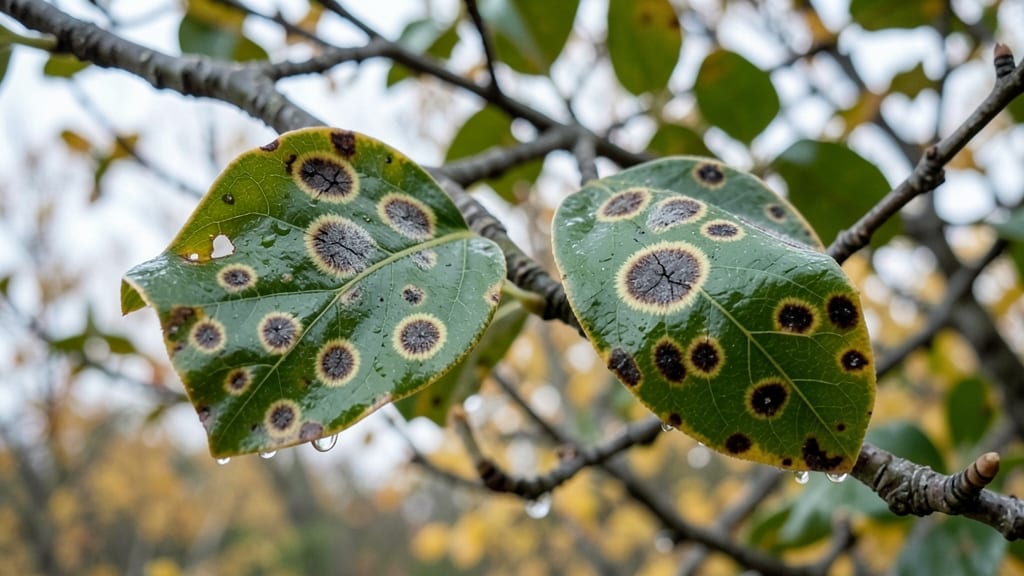
If your magnolia tree’s leaves are developing brown or black spots surrounded by yellow halos this fall, you’re likely dealing with leaf spot fungus—a common issue in wet, humid conditions. These spots often appear as circular marks that can expand rapidly if left untreated.
This fungal infection thrives in fall’s damp weather, and early action is key to preventing defoliation and tree stress. Prune and dispose of infected leaves immediately to stop spores from spreading, and apply a fungicide labeled for leaf spot (like copper or neem oil) for prevention. Keep the area around your tree well-drained to reduce moisture buildup.
Gardeners in humid climates should monitor their magnolias closely during fall rains. Catching this early means healthier leaves and a stronger tree come spring. 🌿
Powdery Mildew on Magnolia Foliage
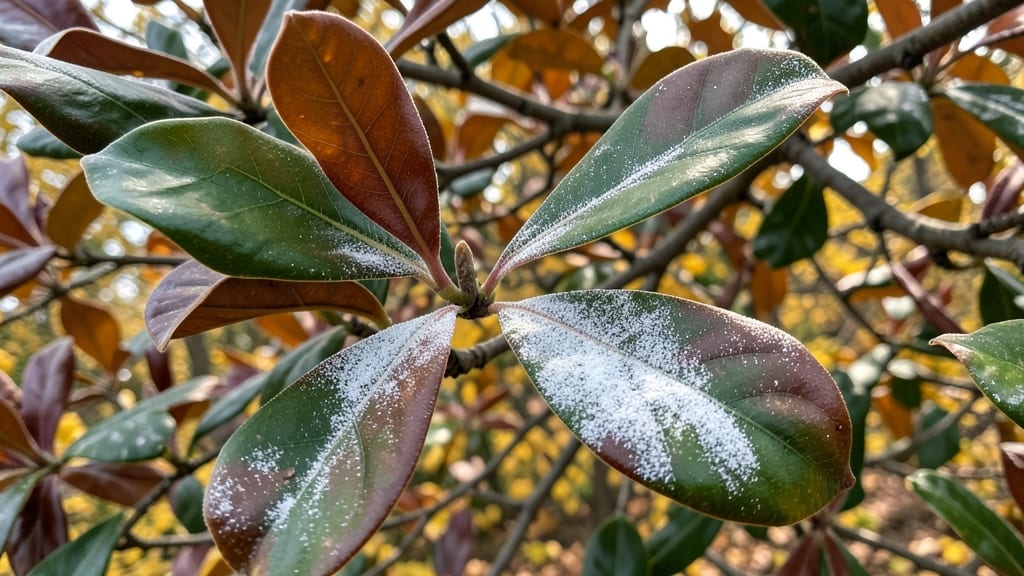
That fine, white powder dusting your magnolia leaves isn’t flour—it’s powdery mildew, a fungal foe that loves the humid fall air. Unlike healthy fall color changes, this fuzzy coating spreads quickly, blocking sunlight and weakening your tree before winter even arrives.
To stop it, prune infected leaves immediately and improve airflow by thinning dense branches. A weekly spray of baking soda solution (1 tsp per quart of water with a drop of dish soap) can deter new growth, while fungicides like neem oil provide stronger protection. Act fast—untreated mildew leads to stunted growth and premature leaf drop.
Gardeners in coastal or high-humidity regions should monitor magnolias weekly during fall’s damp spells. With early action, you can save your tree’s foliage—and its beauty—until next season. 💚
Magnolia Scale Insect Damage
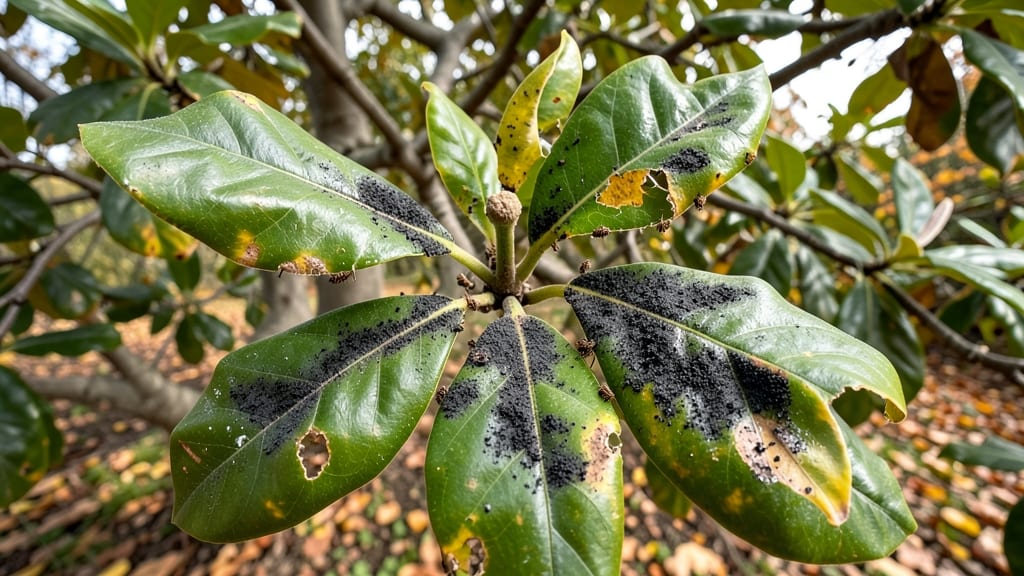
If your magnolia leaves look like they’ve been dusted with black sooty mold or feel sticky to the touch, magnolia scale insects are likely the culprit. These tiny pests suck sap from leaves, leaving behind a honeydew residue that attracts mold and weakens the tree over time.
Look for curled leaf edges, yellowing foliage, and a glossy, black fungal growth on the undersides of leaves—classic signs of scale infestation. Unlike fungal diseases, this issue requires insecticidal soap or horticultural oil applied in early fall before the pests mature. Prune heavily infested branches and dispose of them in sealed bags to prevent spread.
Gardeners in warm climates should monitor magnolias year-round, as scale thrives in mild winters. Early action can save your tree from long-term stress and defoliation. 💚
Anthracnose Fungus on Magnolia Leaves
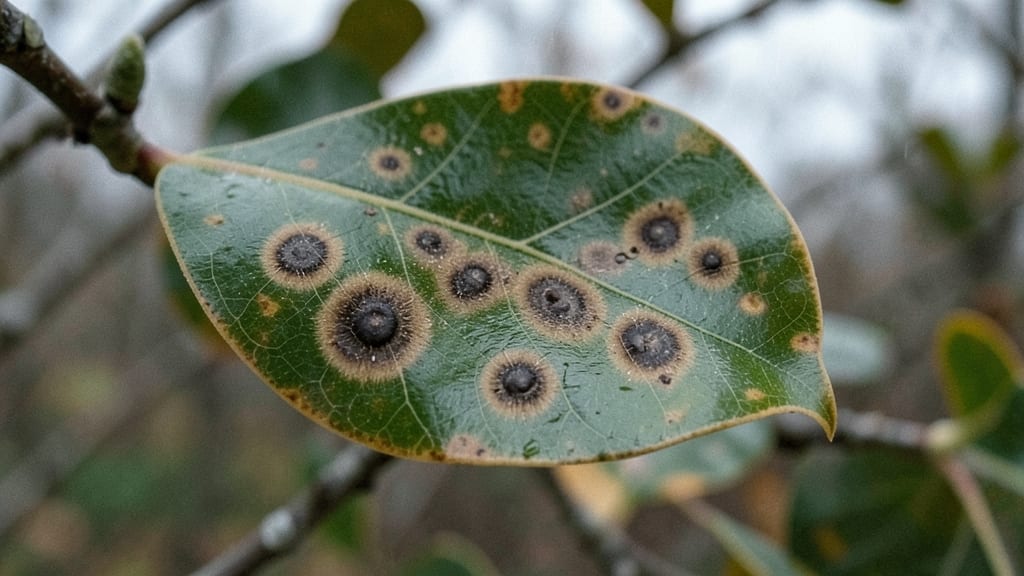
If your magnolia leaves develop dark, sunken spots with concentric rings this fall, you’re likely dealing with anthracnose fungus—a sneaky disease that thrives in cool, wet conditions. Unlike other leaf issues, these lesions often appear as if someone pressed a coin into the leaf, creating a distinct "target" pattern.
This fungus spreads rapidly in damp autumn weather, so prune infected leaves immediately using sterilized tools to prevent it from moving to healthy foliage. Focus on removing entire branches if the infection is severe, and dispose of them in the trash—not your compost bin. For stubborn cases, a copper fungicide applied in early fall can help protect next year’s growth.
Gardeners in humid climates or those with dense magnolia plantings should monitor their trees closely during fall rains. Early action keeps your magnolia’s canopy lush and disease-free. 🌿
Magnolia Leaf Blight Signs
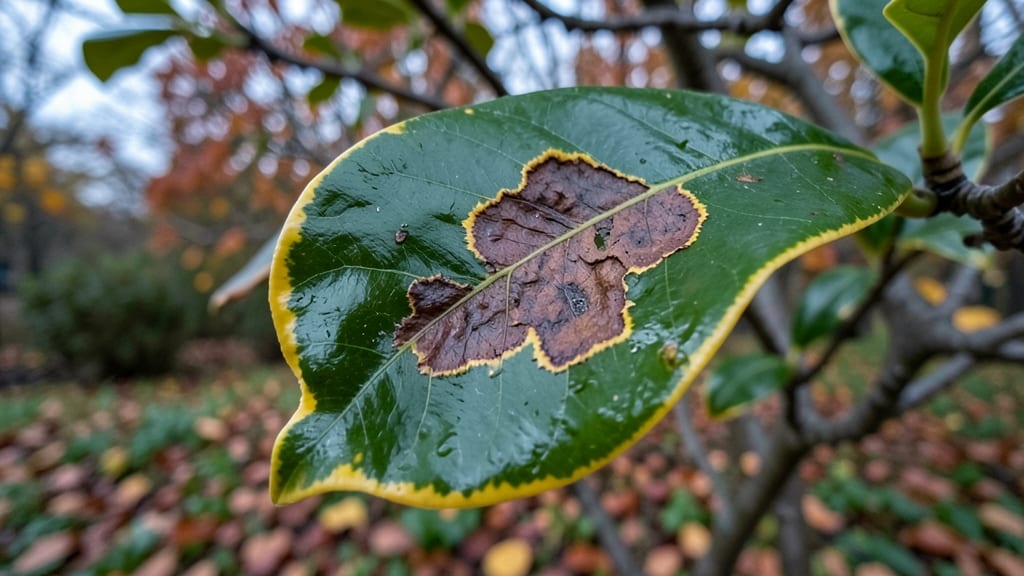
If your magnolia tree leaves are developing large, irregular brown patches with yellow margins, don’t assume it’s just fall stress—it could be leaf blight, a serious fungal infection that spreads quickly in damp conditions.
Unlike leaf spot or mildew, blight creates splotchy, uneven discoloration that often appears on lower branches first. The key difference? These patches don’t follow a circular pattern like fungal spots—they’re jagged and uneven, sometimes merging into larger dead areas. If left untreated, the disease can weaken the tree’s immune system, making it vulnerable to winter damage.
Act fast by applying a copper-based fungicide (like Bordeaux mixture) and pruning affected branches 12 inches below the damage. This disease thrives in fall humidity, so monitor your tree closely during rainy seasons. 🌿
Nutrient Deficiency in Fall Leaves
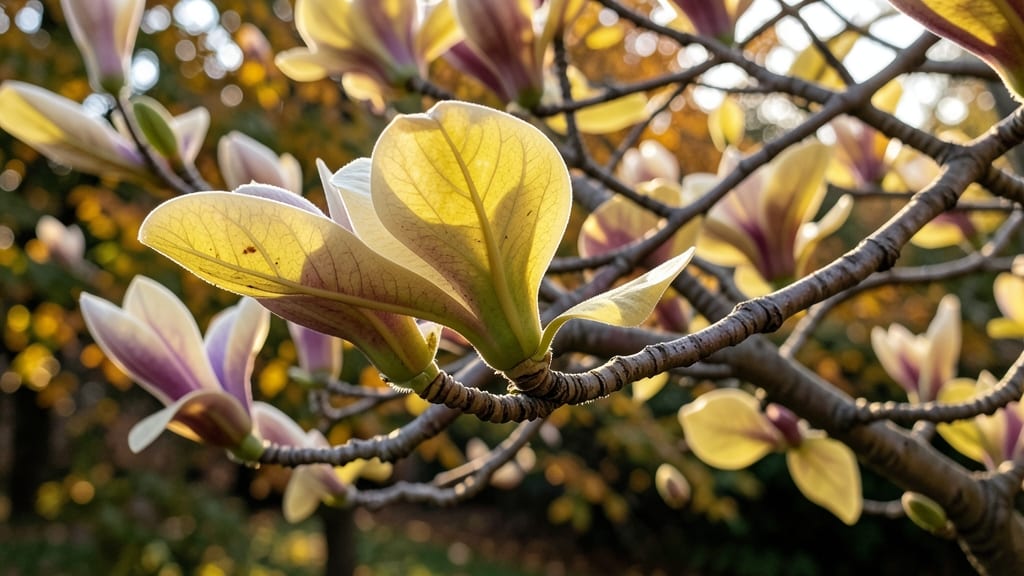
When your magnolia’s leaves turn yellow between the veins or develop purple undersides this fall, it’s not just seasonal color change—it’s a cry for help. These signs point to iron or magnesium deficiency, common in acidic or compacted soils where nutrients get locked away.
To fix this, start with a soil test to pinpoint deficiencies, then amend with chelated iron (for iron chlorosis) or Epsom salt (for magnesium). Mulching with compost improves soil structure over time, while avoiding over-fertilizing prevents further stress. Young magnolias and those in containers are especially vulnerable.
Don’t wait for bare branches—correcting deficiencies now ensures your tree stays vibrant next spring. 🌿
Magnolia Rust Disease Spots
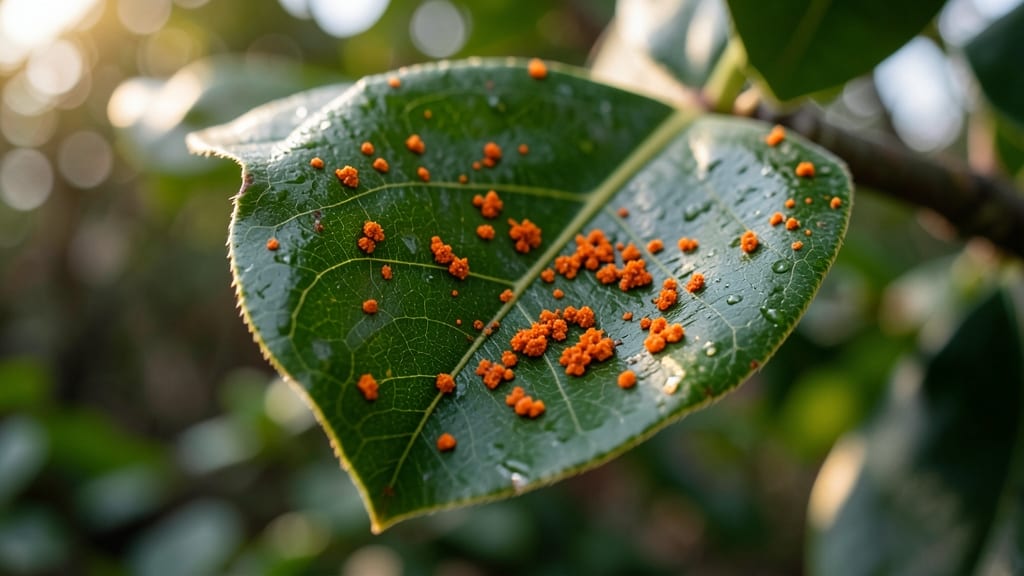
If you’ve ever flipped over a magnolia leaf expecting to see the usual glossy green and instead found bright orange pustules, you’ve spotted magnolia rust disease—one of the most contagious fungal threats to these prized trees.
These orange pustules appear on the undersides of leaves in late summer or fall, often after wet weather. The fungus spreads rapidly, causing premature leaf drop and weakening the tree. The key to stopping it? Remove infected leaves immediately and sterilize pruning tools with a 10% bleach solution or rubbing alcohol to prevent cross-contamination.
This disease is particularly tricky because it can overwinter on fallen leaves, so clean up thoroughly in autumn. Gardeners in humid climates or those with overhead watering systems should be extra vigilant—early action can save your magnolia from severe decline. 🌟
Winter Burn on Magnolia Foliage
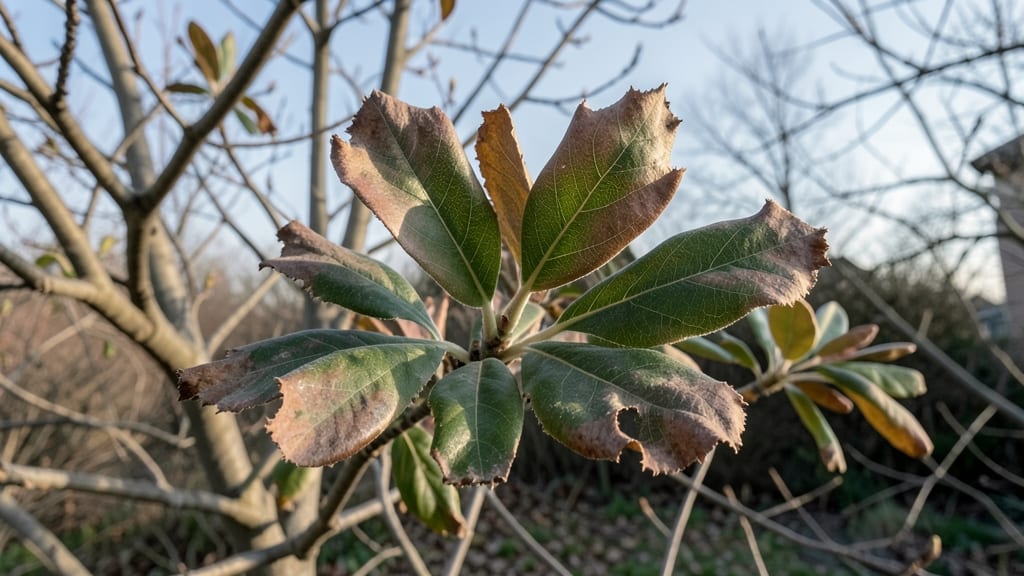
If your magnolia leaves are developing crispy, brown edges by late fall, you’re likely dealing with winter burn—a common but often misunderstood issue. Unlike diseases, this damage is purely environmental, triggered by harsh winds and dry air during cold snaps.
To prevent winter burn, focus on deep mulching (3-4 inches of organic mulch) to insulate roots and retain moisture. Water your tree deeply before the first hard freeze, and consider wrapping the trunk with burlap for extra protection against wind scorch. Young magnolias or those in exposed locations are most vulnerable.
This issue is especially frustrating for gardeners in USDA Zones 6-8, where sudden temperature drops are common. With proper care, your magnolia can bounce back fully by spring—just avoid fertilizing in late fall, as new growth is more susceptible to damage. 💪
Healthy vs. Diseased Leaf Comparison

When your magnolia’s leaves start shifting from green to golden-brown, how do you tell if it’s a natural fall transformation or a sneaky disease? A side-by-side comparison is your best tool—healthy leaves should have even color changes and firm edges, while diseased leaves often show uneven spots, curling, or premature browning.
Create a simple visual guide by snapping photos of both healthy and suspect leaves side by side. Look for abrupt color shifts (like black spots or white powder) or textures that differ from the rest of the tree. This method helps even beginner gardeners spot early signs before diseases like leaf spot or mildew take hold. Keep a notebook to track changes weekly.
This approach is especially helpful for urban gardeners with limited space—early diagnosis means fewer chemicals and healthier trees. A quick comparison could save your magnolia from winter stress! 🌟