
Pruning
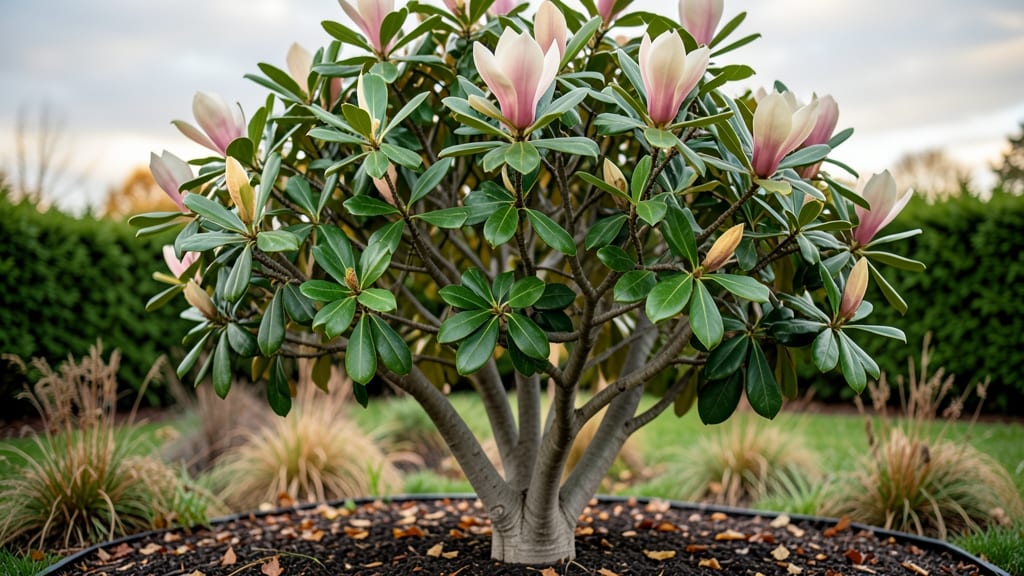
Fall is when your Jane magnolia tree decides next spring’s show will be spectacular—or just okay. ✨ The secret lies in pruning now, while the leaves are still on but before the first frost. I’ve pruned mine for years, and the difference in bloom size is night-and-day.
Start by removing any dead, diseased, or crossing branches first—those are obvious. Then focus on thinning the canopy by about one-third to let sunlight reach the center. The goal is to encourage strong new growth where next year’s buds will form.
My tree now bursts with rosy-pink blooms by April, thanks to this fall prep.
Timing matters: wait until late October or November, after the leaves have fully colored but before hard frost. A sharp pair of pruners and a clean cut at a 45-degree angle keep the wounds from inviting pests. You’ll see fresh, vibrant green growth in spring—proof the pruning worked.
This method works for any Jane magnolia, whether you’ve got a mature tree or a young one just starting to bloom. The key is patience—next year’s flowers are worth the effort now. Here’s how to do it right without overdoing it.
📚 In This Guide
- What you need
- Instructions
- Tips and common mistakes
- Wrapping up and next steps
What you need
- ● Pruning shears – Bypass pruners (sharp, 6-8" blade) for clean cuts on small branches.
- ● Loppers – 8-10" bypass or anvil type (for branches ½–2" thick).
- ● Pruning saw – Curved-tooth or folding saw for branches thicker than 2".
- ● Disinfectant – 70% isopropyl alcohol or bleach solution (1 part bleach : 9 parts water) to sterilize tools between cuts.
- ● Gloves – Heavy-duty, cut-resistant (magnolia thorns are no joke!).
- ● Ladder or step stool – Sturdy, extendable (if your tree is over 6–8 feet tall).
- ● Trash bags or bucket – For collecting pruned branches.
- ○ Marking twine or tape – Optional but helpful for flagging branches to remove.
- ● Hand sanitizer or wipes – For post-pruning clean-up.
- ● Pruning sealant – Only if sealing cuts over ½" thick (not always necessary for magnolias).
- ● Camera or phone – To document your tree’s shape before/after pruning!
- ● Safety glasses – If working near your face or eyes.
Instructions: prune your Jane magnolia for stunning spring blooms
Fall is the perfect time to shape your Jane magnolia—just a few strategic cuts now will reward you with bigger, healthier blooms next spring.
✂️ Step 1: Time Your Pruning for Optimal Healing
Wait until after your tree has finished dropping its last leaves but before hard frost sets in—typically 4-6 weeks after leaf fall. The ideal window is late October to early November when temperatures stay above 40°F during the day. Pruning too early leaves wounds exposed to disease, while pruning too late risks winter dieback.
Check the weather forecast and choose a dry, calm day. Wet conditions encourage fungal infections, and wind makes cuts harder to control. I like to prune on a Saturday morning when the air is still—you’ll see less sap bleeding and cleaner cuts.
🌿 Step 2: Remove Dead, Diseased, or Crossing Branches First
Start by scanning your tree for branches that are dead (no green bark when scraped), diseased (mushrooms, cankers, or oozing sap), or crossing (rubbing against others). Use sharp bypass pruners to make clean cuts just outside the branch collar—the swollen area where the branch meets the trunk. This ensures proper healing.
Don’t worry about the size of these cuts. Even large branches heal well if you remove them completely at the collar. I always work from the bottom up—this way, fallen branches won’t damage lower limbs. Toss diseased branches in the trash, not your compost pile.
☀️ Step 3: Thin the Canopy for Better Airflow and Light
Jane magnolias bloom on old wood, so you’re not shaping for form—you’re creating space. Remove about 20-30% of the smallest branches to open up the center. Focus on branches growing inward or downward that block sunlight from reaching the interior. These cuts encourage stronger growth on the outer branches where next year’s blooms will form.
Look for branches that are thinner than a pencil—these are the easiest to remove without harming the tree. Make your cuts at a slight outward angle just above an outward-facing bud. You’ll see new growth sprout from these buds in spring, filling in any gaps you created.
⏰ Step 4: Shape for Balance and Future Blooms
Step back and assess your tree’s natural shape. Jane magnolias have a graceful, rounded form—your goal is to enhance that without over-pruning. Remove any branches that disrupt the tree’s symmetry or grow straight upward (these are called "water sprouts" and rarely produce flowers).
For larger branches, use three cuts: the first undercuts the branch, the second makes the final cut just outside the collar, and the third removes the stub. Seal larger wounds (over ½ inch thick) with pruning sealant to prevent disease. Save smaller branches for next year’s pruning—they’ll heal on their own.
🪴 Step 5: Clean Up and Protect Your Tree
After pruning, rake up all fallen leaves and debris within a 10-foot radius of the tree. This reduces hiding spots for pests and fungal spores. Water the base of the tree deeply to help it recover from the stress of pruning. A 1-2 inch layer of mulch (like shredded bark) around the drip line keeps roots moist and protects against winter temperature swings.
Finally, give your tree a light spray of fungicide if your area has a history of anthracnose or other fungal diseases. I like to apply it in the late afternoon so the leaves have time to dry before evening. Your Jane magnolia will thank you with larger, showier blooms next spring—and fewer pests to contend with.
Tips & tricks for pruning your Jane magnolia
These simple strategies will help you prune with confidence and set up your tree for spectacular spring blooms.
Timing is Everything: The 4-6 week window after leaf fall is non-negotiable for healthy healing. I check my tree's leaf drop by gently scraping bark—if it's green underneath, it's not ready yet. Wait until daytime temperatures consistently stay above 40°F, but don't delay past early November. Early pruning exposes fresh wounds to fall rains, while late pruning stresses the tree before winter dormancy. Mark your calendar now!
Tool Prep Matters: Sharp bypass pruners are your best friend—dull blades tear bark and create jagged wounds that heal poorly. Before you start, wipe your tools with rubbing alcohol to prevent spreading disease between cuts. For branches thicker than your wrist, use a pruning saw with a fine-toothed blade to avoid splintering. I always carry a small bucket to collect debris and a spray bottle with water to clean tools between cuts on diseased branches.
Visual Cues for Perfect Cuts: When removing branches in Step 2, look for the branch collar—the swollen ridge where the branch meets the trunk. Your cut should be just outside this collar, at a slight angle following the branch's natural slope. For Step 3's canopy thinning, imagine sunlight streaming through the center—your goal is to create an open lattice that lets light reach all branches. The pencil-thin branches you're removing should have buds facing outward; make your cut just above these buds to encourage new growth in the right direction.
Seasonal Aftercare: That 10-foot cleanup radius is crucial—don't skip raking up fallen leaves and debris. I've seen anthracnose fungus overwinter in leaf litter just 6 inches from the trunk. After pruning, add your 1-2 inch mulch layer, but keep it clear of the trunk to prevent rot. For the fungicide application, I use a handheld sprayer with a fine mist setting—this gives even coverage without oversaturating the leaves. Apply when temps are above 50°F to prevent stress on the tree.
Pro Tips for Jane Magnolia Tree In Fall
- These simple strategies will help you prune with confidence and set up your tree for spectacular spring blooms.
- Timing is Everything: The 4-6 week window after leaf fall is non-negotiable for healthy healing.
- Tool Prep Matters: Sharp bypass pruners are your best friend—dull blades tear bark and create jagged wounds that heal poorly.
Frequently asked questions
Got questions about pruning your Jane magnolia for a stunning fall prep? You’re not alone!
Here are answers to the most common queries—so you can confidently shape your tree’s future blooms.
When is the best time to prune a Jane magnolia in fall?
The ideal window is late fall (November–early December), after leaves drop but before harsh winter sets in. Pruning too early risks stimulating new growth that won’t harden off before cold. Wait until temps dip below 40°F at night for safety. Pro tip: Avoid pruning after January—you’ll miss the late-winter dormancy window needed for next spring’s buds!
How much can I trim back my Jane magnolia in one go?
Stick to no more than 25% of the tree’s canopy per year to avoid stress. For a mature Jane, this might mean removing 1–2 feet of branches from the top or thinning out crowded limbs. Jane magnolias are forgiving, but aggressive cuts can delay—or even prevent—spring blooms. Focus on shaping and airflow over drastic reductions.
What if I prune too late? Will my magnolia still bloom next spring?
Pruning after late December won’t kill your tree, but it will reduce next year’s flowers since buds form during winter dormancy. If you’ve already missed the window, prioritize light shaping (removing dead/diseased wood) and avoid heavy cuts. Your Jane may still bloom, but expect fewer flowers. Next fall, plan ahead!
Can I use regular pruning shears, or do I need special tools?
For small branches (<1 inch thick), bypass pruners work great. Thicker limbs (1–2 inches) need loppers, and anything larger should be tackled with a pruning saw. Sterilize tools with rubbing alcohol between cuts to prevent disease spread. Sharp, clean tools = cleaner cuts = faster healing!
What if my Jane magnolia isn’t blooming well after pruning?
Several factors could be at play:
- Age: Young trees (under 5 years) may not bloom heavily yet.
- Light: Jane magnolias need 6+ hours of sun daily.
- Soil: Poor drainage or compacted soil stresses the tree.
- Over-pruning: Heavy cuts can divert energy from flowers.
Wrapping up and next steps
Fall is the perfect time to give your Jane Magnolia tree the care it needs to burst into show-stopping spring blooms! By pruning now, you’re setting the stage for vibrant flowers, healthier growth, and a stunning landscape.
Remember: timing, technique, and tools are key—so take your time and enjoy the process. 🌿
Ready to transform your tree? Grab your pruners, follow the steps, and watch your Jane Magnolia reward you with next year’s boldest blossoms. Happy pruning—your future spring will thank you!
Next step: Mark your calendar for late winter/early spring to admire the fruits of your labor! 🌸