
Diseases
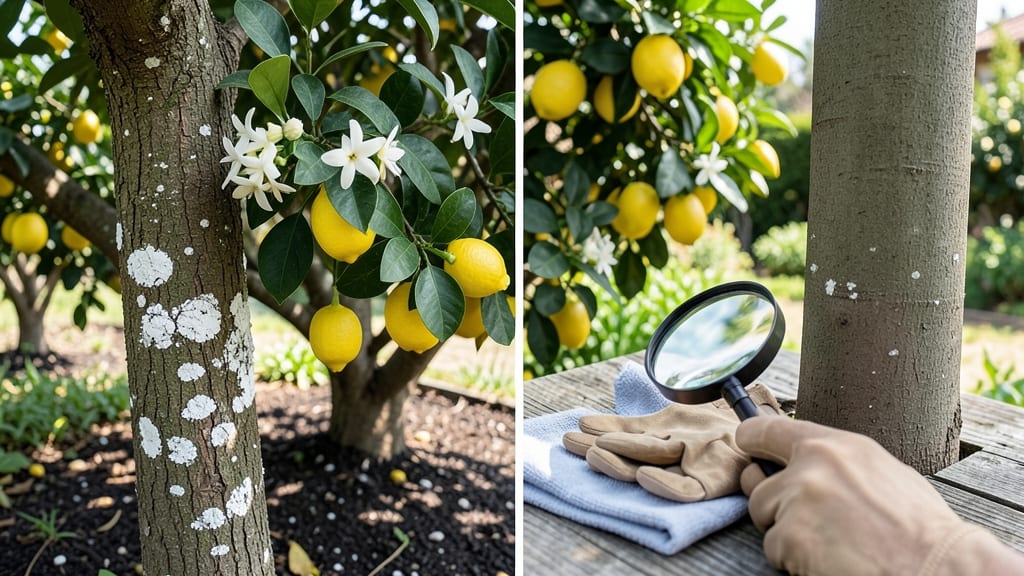
White spots creeping up your lemon tree trunk? 🌿 That chalky residue isn't just cosmetic—it's a fungal blight warning sign, and ignoring it risks losing your tree's health (and fruit).
I've battled this exact issue with my Meyer lemon, where powdery mildew turned a once-smooth trunk into a textured mess within weeks.
The culprit is usually powdery mildew or anthracnose, thriving in humid conditions and poor air circulation. You'll spot early signs as tiny white dots that spread like dust, but don't wait—scrubbing the trunk now prevents it from spreading to leaves and fruit.
The good news? This is one of those problems where early action makes all the difference.
Within a week of treatment, you'll see new growth pushing through clean, smooth bark again. The key is consistent care: prune for airflow, adjust watering habits, and apply the right fungicide (organic options work just as well when used correctly).
I'll show you exactly how to revive your tree's trunk and keep it blight-free for years.
This works for both potted and in-ground lemon trees, regardless of whether you're dealing with a young sapling or a mature fruit producer. The same principles apply to other citrus trees too—once you master this, you'll spot these signs early on any tree.
Root Causes of Trunk Spots
White spots on your lemon tree’s trunk aren’t just cosmetic—they’re often a cry for help from your citrus companion. Understanding the why behind these blemishes is the first step to restoring your tree’s health.
Below, we break down the most common culprits, backed by science, so you can diagnose—and fix—the problem with confidence.
Fungi are the #1 cause of white spots on tree trunks, thriving in warm, humid conditions. Two notorious offenders stand out:
- Powdery Mildew (Erysiphe spp. or Oidium spp.): - How it starts: Spores land on the trunk, germinate, and form a white, powdery coating (like dusting flour).
This fungus loves high humidity (70%+) and poor air circulation around the trunk. - Why it persists: The fungal hyphae (thread-like structures) penetrate the outer bark, weakening the tree’s defenses.
Over time, it can stunt growth or even kill branches if left unchecked. - Tell-tale sign: Spots often appear fuzzy or chalky, and may spread to leaves or fruit if ignored.
- Botryosphaeria Canker (Botryosphaeria spp.): - How it starts: This aggressive fungus enters through wounds (pruning cuts, storm damage, or insect bites).
It produces white to tan fungal mats under the bark, which later turn dark and sunken. - Why it’s dangerous: It blocks water/nutrient flow, leading to dieback (dead branches) or even tree death in severe cases.
Common in stressed or overwatered lemon trees. - Tell-tale sign: Look for raised, crusty spots that ooze gum-like sap when pressed.
💡 Pro Tip: Fungal spores spread via wind, water splashes, or tools. Always sterilize pruners with rubbing alcohol (70%+) between cuts to prevent cross-contamination!
Not all white spots are fungal—some are insect calling cards. These pests either feed on the trunk or lay eggs, leaving behind telltale marks:
- Scale Insects (Diaspididae or Coccidae families): - How they attack: These tiny, armored insects suction sap from the trunk, excreting a sticky substance called honeydew.
Fungi (like sooty mold) then grow on the honeydew, creating a white, fuzzy film. - Why it’s sneaky: Scale insects are hard to spot—they look like small bumps or white dots.
Heavy infestations weaken the tree, making it susceptible to other diseases. - Tell-tale sign: Check for sticky residue on the trunk or nearby leaves (ants love honeydew too!).
- Mealybugs (Pseudococcidae family): - How they attack: These fluffy, white pests cluster in crevices, feeding on sap and leaving behind white, cotton-like residue. Their waste also attracts sooty mold. - Why they spread fast: Mealybugs reproduce quickly and hitchhike on tools or clothing.
They thrive in dry, sheltered spots (like the base of the trunk). - Tell-tale sign: Look for white, waxy tufts that resemble cotton balls.
🔥 Warning: If you see ants trailing up the trunk, they’re farming scale or mealybugs for honeydew—act fast!
Sometimes, white spots aren’t caused by pathogens or pests but by environmental factors that stress the tree:
- Sun Scald: - How it happens: Lemon trees in hot, dry climates (or those suddenly exposed to intense sun after shade) develop white, cracked patches on the trunk.
The bark dies because it can’t protect the underlying tissue. - Why it’s tricky: Sun scald spots may look like fungal infections but are dry and papery, not fuzzy.
They often appear on the south or west side of the trunk. - Tell-tale sign: The affected area may peel or split in extreme cases.
- Chemical Burn:
- How it happens: Over-application of fertilizers, herbicides, or even well-intentioned sprays (like vinegar or harsh soaps) can bleach the trunk’s surface, leaving white, discolored patches.
- Why it’s preventable: Always follow label rates and water the trunk before applying chemicals to dilute concentration.
- Tell-tale sign: Spots are uniformly white and may look powdery or waxy, without texture.
- Physical Injury: - How it happens: Scrapes from lawnmowers, string trimmers, or even animal scratches expose the trunk to bacterial or fungal invaders.
The wounded area may turn white as the tree tries to compartmentalize the damage. - Why it’s critical: Always seal minor wounds with pruning sealant (like Tanglefoot Tree Wound Pruning Seal) to prevent infection.
🌡️ Climate Check: If your tree is in a windy or fluctuating-temperature zone, consider wrapping the trunk with burlap or tree guard to protect it from stress.
A malnourished tree is like a person with a weak immune system—more prone to infections. White spots can signal underlying issues:
- Calcium Deficiency: - How it shows up: Calcium helps strengthen cell walls. Without enough, the trunk may develop white, necrotic (dead) spots as cells collapse.
Common in alkaline soils or if the tree isn’t getting enough lime or gypsum. - Why it’s fixable: Conduct a soil test and amend with calcium nitrate or pelletized lime if needed.
- Magnesium Deficiency: - How it shows up: Magnesium is crucial for chlorophyll production.
While it primarily affects leaves (turning yellow), severe deficiencies can lead to white, crusty patches on the trunk as the tree struggles to transport nutrients. - Why it’s subtle: Often mistaken for fungal issues, but the spots are dry and scaly, not fuzzy.
💪 Boost Your Tree’s Diet:
- Test your soil every 2–3 years.
- Use a balanced citrus fertilizer (like 6-6-6 or 8-3-9) in early spring.
- Mulch with compost to improve nutrient absorption.
Fixing White Spots on Lemon Tree Trunks
Now that you’ve identified the cause of those pesky white spots on your lemon tree trunk—whether it’s fungal blight, powdery mildew, or a pest infestation—it’s time to take action! Here’s a step-by-step guide to restoring your tree’s health and preventing future outbreaks.
If the white spots are caused by fungal infections (like citrus scab or powdery mildew), act fast to stop the spread.
🔥 Step 1: Prune Infected Areas
- Use sterilized pruning shears (wipe with rubbing alcohol) to remove any branches or leaves with white spots.
- Dispose of infected plant material in the trash—do not compost it to prevent reinfection.
🍳 Step 2: Apply Fungicidal Sprays
- Neem oil spray (1 tsp neem oil + 1 tsp mild soap + 1 quart water) – Spray thoroughly on the trunk, leaves, and soil.
- Baking soda solution (1 tsp baking soda + 1 quart water + a few drops of dish soap) – Effective for powdery mildew.
- Commercial fungicide (like copper-based or sulfur sprays) – Follow label instructions for best results.
👨🍳 Step 3: Improve Air Circulation
- Thin out dense foliage to allow better airflow around the trunk.
- Avoid overhead watering—water at the base to keep leaves dry.
⏰ Step 4: Schedule Regular Maintenance
- Reapply fungicidal sprays every 7–14 days until the issue clears.
- Monitor for recurrence, especially after rain or high humidity.
If scale insects, mealybugs, or aphids are the culprits, these pests leave behind a waxy residue that looks like white spots.
🔪 Step 1: Scrape Off Infestations
- Use a soft brush or cloth dipped in soapy water to gently remove pests from the trunk.
- Focus on cracks, crevices, and under branches where they hide.
🌡️ Step 2: Apply Natural or Chemical Pesticides
- Insecticidal soap (mix 1 tbsp mild soap + 1 quart water) – Safe and effective for soft-bodied pests.
- Horticultural oil spray (like neem oil) – Smothers pests and disrupts their life cycle.
- Systemic insecticide (like imidacloprid) – For severe infestations (follow label carefully).
🎯 Step 3: Encourage Natural Predators
- Introduce ladybugs, lacewings, or parasitic wasps to control pests naturally.
- Plant marigolds or basil nearby to repel insects.
Once your tree is back in shape, prevent future outbreaks with these simple strategies:
✅ Keep the trunk clean – Remove dead bark or debris where fungi and pests love to hide. ✅ Water properly – Avoid wetting the trunk; water at the base in the early morning. ✅ Fertilize wisely – Over-fertilizing weakens trees; use a balanced citrus fertilizer (6-6-6 or 8-3-9). ✅ Inspect regularly – Check the trunk and leaves weekly for early signs of trouble. ✅ Boost tree strength – Ensure proper sunlight (6+ hours/day) and well-draining soil to help the tree fight off diseases.
| Cause | Immediate Fix | Prevention Tip |
|---|---|---|
| Fungal blight | Prune + fungicide spray | Improve airflow, avoid overhead watering |
| Powdery mildew | Neem oil or baking soda spray | Space plants, reduce humidity |
| Scale/mealbugs | Soapy water scrub + insecticide | Introduce predator insects |
With the right care, your lemon tree will bounce back stronger—and those white spots will be a thing of the past! 🍋💚
Frequently asked questions
Are white spots on my lemon tree trunk always a sign of disease?
Not necessarily! While fungal infections like powdery mildew are common causes, white spots can also result from sun scald (dry, papery patches on sun-exposed sides), chemical burns (from over-fertilizing or harsh sprays), or even physical injuries where bark has been scraped. Always check for texture—fungal spots feel fuzzy, while environmental spots are usually dry and smooth.
Can I use household items like vinegar or dish soap to treat white spots?
Yes, but with caution! A 1:10 vinegar-water mix (sprayed lightly) can help with fungal spots, but avoid concentrated vinegar as it may burn the bark. For pests, insecticidal soap (1 tbsp mild soap per quart of water) works well—just test a small area first. Never use harsh cleaners like bleach or undiluted soaps, as they damage the tree's protective layer.
How often should I check my lemon tree trunk for white spots?
Inspect your trunk every 2 weeks during growing seasons (spring-fall) and monthly in winter. Early detection is key—catching spots when they're small (pea-sized) makes treatment much easier. Pay extra attention after rain or high humidity, when fungal spores spread fastest. A quick visual check takes just 2 minutes and can save your tree!
Will removing white spots damage my lemon tree?
Not if done correctly! Gently scrubbing with a soft brush and soapy water removes fungal growth without harm. For stubborn spots, use a plastic scraper (never metal) to avoid cutting into healthy bark. The key is to sterilize tools between uses (rubbing alcohol works) and avoid damaging the underlying tissue—your tree's healing process will handle the rest.
Can I still harvest fruit from a lemon tree with white spots on the trunk?
Yes, but only if the spots are confirmed non-toxic (like environmental causes) and haven't spread to leaves or fruit. If fungal (like powdery mildew), wash fruits thoroughly before eating—spores rarely transfer to edible parts. For severe infections, wait until the tree is treated and new growth appears before harvesting. When in doubt, peel and cook lemons to ensure safety.