
Pests and Diseases
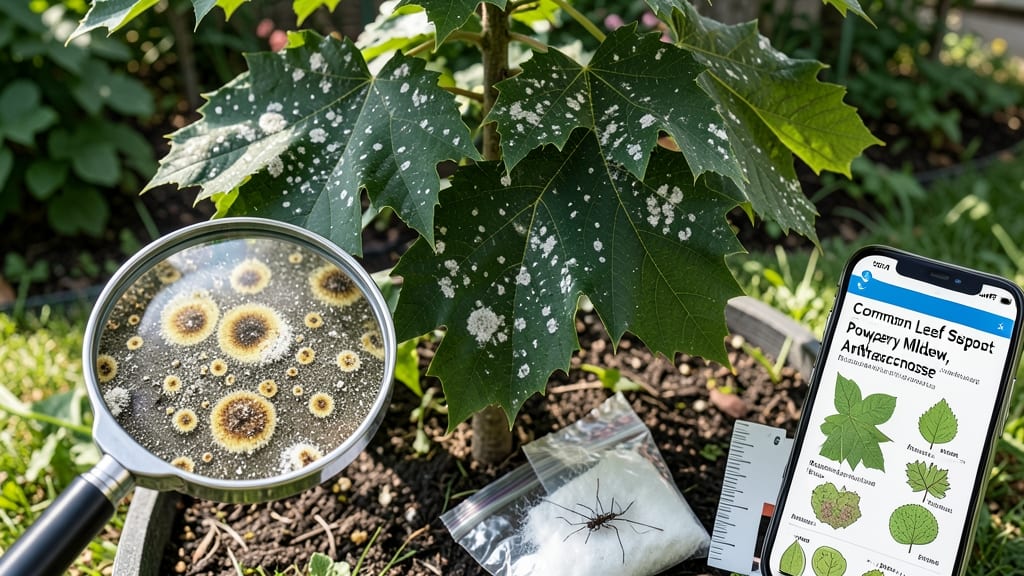
White spots on tree leaves mean your trees are silently screaming for help. 🌿 I’ve seen powdery mildew turn a lush maple into a ghostly white mess, and spider mites leave behind a fine webbing that looks like frost. The good news?
Most causes have simple fixes—if you act fast. These spots aren’t always fungal. Mineral deposits from hard water, pest damage from aphids or mites, or even environmental stress can mimic disease. The key is identifying whether the spots are powdery, sticky, or crusty—each points to a different solution.
A quick inspection with a magnifying glass saves weeks of frustration. You’ll learn to treat powdery mildew with baking soda spray, scrub off mineral deposits with vinegar water, and outsmart pests with neem oil. Prevention is even easier: adjust watering, improve airflow, and keep foliage dry.
Most trees bounce back in 2-4 weeks with the right care. Works for shade trees, fruit trees, and even houseplants. Let’s diagnose that mystery white mess before it spreads.
Understanding Leaf Spot Triggers
White spots on tree leaves aren’t just random blemishes—they’re often a cry for help from your plants, signaling stress, infection, or environmental abuse. Let’s break down the real culprits behind these unsightly marks, so you can diagnose (and fix!) the problem fast.
Fungi are the #1 cause of white spots on leaves, thriving in damp, humid conditions. These microscopic troublemakers release spores that land on leaves, germinate, and form powdery mildew, rust, or leaf spot diseases. Here’s how they strike:
- Powdery Mildew 🌬️ - Symptoms: White, powdery patches (like dust) on upper leaf surfaces, often on young growth. - Why it happens: Fungi like Erysiphe or Podosphaera love poor air circulation, high humidity (60%+), and shady, crowded plants.
Overhead watering spreads spores like wildfire. - Actionable clue: Check the underside of leaves—you’ll often see fuzzy, web-like growth.
- Leaf Spot Fungi 🎯 - Symptoms: Small, white or tan circular spots with dark borders (e.g., Cercospora or Septoria). - Why it happens: These fungi splash onto leaves via rain or overhead irrigation, then thrive in wet foliage.
Weakened trees (from drought, poor soil, or nutrient deficiency) are prime targets. - Actionable clue: Look for yellow halos around spots or premature leaf drop.
- Rust Fungi 🔥 - Symptoms: Bright orange, yellow, or white pustules (spore cases) on undersides, with white spots on top. - Why it happens: Rusts (Puccinia spp.) need two hosts (e.g., oak + sumac) and moist conditions to reproduce.
Wind spreads spores over long distances. - Actionable clue: Pustules often puff up when crushed (releasing spores).
Pro Tip 💡: "If spots appear overnight or spread rapidly, fungi are likely. Scrape a spot—if it leaves a white, powdery residue, it’s mildew!"
Not all white spots are fungal. Sometimes, your tree’s environmental conditions trigger physiological disorders—harmless but frustrating. Common triggers:
- Sun Scorch ☀️
- Symptoms: Irregular white or bleached patches on leaves exposed to direct afternoon sun, often on the edges or tips.
- Why it happens: Trees suddenly moved from shade to sun (or drought-stressed roots) can’t regulate water loss, causing cell death from heat stress.
- Actionable clue: Check one side of the leaf—scorch is usually one-sided (sun-exposed side only).
- Chlorosis (Nutrient Deficiency) 🌱 - Symptoms: White or pale yellow patches between leaf veins, often on new growth. - Why it happens: Lack of magnesium (center of chlorophyll) or iron/zinc (common in alkaline soil) blocks photosynthesis.
Over-fertilizing with nitrogen (but not micronutrients) worsens it. - Actionable clue: Test your soil—pH >7.0 locks out iron/zinc. Yellowing between veins? Magnesium deficiency (Epsom salt spray helps).
- Water Stress 💧 - Symptoms: White, crispy patches (like burned edges) from overwatering or drought. - Why it happens: Roots can’t supply enough water, causing plasmolysis (cell collapse).
Overwatering leads to root rot, which starves leaves of nutrients. - Actionable clue: Dig near the tree—soggy soil = overwatering; dry, cracked soil = underwatering.
Some white spots aren’t spots at all—they’re pest poop, eggs, or molted skins! Here’s who’s leaving their mark:
- Aphids & Whiteflies 🐛 - Symptoms: Sticky white residue (honeydew) + black sooty mold (a fungus growing on the honeydew). - Why it happens: These sap-suckers excrete honeydew, which attracts mold.
Their white, waxy coatings can also look like spots. - Actionable clue: Shake leaves over white paper—tiny white flies or aphids will appear.
- Spider Mites 🕷️
- Symptoms: Fine white webbing + speckled white/yellow stippling (tiny dots where mites pierce cells).
- Why it happens: These microscopic pests thrive in dry, dusty conditions and suck cell contents, leaving bleached "dots."
- Actionable clue: Hold a leaf up to light—mites look like tiny moving specks.
- Scale Insects 🛡️
- Symptoms: White, waxy bumps (like tiny shells) on leaves/stems.
- Why it happens: Scale insects anchor to leaves and secrete a protective wax layer, smothering the leaf beneath.
- Actionable clue: Gently scrape a bump—if it’s hard and doesn’t smear, it’s scale.
Sometimes, human error causes white spots. Watch for these red flags:
- Fungicide or Herbicide Drift 🚜 - Symptoms: Bleached, white patches along leaf edges or random splotches (like paint splatter). - Why it happens: Wind carries sprays from lawns or gardens, burning leaf tissue.
Even "organic" sprays can cause this. - Actionable clue: Check recent spray activity nearby. Spots often follow a gradient (heavier near edges).
- Floral Spray Residue 🌸
- Symptoms: White, powdery residue (like talcum powder) on leaves under flowering trees.
- Why it happens: Some trees (e.g., birch, apple, or lilac) release pollen or fine debris that sticks to leaves.
- Actionable clue: Wipe a leaf with a damp cloth—residue wipes off easily.
🎯 Key Takeaway: White spots = diagnose first, treat second. Start by checking:
- Leaf texture (powdery = fungus; crispy = stress).
- Location (underside = rust; edges = scorch).
- Recent changes (new fertilizer? moved tree? rain?).
Next up: How to Treat White Spots—because knowing the cause is half the battle!
Fixing White Spots on Foliage
White spots on tree leaves can feel like a mystery, but the good news? Most issues have straightforward fixes—once you know the culprit. Below, we’ve mapped out practical solutions for each common cause, from quick remedies to long-term prevention.
Grab your gardening gloves, and let’s restore your trees to their lush, healthy glory!
Fungi thrive in damp, shady conditions and spread like wildfire if left unchecked. Here’s how to stop the spread and heal your tree:
🔥 Step 1: Prune for Better Airflow 🌬️
- Remove infected leaves (sterilize pruners with rubbing alcohol between cuts).
- Thin out dense branches to improve sunlight and airflow—fungi love stagnant, humid spots.
- Pro tip: 💡 Prune in the early morning when humidity is lower to reduce spore dispersal.
🍳 Step 2: Apply Fungicidal Treatments 🛡️
- Baking soda spray (1 tsp baking soda + 1 quart water + a drop of dish soap) for mild cases.
- Neem oil (1 tbsp neem oil + 1 quart water + surfactant) for organic control—spray both sides of leaves and repeat every 7–10 days.
- Copper-based fungicides (like copper sulfate) for severe infections—follow label instructions carefully.
🌡️ Step 3: Adjust Growing Conditions 🌧️☀️
- Water at the base (not overhead) to keep foliage dry.
- Space trees properly (3–6 feet apart, depending on the species) to prevent overcrowding.
- Mulch around the base (2–3 inches of organic mulch) to regulate soil moisture and temperature.
Tiny pests can leave behind sticky residue or white webbing—here’s how to evict them for good:
👨🍳 Step 1: Blast Them Off 💦
- Spray with water (a strong jet from a hose dislodges aphids and mites).
- Use insecticidal soap (1.5 tbsp soap + 1 quart water) for a gentle but effective kill.
- For stubborn infestations, try horticultural oil (apply in early spring or fall to avoid harming beneficial insects).
🔪 Step 2: Introduce Predators 🐞🐝
- Ladybugs and lacewings devour aphids—buy them online or attract them with native plants like dill or fennel.
- Release parasitic wasps (for scale insects) from garden centers.
⏰ Step 3: Monitor and Repeat 📅
- Check leaves weekly for new pests—early action prevents full-blown invasions.
- Remove heavily infested leaves and dispose of them in a sealed bag.
Sometimes, white spots aren’t a disease—they’re a sign of environmental harm. Here’s how to reverse the damage:
🌞 Step 1: Shield from Harsh Sun 🌿
- Gradually acclimate young trees to full sun (start with partial shade for a few weeks).
- Use shade cloth (30–50% coverage) if transplanting during hot months.
- Pro tip: 🌡️ Water deeply in the morning to help leaves absorb sunlight without burning.
💧 Step 2: Flush Out Mineral Buildup 🚰
- If white spots are from hard water or fertilizer salts, leach the soil:
- Water the tree slowly but deeply for 20–30 minutes to rinse salts from the root zone.
- Avoid over-fertilizing—stick to a balanced, slow-release fertilizer in early spring.
🎯 Step 3: Improve Soil Health 🌱
- Test your soil (kits are cheap and available at garden centers) to check pH and nutrient levels.
- Amend with compost (2–3 inches mixed into the top 6 inches of soil) to improve drainage and nutrient uptake.
Once your tree is healthy, keep it that way with these easy maintenance habits:
- 💡 Sanitize tools after pruning to prevent fungal hitchhiking.
- ✨ Choose resistant varieties (e.g., disease-resistant apple or oak trees if possible).
- 🌿 Rotate sprays (don’t rely on one treatment—fungi and pests develop resistance).
- 🍂 Clean up fallen leaves in autumn to remove overwintering spores and pests.
Remember: Patience is key—some trees take weeks to months to fully recover. Stick with the treatment plan, and your tree will be back to its vibrant self in no time! 🌳💚
Frequently asked questions
Are white spots on tree leaves always a sign of disease?
Not necessarily! While fungal infections like powdery mildew are common, white spots can also come from environmental factors like sun scorch or mineral deposits from hard water. Pests such as spider mites or scale insects leave white webbing or waxy coatings too. Always check leaf texture and location first—powdery spots on upper surfaces usually indicate fungus, while crispy patches often mean stress.
How quickly can white spots spread if left untreated?
Fungal infections like powdery mildew can spread rapidly—sometimes within 3-7 days—especially in humid conditions. Pest-related spots may spread slower but can weaken trees over time. The key is early action: prune infected areas immediately, improve airflow, and apply treatments within 48 hours of noticing symptoms for best results.
Can I use household items to treat white spots?
For fungal issues, a baking soda spray (1 tsp baking soda + 1 quart water + dish soap) works well. For mineral deposits, wipe leaves with a damp cloth or rinse with vinegar water (1:3 vinegar to water ratio). Neem oil (diluted) is another great organic option for both fungi and pests—just apply in the evening to avoid leaf burn.
When should I call a professional arborist?
If white spots appear on multiple tree species in your area, or if the tree shows signs of severe wilting, dieback, or large cankers, it's time to call an expert. Also seek professional help if home treatments fail after 4-6 weeks, or if you suspect chemical damage from nearby herbicide drift—some issues require specialized equipment or knowledge.
Will pruning help prevent future white spots?
Yes! Proper pruning improves airflow and sunlight penetration, which are critical for preventing fungal growth. Always remove crossing branches and dense foliage, and sterilize tools between cuts. Prune during dry weather (early morning is best) to minimize spore spread. Thin out lower branches to reduce humidity near the canopy where fungi thrive.