
Pruning
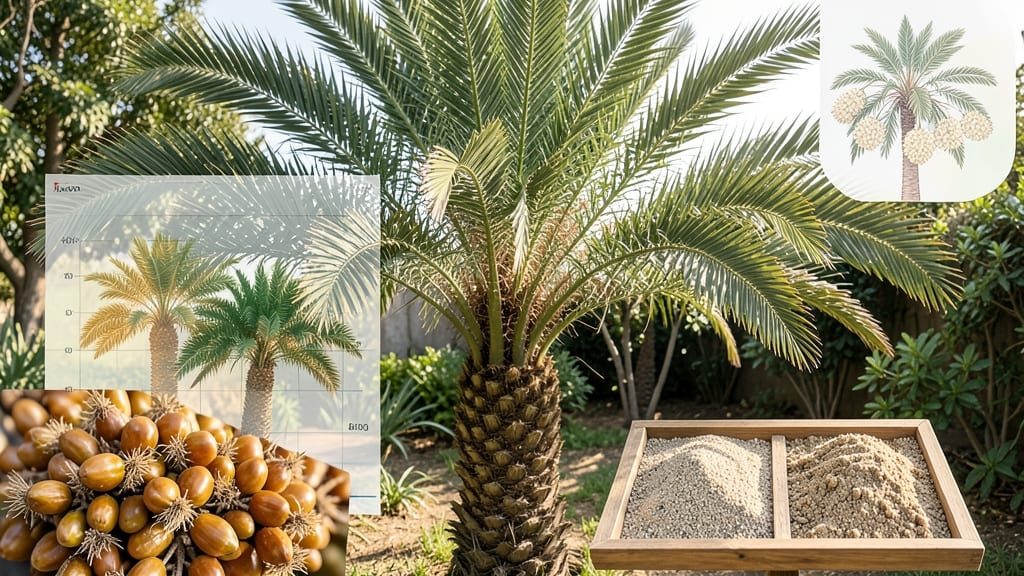
Are palm trees and date trees the same? No—date palms (Phoenix dactylifera) are a specific species that produces edible fruit, while most ornamental palms like coconut or palmettos serve purely decorative or structural roles without bearing dates. They belong to different genera and have distinct growth patterns, leaf shapes, and climate requirements.
Date palms stand out because they're the only palms in the Phoenix genus that produce fruit we can eat. 🌵 Meanwhile, ornamental palms like the majestic coconut palm (Cocos nucifera) or the hardy windmill palm (Trachycarpus fortunei) focus on aesthetics or even structural support.
The key difference lies in their biology: date palms thrive in arid climates with well-draining soil, while many ornamental palms prefer tropical humidity. Even their leaf structures differ—date palms have fan-shaped fronds that arch gracefully, while palms like the sago palm (Cycas revoluta) have more rigid, palmate leaves.
What's fascinating is how their cultivation needs reflect these differences.
Date palms need full sun and minimal water once established, while palms like the bamboo palm (Chamaedorea seifrizii) adapt well to indoor conditions with indirect light. 🌿 If you're growing them, remember that date palms can take years to bear fruit, whereas ornamental palms often reward you with striking foliage much sooner.
This distinction explains why you might see date palms in desert landscapes while tropical palms dominate coastal regions.
💡 In This Article
- Botanical Differences Between Date Palms and Other Palm Species
- Growing Conditions and Cultivation Tips for Date Palms vs Decorative Palms
Botanical differences between date palms and other palm species
The first major distinction lies in their scientific classification. Date palms belong to the Phoenix genus, specifically Phoenix dactylifera, while most ornamental palms fall into entirely different genera like Cocos (coconut palm) or Trachycarpus (windmill palm).
This classification explains why date palms produce edible fruit—only the Phoenix genus has evolved the biochemical pathways to develop sweet, fleshy dates containing up to 60% sugar by weight, whereas ornamental palms focus on structural adaptations like fibrous trunks or broad leaves for shade.
Physically, their leaf structures reveal even more differences. Date palm fronds have 150-180 individual leaflets arranged in a graceful arch, creating that iconic "feather duster" silhouette.
In contrast, coconut palms have pinnae (leaflets) arranged in a more rigid, fan-like pattern, and palms like the sago don't even have true leaves—they produce cycads instead.
The fruit itself is another dead giveaway: date palm fruit grows in clusters of 10-100 dates per bunch, while coconut palms produce single, hard-shelled nuts that float in seawater.
Ecologically, these differences become even clearer. Date palms have adapted to arid desert climates with their deep root systems reaching 100+ feet underground to access water, while ornamental palms like the oil palm (Elaeis guineensis) thrive in tropical rainforests with high humidity.
This explains why you'll see date palms in the Middle East and North Africa, while palms like the canary palm (Phoenix canariensis) dominate Mediterranean landscapes. Even their growth rates differ—date palms can take 5-7 years to bear fruit, while many ornamental palms reach maturity in 3-5 years.
What's particularly interesting is how their reproductive strategies vary. Date palms are dioecious, meaning male and female flowers grow on separate plants, while many ornamental palms like the coconut palm are monoecious (both sexes on one plant).
This biological difference affects cultivation—date palm growers must carefully manage male-to-female ratios to ensure pollination, while coconut palms self-pollinate. The fruit development process also differs: date palm fruit starts green and ripens to brown, while coconut fruit remains green but develops a fibrous husk.
For those curious about palm genetics, consider this: date palms share only about 30% of their DNA with coconut palms, despite both being classified as "palms."
Their evolutionary paths diverged millions of years ago, with date palms adapting to xeric (dry) environments and ornamental palms evolving in mesic (moist) climates.
This genetic divergence explains why date palms can survive with as little as 10 inches of annual rainfall, while palms like the bamboo palm need consistent moisture to thrive.
One visual clue often overlooked is their trunk texture. Date palms develop ringed, fibrous trunks from old leaf bases, while palms like the palmetto (Sabal palmetto) have smooth, unringed trunks that store water.
These adaptations reflect their native environments—date palms store water for droughts, while palmettos rely on floodplains for moisture. 🌵