
Size
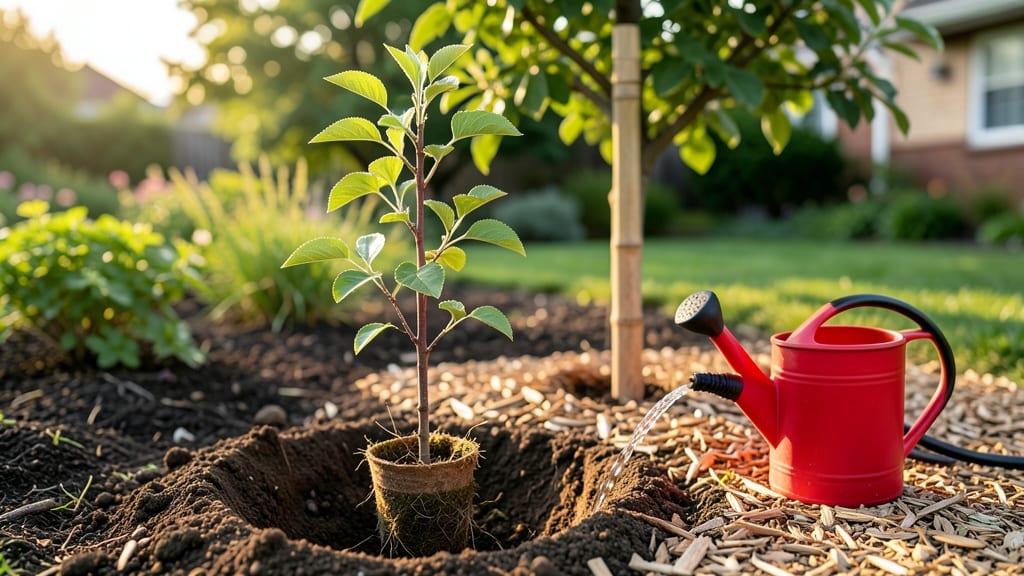
If you plant an apple seed, a tree will grow—but it won't necessarily produce fruit like the parent apple. Seed-grown trees often take 5-10 years to bear fruit, and the apples may differ in size, color, and flavor due to genetic variation.
Apple seeds contain the genetic blueprint for a new tree, but they require specific conditions to sprout. 🌱 The seed must first break dormancy, which happens when moisture and warmth trigger the embryo to grow.
Once planted in well-draining soil, the seedling emerges in 2-4 weeks, but it won't produce fruit for years—sometimes a decade or more. Unlike grafted trees, which reliably reproduce the parent variety, seed-grown trees develop unique traits, making them exciting but unpredictable.
For best results, start with fresh seeds from organic apples (avoid store-bought varieties, as they're often chemically treated). Plant them ½ inch deep in a pot or garden bed with full sun exposure and keep the soil consistently moist but not waterlogged.
Patience is key—many seeds fail to germinate, and even successful seedlings may struggle without proper care.
💡 In This Article
- How Apple Seeds Germinate and Develop Into Trees
- Tips for Growing a Successful Apple Tree from Seed
How apple seeds germinate and develop into trees
Apple seeds enter a state called dormancy after being harvested, which means they won’t sprout immediately even with moisture. This natural pause helps trees survive harsh conditions in the wild.
For germination to begin, seeds need two key triggers: stratification (a cold period to break dormancy) and warmth (typically 60-75°F) to activate growth.
Most apple seeds require 60-90 days of cold exposure (like winter) before they’ll sprout reliably—this mimics the natural cycle of apples falling in autumn and germinating in spring.
The actual germination process starts when the seed absorbs water, swelling the embryo inside. Within 2-4 weeks, a tiny root (radicle) emerges first, followed by the shoot.
Unlike grafted trees—where the scion (top part) is genetically identical to the parent—seedlings develop from the embryo inside the seed, which contains a mix of genes from both parent trees.
This genetic shuffle explains why your seedling might grow into a tree producing tiny, tart apples instead of the sweet, juicy variety you started with. 🌱 For example, planting a seed from a Honeycrisp apple could yield a tree with fruit resembling a crabapple—small, hard, and inedible—due to recessive traits surfacing.
Once the seedling emerges, it enters a juvenile phase that can last 5-10 years before producing flowers or fruit. During this time, the tree focuses on growing its root system and trunk.
In contrast, grafted trees (common in commercial orchards) skip this phase entirely—they’re essentially mature trees attached to a rootstock, allowing them to fruit in 2-4 years. The rootstock also influences the tree’s hardiness, disease resistance, and size.
For instance, a seedling’s roots might struggle in heavy clay soil, while a grafted tree’s rootstock could thrive in the same conditions.
Another critical factor is the seed’s viability. Fresh seeds from organic apples have a 70-90% germination rate, but store-bought apples (often treated with fungicides or irradiated) may have seeds that fail to sprout.
Even if a seed germinates, the resulting tree’s fruit quality depends on pollination—most apple trees require cross-pollination from a different variety to produce fruit.
Without a second tree nearby, your seedling might grow leaves and branches but never bear apples at all. 🍎 This is why orchards plant multiple apple varieties in close proximity.
Understanding these biological steps helps explain why seed-grown trees are a gamble. While they’re genetically diverse and may produce unique fruit, they lack the consistency of grafted trees.
For example, the famous Granny Smith apple was discovered as a seedling in Australia in the 1860s—its tart, green fruit was a complete surprise compared to the parent variety.
If you’re patient and lucky, your seedling could become the next botanical curiosity, but don’t expect it to replicate the apple you ate!
To maximize your chances, start with seeds from heirloom or open-pollinated apples (avoid hybrids like Gala or Fuji, which often produce sterile seeds). Plant them in well-draining soil with 6+ hours of sunlight daily, and keep the soil moist but not soggy.
With the right conditions, your seed could sprout within weeks—and if it survives the juvenile phase, you might just grow a tree with apples no one else has ever tasted. 💫