
Pruning
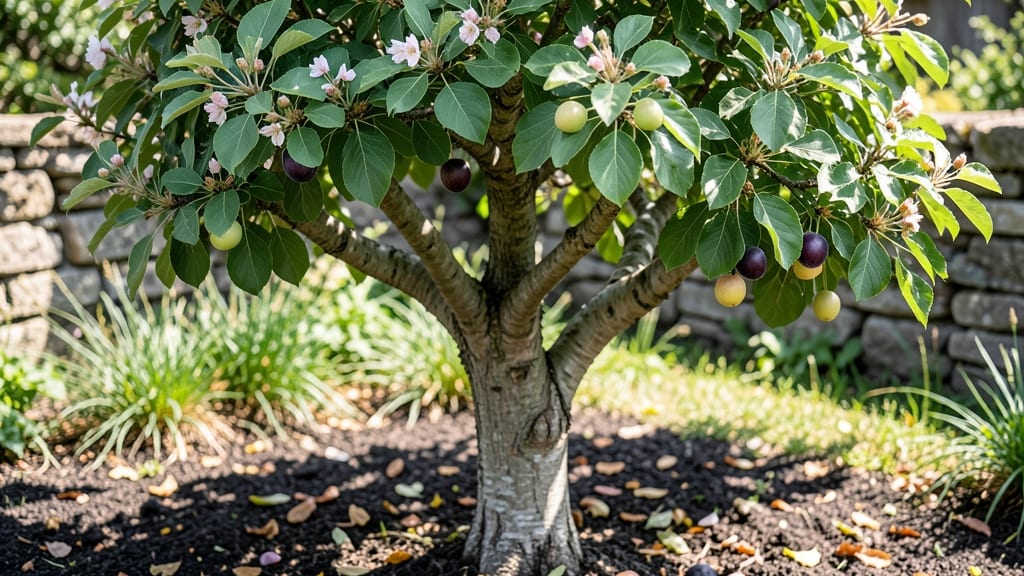
Plum trees typically bear fruit 2 to 4 years after planting, but some early varieties like 'Santa Rosa' can surprise you with harvests as soon as year two. 🌳 The timeline hinges on variety, climate, and care—dwarf trees fruit faster than standard ones, while cold-hardy plums in Zone 5 might take an extra year compared to milder Zone 8 regions.
My first plum tree took three years to produce, but I learned the hard way that patience pays off with bigger harvests later.
Seasonal timing matters just as much as age—most plums bloom in late winter to early spring, and fruit ripens 60 to 90 days after flowering. Early varieties like 'Methley' ripen in June, while late types such as 'Stanley' hold onto their fruit until August or September.
Pruning in late winter removes dead wood and opens the canopy for better sunlight penetration, which directly impacts fruit set. I prune mine every year, and it’s made a noticeable difference in how many plums my tree produces.
You’ll know harvest time is near when the fruit softens slightly and the skin develops its signature color—deep purple, red, or yellow, depending on the variety. A ripe plum should yield gently to pressure and smell sweet when you sniff near the stem.
The first year your tree fruits, expect a modest harvest; by year five, you could be looking at 50 to 100 pounds of fruit, depending on the tree’s size and growing conditions. My 'Black Diamond' plum now produces enough for fresh eating, jams, and even a few jars of preserves.
Regional differences can shift timing by weeks—plums in Florida might ripen in May, while those in Minnesota wait until July. If you’re in a short-season area, choose early-ripening varieties and give your tree consistent water, especially during flowering and fruit development.
With the right care, you’ll go from bare branches to a laden tree in no time—just don’t rush the process, or you’ll end up with bitter, undersized fruit. Patience is key, and the payoff is worth every wait.
📚 In This Guide
- What you need
- Instructions
- Tips and common mistakes
- Wrapping up and next steps
What you need
- ● Plum Tree Variety: Choose a variety suited to your climate (e.g., European Plum (Prunus domestica), Japanese Plum (Prunus salicina), or American Plum (Prunus americana)).
- ● Ensure it’s disease-resistant (e.g., Santa Rosa, Stanley, or Larry Ann varieties).
- ● Soil: Well-draining, slightly acidic to neutral soil (pH 6.0–7.0).
- ● Compost or aged manure (2–3 gallons per tree for planting or top-dressing annually).
- ● Fertilizer: Balanced fertilizer (10-10-10 or 20-20-20) for young trees (apply in early spring).
- ● High-phosphorus fertilizer (e.g., 5-10-10) for flowering/fruiting trees (spring and summer).
- ● Watering Supplies: Drip irrigation system or soaker hose (for consistent moisture).
- ● Watering can (for young seedlings or container-grown trees).
- ● Pruning Tools: Sharp bypass pruners (for cutting branches up to ½ inch thick).
- ● Loppers (for thicker branches, ½–1½ inches).
- ● Pruning saw (for large branches over 1½ inches).
- ● Disinfectant (rubbing alcohol or bleach solution) to clean tools between cuts.
- ● Mulch: Organic mulch (wood chips, straw, or shredded bark, 2–3 inches thick).
- ○ Support Structures (Optional but Helpful): Stakes or tree ties (for young trees to prevent wind damage).
- ● Trellis or espalier system (for dwarf varieties or space-saving gardens).
- ● Sunlight: Full sun (6–8 hours of direct sunlight daily).
- ● Climate: Chill hours: Most plum varieties need 200–1,000 chill hours (below 45°F/7°C) to flower and fruit. Check your variety’s requirements!
- ● Hardiness zones: Typically USDA Zones 5–9, but some varieties thrive in warmer zones.
- ● Pollination: Cross-pollination: Plant at least two compatible varieties (e.g., Stanley and Larry Ann) within 50–100 feet for fruit set.
- ● Bees or other pollinators (ensure your garden is bee-friendly!).
- ● 🌡️ Soil Test Kit: Test your soil’s pH and nutrient levels before planting (available at garden centers).
- ● 🍄 Fungicide: Copper fungicide or neem oil (to prevent diseases like brown rot or silver leaf).
- ● 🐝 Pollinator-Friendly Plants: Add flowers like lavender or clover near your plum tree to attract bees.
- ● 📅 Planting Calendar: Time your planting for late winter or early spring (dormant season) for best results.
When to expect fruit on your plum tree: a variety guide
Knowing when your plum tree will bear fruit depends on its type and care—here's how to predict harvest timing.
🌱 Step 1: Identify Your Plum Tree Variety
European plums typically bear fruit 3-5 years after planting, while Japanese plums can fruit in just 2 years. Dwarf varieties often fruit faster than standard trees. Check your tree's label or consult a local nursery if unsure—some varieties like 'Santa Rosa' produce reliably, while others like 'Stanley' may take longer.
Look for these visual cues: European plums have glossy leaves and round fruit, while Japanese plums have fuzzy leaves and oval fruit. The tree's growth rate also matters—fast-growing trees bear fruit sooner than slow growers. If your tree is already 6-8 feet tall with multiple branches, it's likely closer to fruiting.
☀️ Step 2: Understand the Tree's Age and Development Stage
The first 2 years after planting focus on establishing strong roots and branches. You'll see buds forming in late winter—these are your first sign of potential fruit. Count the number of buds: 50+ buds on a mature branch suggests good fruiting potential for next season.
Real talk: Some trees flower heavily their first year but drop fruit due to weak structure. Prune to remove water sprouts and dead branches—this redirects energy to fruit production. A healthy tree with 3-4 main scaffold branches will bear fruit more reliably than one with a single leader.
🌿 Step 3: Monitor Flowering Patterns
Plum trees bloom in early spring (March-April in most climates). The flowers appear before leaves, lasting 7-10 days. Count the number of flower clusters: 10+ clusters per branch means a good harvest is likely. If you see fewer than 5 clusters, your tree may need more sunlight or fertilizer.
Here's the thing—some varieties like 'Larry Ann' are self-pollinating, while others like 'Methley' need a second tree nearby. If your tree has flowers but no fruit, check for a pollinator partner within 50 feet. You'll also notice bees visiting healthy blooms—this confirms viable pollen transfer.
⏰ Step 4: Track Growth and Fruit Development
After flowering, small fruit (pea-sized) appears in 4-6 weeks. This is your first checkpoint—if fruit drops before reaching 1 inch, your tree may need more nutrients or protection from late frosts. Thin fruit to 4-6 inches apart on branches to encourage larger plums.
Watch for color changes: European plums turn from green to yellow or red, while Japanese plums develop a waxy bloom. Fruit ripens in 60-90 days after flowering, depending on variety. A ripe plum will feel slightly soft when gently squeezed and separate easily from the branch.
🍑 Step 5: Plan for Consistent Harvest Timing
Most plum varieties ripen in late summer to early fall (August-September). European plums typically harvest first, followed by Japanese plums 2-3 weeks later. Keep a harvest journal noting the year, variety, and ripening date—this helps predict future seasons.
Don't skip this: Harvest plums when they're fully colored but still firm. Overripe fruit bruises easily and attracts pests. Store in the fridge for up to 2 weeks or process into jams/juices immediately. Next year, you'll recognize the exact timing by the tree's leaf color and fruit firmness.
Tips & tricks for predicting your plum tree's fruit timeline
Took me years of watching plum trees to figure out these key insights—here's what actually makes the difference between waiting forever and enjoying fruit sooner.
Variety Matters More Than You Think: The 3-5 year timeline for European plums isn't set in stone—it's based on how fast your specific variety matures. 'Santa Rosa' often fruits in 3 years, while 'Stanley' might take 5. I always check the tree label first, but if it's missing, I look at leaf texture: glossy leaves mean European plum (round fruit, 3-5 years), fuzzy leaves mean Japanese plum (oval fruit, 2 years). This visual trick saved me from misidentifying my first tree!
Bud Count is Your Early Warning System: In Step 2, when you see those buds forming in late winter, count them! I learned this the hard way after planting a tree with only 10 buds total—it barely fruited. Aim for 50+ buds on mature branches by year 2. If you're seeing fewer, it might be time to prune water sprouts or add some balanced fertilizer to boost growth. Think of buds like little fruit promises—the more you have, the bigger your harvest will be.
Flower Clusters Tell the Real Story: Those 7-10 days of blooming in Step 3 are critical. I used to think more flowers always meant more fruit, but that's not true—it's about cluster density. 10+ clusters per branch means good harvest potential. If you're seeing fewer than 5 clusters, your tree might need more sunlight (plums need 6-8 hours daily) or a light application of bloom fertilizer. And here's a pro tip: if you notice bees buzzing around your flowers, that's a great sign—bees confirm viable pollen transfer, which means fruit will set.
Thinning Fruit is Non-Negotiable: In Step 4, when you see pea-sized fruit appear, don't skip thinning to 4-6 inches apart. I've seen gardeners leave fruit too close, and the result? Tiny plums because the tree can't support them all. Thin early to encourage larger, healthier fruit. And watch for color changes—European plums turn yellow or red, while Japanese plums develop that signature waxy bloom. That's your final cue that harvest is coming soon!
Pro Tips for When Does Plum Tree Bear Fruit
- Took me years of watching plum trees to figure out these key insights—here's what actually makes the difference between waiting forever and enjoying fruit sooner.
- Variety Matters More Than You Think: The 3-5 year timeline for European plums isn't set in stone—it's based on how fast your specific variety matures.
- Bud Count is Your Early Warning System: In Step 2, when you see those buds forming in late winter, count them!
Frequently asked questions
Got questions about when your plum tree will bear fruit? Here are some of the most common ones—and their answers—to help you plan ahead!
How long does it take for a plum tree to bear fruit after planting?
A newly planted plum tree typically takes 3 to 5 years to bear fruit, depending on the variety and growing conditions. Dwarf varieties may fruit sooner (2–3 years), while standard trees can take up to 5 years. Patience is key—consistent care speeds up the process!
Do plum trees fruit every year once they mature?
Yes! Once established, plum trees usually produce fruit annually, though yields can vary based on weather, pruning, and tree health. Heavy fruit production may alternate with lighter years in some varieties, but proper care helps maintain consistent harvests.
Why isn’t my plum tree producing fruit yet?
Several factors could delay fruiting: young age (most trees need 3+ years), lack of pollination (some varieties need cross-pollination), poor soil/nutrients, or over-pruning. Check for pests/diseases too—healthy trees fruit better!
Can I speed up fruiting in a plum tree?
While you can’t rush nature, you can optimize conditions:
- Use dwarf or semi-dwarf varieties (fruit faster than standard trees).
- Ensure full sun (6+ hours daily) and well-draining soil.
- Plant two compatible varieties for cross-pollination.
- Avoid heavy pruning in early years—focus on shaping.
What’s the difference in fruiting time between European and Japanese plums?
European plums
(e.g., Stanley, Santa Rosa) typically fruit in late summer to early fall (August–September). Japanese plums (e.g., Santa Rosa, Methley) often ripen earlier (June–July) and are more cold-hardy. Climate and variety play a big role—check your USDA zone!
Wrapping up and next steps
Now that you know when to expect fruit from your plum tree—whether it’s the early blooms of Santa Rosa or the late harvest of Stanley—you’re well on your way to a bountiful harvest! 🌳🍑 The key is patience, proper care, and choosing the right variety for your climate.
Ready to take the next step? Start planning your orchard layout or prune your tree now to encourage healthier growth and even better fruit production next season.