
Pests
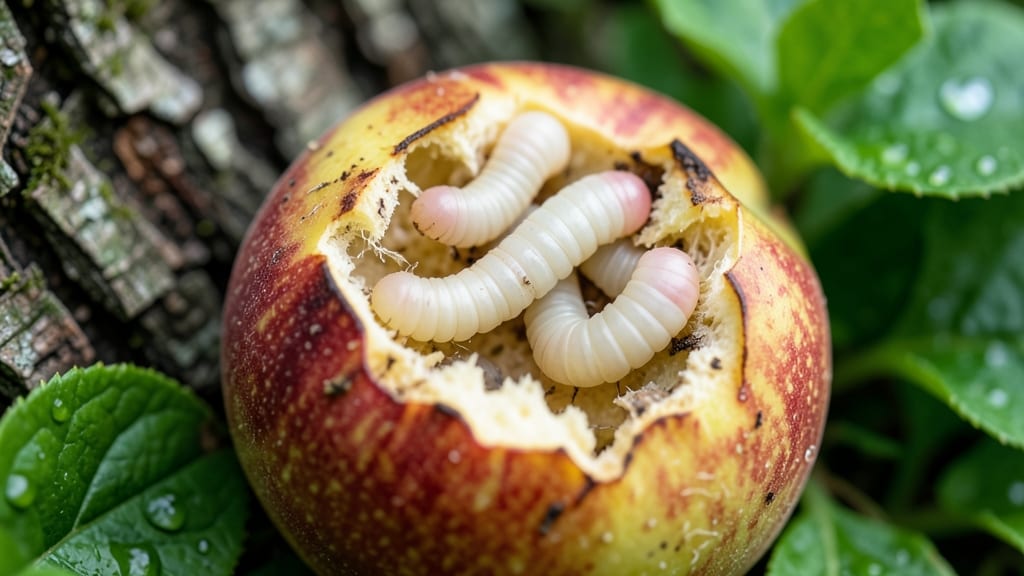
When you spot white worms wriggling in your tree bark or sawdust-like frass at the base, you're dealing with destructive grubs or borers that chew through wood and sap—and the damage spreads faster than you think. ✨ I’ve watched healthy fruit trees turn into skeletal husks in just a few seasons because these pests go unnoticed until it’s too late.
The good news? You don’t need harsh chemicals to stop them—just the right approach to identify, treat, and prevent them before they ruin your trees.
These white worms—often grubs (like Japanese beetle larvae) or borers (such as emerald ash borer)—target stressed trees first. Look for wilting leaves, holes in bark, or oozing sap as red flags.
Fruit trees, oaks, and willows are especially vulnerable, but almost any tree can fall victim if the soil or bark conditions are right. The key is catching them early, when natural predators like birds and beneficial nematodes still stand a chance of keeping populations in check.
You’ll learn how to flush grubs from the soil with a simple water spray, use beneficial nematodes to target borers, and apply organic sprays like neem oil to disrupt their life cycle—all without harming your yard or local wildlife.
The goal isn’t just to kill the worms but to restore your tree’s health so it can fight back. By the end, you’ll have a fail-safe plan to protect your trees year-round, even if pests return.
Whether you’re dealing with a single infested tree or want to prevent future outbreaks, this method scales from backyard fruit trees to large shade trees. No more guessing—just practical, chemical-free solutions that work. Let’s get your trees back to thriving.
Underlying Causes Of White Tree Infestations
White tree worms—often mistaken for caterpillars, sawfly larvae, or even fungal growth—don’t just appear out of nowhere. Their presence is usually a sign of deeper ecological imbalances or specific environmental triggers.
Understanding these causes is the first step toward effective, chemical-free management. Below, we break down the most common reasons these pests target your trees, along with the science behind their behavior.
When trees are nutrient-deficient, drought-stressed, or physically damaged, their natural defenses weaken. White tree worms, such as gypsy moth caterpillars or tent caterpillars, are drawn to weakened foliage because it’s easier to feed on. Here’s why this happens:
- Nutrient Deficiency: Trees lacking nitrogen, phosphorus, or potassium produce softer, less resilient leaves, making them a buffet for hungry larvae.
- Drought Stress: Prolonged dry spells force trees to conserve water, reducing their ability to produce tannins and resins—natural pest repellents.
- Physical Damage: Storms, improper pruning, or compaction from foot traffic create entry points for pests and disrupt the tree’s immune response.
💡 Pro Tip: Conduct a soil test to check nutrient levels and water deeply (but not excessively) during dry spells. Mulching with organic matter can also improve root health.
Many white tree worms aren’t random invaders—they’re highly social and follow chemical cues. Female moths release pheromones to attract males, and once eggs are laid, the larvae emit aggregation pheromones to signal safety in numbers. This explains why entire branches can be defoliated overnight:
- Mass Egg-Laying: A single female gypsy moth can lay up to 1,000 eggs in a hidden crevice, hatching synchronously when conditions are ideal (warm, humid springs).
- Scent-Based Navigation: Larvae use olfactory cues to locate food sources, often targeting trees already under attack.
- Seasonal Peaks: Outbreaks spike in late spring to early summer when new leaves are tender and protein-rich.
🎯 Actionable Insight: Install pheromone traps in early spring to disrupt mating cycles. These traps mimic female signals, luring males away from your trees.
Some white tree worms, like woolly aphids or scale insects, thrive in trees already compromised by fungal infections (e.g., honey fungus) or bacterial diseases (e.g., fire blight). Here’s how it works:
| Pathogen | How It Attracts Worms | Visual Clues |
|---|---|---|
| Honey Fungus (Armillaria) | Decays root systems, weakening the tree’s ability to produce defensive compounds like phenolics. | White fungal fans at the base, mushrooms in rings. |
| Verticillium Wilt | Clogs xylem vessels, reducing nutrient transport to leaves, making them easier targets. | Yellowing between veins, wilting despite hydration. |
| Fire Blight (Erwinia) | Creates oozing cankers that attract sap-feeding insects, which in turn draw predatory larvae. | Blackened, tar-like ooze on branches. |
⚠️ Warning: If you suspect a fungal/bacterial issue, prune infected branches immediately (sterilize tools with 70% alcohol) and treat with copper-based fungicides or beneficial microbes like Trichoderma.
White tree worms are opportunistic—they exploit microclimates where conditions are perfect for their life cycle. Key environmental triggers include:
- High Humidity: Larvae like tent caterpillars thrive in 60–80% humidity, as it slows desiccation and encourages fungal growth on their silk tents.
- Urban Heat Islands: Cities with asphalt and concrete trap heat, creating warmer pockets that accelerate pest development by 10–15 days compared to rural areas.
- Poor Air Circulation: Dense foliage or overgrown shrubs around trees trap moisture, mimicking a greenhouse effect that pests love.
- Late Frosts: A sudden cold snap after eggs hatch can kill off natural predators (like birds or parasitic wasps), leaving larvae unchecked.
🌡️ Climate Hack: Improve airflow with strategic pruning and avoid overwatering. If your area is prone to humidity, mulch with gravel (not wood chips) to reduce soil moisture retention.
By addressing these root causes—whether through tree health optimization, pheromone disruption, or environmental adjustments—you can starve out white tree worms before they become a full-blown infestation. The key is prevention, not just reaction.
Natural Ways to Remove Tree Worms
White tree worms—often mistaken for caterpillars or larvae—can wreak havoc on your trees if left unchecked. The good news? You can tackle them safely and effectively without resorting to harsh chemicals.
Below, we’ve broken down practical, eco-friendly solutions tailored to the most common causes of infestations, along with prevention tips to keep your trees healthy long-term.
Before jumping into treatments, confirm what you’re dealing with. White tree worms could be:
- Bagworms (covered in silk bags)
- Tent caterpillars (grouped in silk tents)
- Gypsy moth larvae (hairy, pale green/white)
- Sawfly larvae (smooth, white, and plump)
A quick inspection with a flashlight (🔦) or magnifying glass can help!
🔥 Bagworms or tent caterpillars? Handpick & prune cause: silky nests or bags on branches, defoliation. fix: 1. 👨🍳 remove nests manually – wear gloves and shake nests into a bucket of soapy water (1 tbsp dish soap per gallon). dispose of them far from your yard.
- 🌿 Prune infested branches – Cut and destroy heavily damaged sections (bagworms can survive in dried leaves, so don’t compost them!).
- 💡 Pro Tip: Do this in late fall or early spring when caterpillars are dormant. Repeat weekly until no nests remain.
Prevention:
- 🌡️ Encourage natural predators like birds (install nest boxes) and parasitic wasps by avoiding pesticides.
- ✨ Use neem oil spray (1 tsp neem oil + 1 tsp mild soap per quart of water) as a deterrent in early spring.
🍳 Gypsy Moth Larvae? Bt or Horticultural Oil Cause: Hairy, white/pale green worms stripping leaves; webbing between branches. Fix: 1. 🔪 Apply Bacillus thuringiensis (Bt) – A natural bacteria (safe for humans/pets) that kills caterpillars when ingested.
Mix 1 tsp Bt per gallon of water and spray evenly on foliage (especially undersides of leaves). Reapply after rain. 2. 🌿 Use horticultural oil – Spray in late winter/early spring to suffocate eggs. Mix 2 tbsp oil per gallon of water and apply when temps are above 40°F.
- 💡 Pro Tip: Focus on young trees first—they’re most vulnerable. Reapply Bt every 7–10 days during outbreaks.
Prevention:
- 🎯 Remove egg masses – Scrape off white, fuzzy egg clusters from tree trunks/branches in fall/winter and crush them.
- 🌳 Plant diverse trees – Gypsy moths prefer oak, birch, and apple; interplanting with less favored species (e.g., pine, maple) disrupts their life cycle.
👨🍳 Sawfly Larvae? Soap Spray or Nematodes Cause: Smooth, white, plump worms (often in clusters); chewed leaves with notched edges. Fix: 1. 🧼 Spray insecticidal soap – Mix 2.5 tbsp castile soap per gallon of water and spray directly on larvae (avoid blooming plants).
Reapply every 3–5 days until gone. 2. 🐛 Introduce beneficial nematodes** – Microscopic worms (Steinernema carpocapsae) that parasitize sawfly larvae. Apply in early evening (they die in sunlight) by mixing 1 lb nematodes per 100 gallons of water and watering at the tree’s base.
- 💡 Pro Tip: Sawflies love willow, birch, and apple trees—monitor these species closely in spring/summer.
Prevention:
- 🌿 Mulch with wood chips – Encourages nematodes and other beneficial soil organisms.
- 🥗 Avoid broad-spectrum pesticides – They kill natural predators like ladybugs and lacewings.
🌳 General Tree Health Boost Regardless of the worm type, healthy trees resist infestations better.
Try these long-term fixes: - 💧 Water deeply but infrequently – Encourages deep root growth (1–2 inches per week). - 🌱 Fertilize with compost – Improves soil health and tree resilience. - 🪓 Thin out dense branches – Promotes airflow and reduces hiding spots for pests. - 🌿 Plant companion plants – Marigolds, garlic, and chrysanthemums repel some pests naturally.
- 🍃 Early intervention is key – Treat infestations when worms are small (before they skeletonize leaves).
- 🌧️ Timing matters – Avoid spraying Bt or neem oil in direct sunlight or extreme heat (they degrade quickly).
- 📅 Seasonal schedule:
- Fall: Remove egg masses, prune.
- Spring: Apply Bt or horticultural oil.
- Summer: Monitor and reapply treatments as needed.
Remember: Patience and consistency are key! Natural methods take time but protect your trees—and the environment—safely. 🌳💚
Frequently asked questions
What do white tree worms actually look like up close?
White tree worms vary by species, but common types include gypsy moth larvae (hairy, pale green/white with black heads), bagworms (covered in silk bags), and sawfly larvae (smooth, plump, and creamy white). Use a magnifying glass to spot key details like silk tents (tent caterpillars) or tiny silk bags (bagworms) that distinguish them from harmless caterpillars.
Are these worms harmful to humans or pets?
Most white tree worms are harmless to humans and pets, but some—like gypsy moth larvae—can cause skin irritation if handled without gloves. The real danger is their damage to trees, which weakens roots and invites disease. Never eat them (they’re not edible), and avoid touching hairy varieties that may cause rashes.
How do I know if my tree is already too damaged?
Look for these red flags: 50%+ leaf loss, sawdust-like frass (chewed wood), oozing sap, or holes in bark. If you see wilting despite watering or dead branches, the tree may be beyond saving. For less severe damage, focus on pruning dead sections and boosting soil health to help recovery.
Will birds or other wildlife help control these worms?
Birds like robins and blue jays love eating caterpillars, while parasitic wasps target larvae. Install birdhouses and avoid pesticides to encourage these natural predators. Even toads and spiders help—just avoid overwatering, which can drown beneficial soil organisms.
Can I use store-bought sprays if natural methods fail?
If natural solutions don’t work, opt for Bt (Bacillus thuringiensis) or horticultural oil—both are pet-safe and target only caterpillars. Avoid carbaryl or malathion (harsh chemicals that harm bees). Always follow label instructions and reapply after rain for best results.