
Blooming
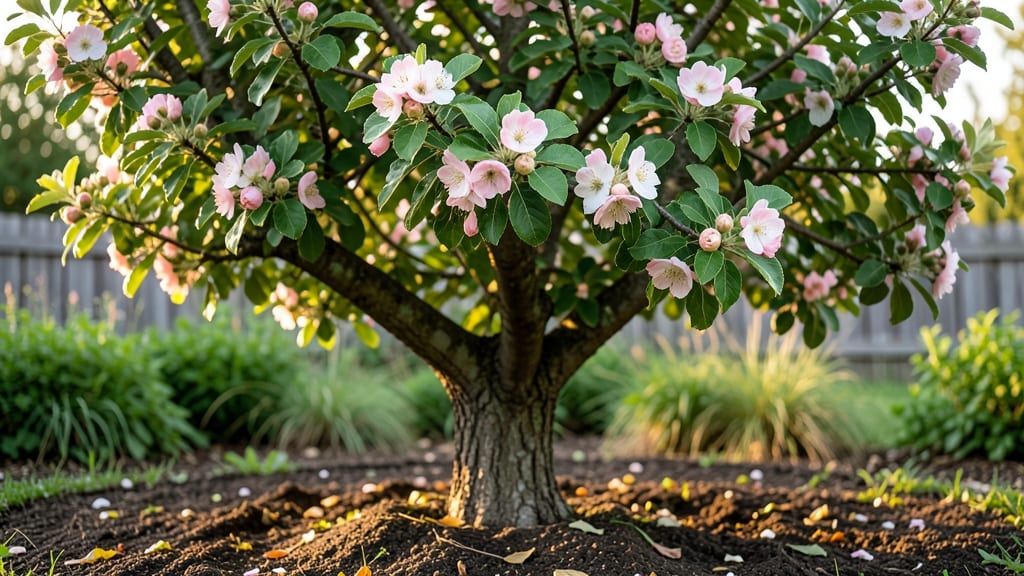
Timing your Fuji apple tree pruning right means hundreds of perfect pink blooms come spring—those delicate, fragrant clusters that turn into sweet, crisp fruit. 🌸 I learned the hard way that pruning too late (or too early) can rob you of blooms, leaving you with leafy branches but no flowers.
The secret lies in understanding when your tree’s energy shifts from winter dormancy to spring growth—and how to work with that natural rhythm.
Fuji apple trees bloom in late April to early May in most climates, but the magic starts with winter pruning (December–February) when the tree is dormant. Cold-hardy varieties like Fuji need 100–200 chill hours (below 45°F) to trigger blooms, so prune after the last hard frost but before buds swell.
Think of it like setting the stage: you’re shaping the branches to catch sunlight while preserving next year’s flower buds, which form on spurs (those little stubby shoots along the branches).
When you get it right, you’ll see thousands of blossoms within weeks—each one a promise of fruit. The tree’s canopy opens up, letting sunlight warm the center where fruit develops, and the scent of blooms fills the air like nothing else.
Prune too aggressively, though, and you’ll trigger vigorous growth that steals energy from flowers. The goal is balance: open the center but leave enough spurs to ensure blooms.
This works for zone 5–8 climates, but adjust timing if you’re in a warmer area (Fuji needs chill hours). For container-grown trees, prune even more carefully—they’re sensitive to root stress.
Once you master the timing, your Fuji will reward you with the most abundant spring display in the neighborhood, and fruit that’s sweeter than store-bought. Let’s get those branches ready!
📚 In This Guide
- What you need
- Instructions
- Tips and common mistakes
- Wrapping up and next steps
What you need
- ● Pruning shears: Bypass pruners (sharp, clean, and sterilized with rubbing alcohol or bleach solution). Size: 6–8 inches for medium branches.
- ● Loppers: For thicker branches (½–1½ inches in diameter). Quantity: 1 pair.
- ● Pruning saw: For branches over 1½ inches thick. Type: Curved-tooth saw for clean cuts.
- ● Gloves: Heavy-duty, cut-resistant gloves (e.g., Mechanix or Cooper brand) to protect hands.
- ● Disinfectant: 70% isopropyl alcohol or 10% bleach solution (1 part bleach to 9 parts water) to prevent disease spread.
- ○ Tree wound sealant (optional but recommended): Pruning paste or beeswax-based sealant for cuts larger than ½ inch.
- ● Ladder or step stool: Sturdy, extendable ladder (if tree is over 6 feet tall). Safety tip: Use a 3-point contact rule (two hands + one foot or two feet + one hand).
- ● Tarp or drop cloth: 10x12 ft to collect debris (helps keep the workspace clean!).
- ● Notebook & pencil: To map out pruning cuts and track bloom progress.
- ● Know your Fuji apple tree’s age: Young trees (under 3 years) need minimal pruning (focus on shaping). Mature trees (3+ years) can handle more aggressive trimming.
- ● Bloom timing: Fuji trees bloom in late spring (April–May in most U.S. zones 5–8). Prune immediately after harvest (fall) or late winter (before buds swell).
- ● Weather check: Prune on a dry, cloudy day (avoid frost or extreme heat).
- ● Safety gear: Safety glasses (to shield eyes from debris) and long sleeves/pants (protection from thorns).
- ● Hose with nozzle: For rinsing tools and cleaning sap off branches.
- ● Tree pruning guidebook: Or a printed checklist of Fuji-specific pruning steps (e.g., “Remove 20% of last year’s growth”).
- ● Fertilizer (balanced 10-10-10): Apply after pruning to boost recovery and next year’s blooms.
- ● Camera or phone: Capture before/after shots—your Fuji bloom progress will be show-stopping!
Step-by-step pruning for Fuji apple tree spring blooms
Timing is everything when it comes to shaping your Fuji apple tree for showstopping spring blossoms.
⏰ Step 1: Prune in Late Winter Before Bud Swell
Start your pruning 4-6 weeks before your region's last frost date, when the tree is still dormant but buds haven't begun to swell. This timing ensures you're not removing growth that would support next year's fruit. I like to prune on a dry, sunny day—the crisp air helps prevent disease spread and makes cuts cleaner.
Look for dead, crossing, or diseased branches first—they're the easiest to spot against the bare winter wood. Use sharp, clean pruners to make cuts just outside the branch collar (that little swollen area where the branch meets the trunk). Avoid leaving stubs, as they invite rot and pests. You'll know you're ready when the buds still look tight and brown, not plump and green.
✂️ Step 2: Thin Out Crowded Branches for Better Airflow
Next, focus on the tree's structure by removing up to 25% of the total growth to improve airflow and sunlight penetration. Start at the center and work outward, removing branches that rub against each other or grow inward. Fuji apple trees produce fruit on spurs (short lateral branches), so avoid cutting these unless they're diseased.
Make your cuts at a 45-degree angle just above an outward-facing bud. This encourages new growth to angle away from the center, creating a more open canopy. You'll see the tree's natural shape emerge as you remove competing branches—think of it like sculpting, where each cut reveals the tree's true form. If a branch is thicker than your wrist, use a pruning saw to avoid tearing the bark.
☀️ Step 3: Shape for Sunlight and Fruit Production
Now, shape the tree to maximize sunlight exposure, which is critical for Fuji apple tree bloom and fruit development. Remove any branches growing straight upward (called "water sprouts") and those that grow downward, as they block light and reduce airflow. Aim to create a vase-like shape with a strong central leader and well-spaced scaffold branches.
Leave 3-5 main branches spaced evenly around the trunk, each with its own smaller branches. These will form the tree's framework. You'll know you're on the right track when you can see light filtering through the branches and the tree's silhouette looks balanced from all sides. Avoid over-pruning—less is more with Fuji apples, as they produce fruit on older wood.
🌱 Step 4: Clean Up and Fertilize for Spring Growth
After pruning, rake up and dispose of all clippings to prevent disease and pests from overwintering. Sterilize your pruners with rubbing alcohol to kill any lingering bacteria or fungi. Now's also the time to apply a balanced fertilizer (10-10-10 ratio) to support new growth and bloom production.
Water the tree deeply at the base to help it recover from pruning. You'll notice fresh, bright green leaves emerging within 2-3 weeks, signaling that the tree is responding well. Keep an eye out for new shoots growing from the base or trunk—these are called "suckers" and should be removed to direct the tree's energy toward fruit production.
⏰ Step 5: Monitor for Bloom and Adjust as Needed
As spring approaches, watch for pink buds to form—this is your cue that the pruning worked! If you notice any unexpected growth or branches that seem out of place, adjust with light pruning as needed. Fuji apple trees typically bloom in late spring, so timing your pruning correctly ensures you're not cutting off potential blossoms.
Once the tree is in full bloom, avoid heavy pruning until after the fruit has set. You'll know the tree is thriving when it's covered in pink and white blossoms and the air is filled with the sweet scent of spring. This is the reward for your careful pruning—maximum bloom and, eventually, delicious Fuji apples.
Tips & tricks for perfect Fuji apple tree bloom
Timing and technique make all the difference when shaping your Fuji apple tree for that spectacular spring display.
Timing Secret: The 4-6 week window before your last frost date is your sweet spot for pruning. I learned this the hard way—pruning too early can stimulate growth that will freeze, while waiting too long risks cutting off blossom buds. Check your local frost dates and mark your calendar accordingly. A dry, sunny day isn't just ideal weather—it helps prevent disease spread and makes those clean cuts easier to execute.
Branch Selection Strategy: When removing up to 25% of total growth in Step 2, focus on branches that cross or rub against each other first. These are the real culprits that block airflow and sunlight. Think of your tree like a sculpture—each cut should reveal the natural beauty underneath. For those thicker branches, a pruning saw is your best friend. I've torn bark trying to use regular pruners, and that's an invitation for pests and disease.
Visual Cues for Perfect Cuts: In Step 3, when shaping for sunlight, look for branches growing straight up (water sprouts) and those growing downward—they're the ones stealing light from your blossoms. Aim to create that vase-like shape with 3-5 main branches. Here's my trick: stand back and look at your tree's silhouette from all sides. If you can't see light filtering through, you're not done yet. The goal is to create an open canopy that lets sunlight reach every blossom.
Post-Pruning Care: After you've finished pruning, don't just walk away! Rake up those clippings—they're a breeding ground for pests and diseases. Sterilizing your pruners with rubbing alcohol takes 30 seconds but prevents future problems. That 10-10-10 fertilizer application is your secret weapon for spring growth. I've seen trees that looked dead after pruning come back to life in just 2-3 weeks with this simple step.
Pro Tips for Fuji Apple Tree Bloom
- Timing and technique make all the difference when shaping your Fuji apple tree for that spectacular spring display.
- Timing Secret: The 4-6 week window before your last frost date is your sweet spot for pruning.
- Branch Selection Strategy: When removing up to 25% of total growth in Step 2, focus on branches that cross or rub against each other first.
Frequently asked questions
Got questions about timing, care, or troubleshooting your Fuji apple tree’s spring bloom? Here are the answers to the most common queries—so you can enjoy those stunning blossoms year after year!
When is the best time to prune a Fuji apple tree for optimal bloom?
The ideal time to prune is late winter or early spring (just before buds swell but before they break). This ensures the tree directs energy to new growth and blossoms. Avoid pruning in fall or during bloom—it can stress the tree or reduce fruit production.
How long does it take for a Fuji apple tree to bloom after pruning?
Blossoms typically appear 4–6 weeks after pruning, depending on climate and tree health. Warmer regions may see blooms sooner, while cooler areas take longer. Patience pays off—healthy trees reward you with vibrant flowers and future fruit!
What should I do if my Fuji apple tree’s buds freeze before blooming?
Don’t panic! If buds are damaged by frost, prune only the dead or brown sections once the threat passes. Healthy green buds will sprout new growth. For severe damage, fertilize lightly in spring to support recovery. Next year, protect young trees with frost cloth if frost is common.
Can I still get apples if I miss the pruning window?
Yes, but yields may drop. Late pruning can delay blooms or reduce fruit quality. If you miss the window, focus on light shaping cuts in early summer to encourage airflow and prevent disease. Prioritize removing dead/diseased branches over heavy pruning.
Are there alternative pruning methods for small spaces or dwarf Fuji trees?
For dwarf trees or tight spaces, try espalier pruning (training branches flat against a wall) or central leader pruning (keeping one main trunk). Both methods maximize bloom exposure to sunlight while saving space. Just ensure branches are spaced 6–12 inches apart for airflow.
Wrapping up and next steps
Watching your Fuji apple tree burst into stunning spring blossoms is a reward worth every bit of effort! By mastering timed pruning—combining late winter cuts for structure and early spring adjustments for bloom health—you’ll unlock vibrant, abundant flowers that lead to bountiful harvests. 🌸
Ready to transform your orchard? Start by marking your calendar for next year’s pruning windows and reviewing the step-by-step techniques again. Grab your tools, step outside, and give your tree the care it deserves—your future Fuji apples will thank you!