
Pruning
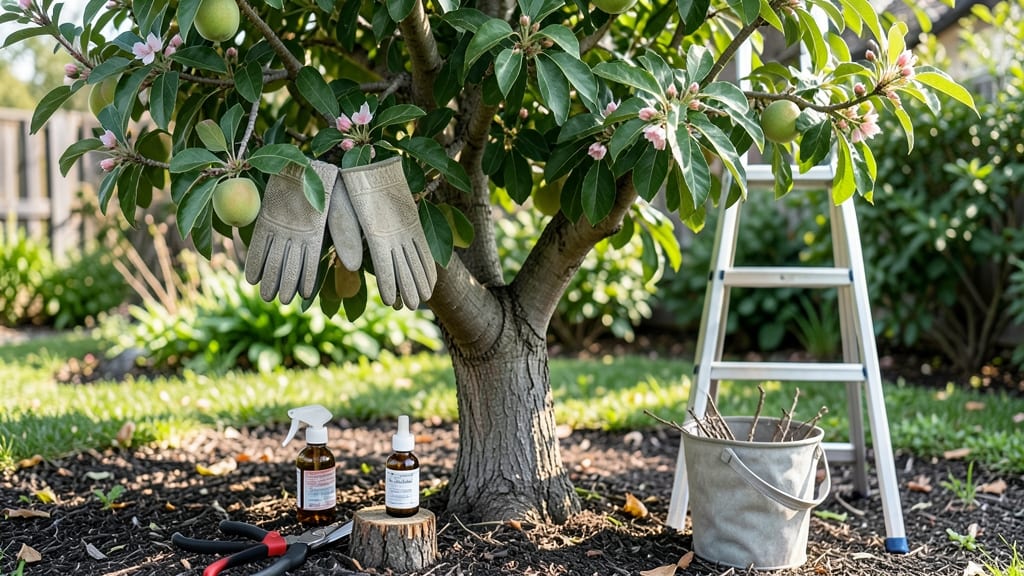
Pruning peach trees in Texas during dormancy isn’t just about shaping—it’s about surviving our brutal summers. ✂️ After years of watching my first tree struggle through heat waves, I learned the right cuts make all the difference, keeping branches strong enough to handle 100°F+ temperatures while producing sweet fruit.
The key is timing: prune in late winter (February) when the tree’s still dormant but before buds swell. Use clean, sharp tools—dull shears tear bark, inviting pests like peach tree borers that thrive in Texas heat.
Focus on removing dead wood, crossing branches, and suckers at the base, then thin the canopy to let sunlight and air circulate. You’ll see new growth emerge in 4-6 weeks, with thicker branches that resist heat stress.
The tree’s energy goes into fewer, stronger limbs instead of weak, sun-scorched shoots. Prune again lightly in summer to control vigorous growth, but avoid heavy cuts when it’s already stressed. Texas-specific challenge? Fire blight—a bacterial disease that spreads fast in our humidity.
Sterilize tools between cuts with rubbing alcohol, and always prune below infected areas by 6 inches. A little prevention now means fewer headaches (and fewer lost trees) in July.
📚 In This Guide
- What you need
- Instructions
- Tips and common mistakes
- Wrapping up and next steps
What you need
- ● Pruning shears (bypass or anvil type) – Sharp, 6- to 8-inch blades for small branches (up to ½ inch thick).
- ● Loppers – 8- to 10-inch handles for branches ½ to 1½ inches thick.
- ● Pruning saw – Curved blade, 18- to 24-inch length for thicker branches (1½+ inches).
- ● Disinfectant (70% isopropyl alcohol or bleach solution) – 1 part bleach to 9 parts water to sterilize tools between cuts and prevent disease.
- ● Gloves (cut-resistant or heavy-duty) – Protects hands from thorns and rough bark.
- ● Rubbing alcohol or hand sanitizer – For cleaning hands after handling sap or debris.
- ● 5-gallon bucket or trash bag – To collect pruned branches and debris.
- ● Ladder (if needed) – Sturdy, extendable, 12-20 feet tall for high branches.
- ● Permanent marker or tape – For marking branches to remove or protect.
- ○ Pruning sealant (optional but helpful) – For cuts larger than ½ inch to prevent disease entry.
- ● Safety gear – Long sleeves and pants to protect from Texas sun and thorns.
- ● Water and sunscreen – Pruning in Texas heat? Stay hydrated and shielded!
- ● Fire extinguisher (if near dry brush) – A precaution for Texas’ dry climate.
Step-by-step pruning for Texas peach trees in dormant season
Here’s how I prune peach trees in Texas winters—focused on shaping for heat tolerance while preventing common diseases.
✂️ Step 1: Identify and Remove Dead or Diseased Wood
Start by scanning the tree for branches with no green bark, hollow centers, or signs of fungal infection like black spots or oozing sap. These are your first targets—diseased wood spreads pathogens during pruning. Use sharp, clean pruners to cut back to the main trunk or a healthy lateral branch. I always disinfect my tools between cuts with a 10% bleach solution to prevent cross-contamination.
Look for branches that cross or rub against each other; these create wounds where pests and diseases enter. Remove the smaller of the two branches at its point of origin. This opens the canopy for better airflow, which is critical in Texas’s humid winters. If a branch is less than ½ inch thick, you can snap it off cleanly with your hands—no tools needed.
✂️ Step 2: Thin the Canopy for Airflow and Sunlight
Peach trees need sunlight to reach the inner branches, especially in Texas’s intense summers. Aim to remove 20-30% of the total canopy volume by targeting branches that grow inward or downward. Start at the outer edges and work your way in. I focus on branches that don’t contribute to the tree’s structure—these are often the ones growing straight up or sprawling horizontally.
Leave the strongest, most vigorous branches that form a natural vase shape. These will produce the most fruit and handle Texas’s heat better. If you’re unsure which branches to keep, look for ones with the thickest bark and most buds. Thin every 6-12 inches along the main trunk to encourage new growth from the base upward.
✂️ Step 3: Shape the Tree for Heat Resistance
Texas peach trees benefit from an open-center shape that allows heat to escape and air to circulate. Focus on creating a central leader (the main upward-growing branch) and evenly spaced scaffold branches. If your tree has multiple leaders, remove all but the strongest one, cutting back to a lateral branch or the main trunk. This prevents competition for water and nutrients, which is crucial in drought-prone Texas winters.
Prune side branches to leave a slight outward angle—this helps them bear fruit more efficiently. Avoid leaving stubs; always cut just outside a bud or branch collar. If you’re unsure where to make the cut, imagine the branch growing outward at a 45-degree angle from the trunk. This angle ensures the branch will grow away from the center, improving sunlight exposure.
✂️ Step 4: Prune for Fruit Production and Disease Prevention
To encourage fruit production, cut back last year’s fruit-bearing branches by ⅓ to ½ their length. This stimulates new growth and increases next year’s yield. Remove any suckers (shoots growing from the base or root system) immediately—they drain energy from the main tree. If a branch is producing more than 12-18 inches of fruit, thin it out to reduce stress on the tree.
Finally, check for water sprouts—fast-growing, vertical shoots that appear after pruning. These are weak and should be removed entirely. Water sprouts compete with fruit-bearing branches for resources, and in Texas’s heat, they’ll only make your tree more vulnerable to stress. After pruning, apply a thin layer of mulch around the base to retain moisture and regulate soil temperature.
Tips & tricks for pruning Texas peach trees in dormant season
Here’s what I’ve learned after years of pruning peach trees in Texas’s brutal winters—these tricks will help you avoid common mistakes and get the most out of your tree.
Timing is Everything: Prune during the dormant season, which in Texas typically means late winter to early spring, just before buds begin to swell. This timing ensures the tree isn’t stressed by cold or disease, and it gives you a clear view of the tree’s structure. Avoid pruning in late summer or early fall, as this can stimulate new growth that won’t harden off before winter, making your tree more vulnerable to cold damage.
Tool Prep Matters: Your pruning tools are just as important as your technique. Before you start, sharpen your pruners and loppers to make clean cuts that heal faster. I always disinfect my tools between cuts with a 10% bleach solution—this prevents the spread of fungal diseases like brown rot, which is especially common in Texas peach trees. A clean cut also reduces the risk of infection and helps the tree recover more quickly.
Shape for Heat Tolerance: When shaping your tree, focus on creating an open-center form. This design allows heat to escape and air to circulate, which is crucial in Texas’s intense summers. Aim to leave branches spaced about 6-12 inches apart along the trunk, and always cut back to a bud or branch collar to encourage healthy regrowth. If your tree has multiple leaders, remove all but the strongest one to avoid competition for resources, which can weaken the tree.
Post-Pruning Care: After you’ve finished pruning, don’t just walk away! Apply a 2-3 inch layer of organic mulch around the base of the tree, but keep it a few inches away from the trunk to prevent rot. This mulch helps retain moisture and regulate soil temperature, which is especially important in Texas’s hot, dry climate. Water deeply after pruning to help the tree recover and encourage new growth.
Pro Tips for Peach Tree Pruning Texas
- Here’s what I’ve learned after years of pruning peach trees in Texas’s brutal winters—these tricks will help you avoid common mistakes and get the most out of your tree.
- Timing is Everything: Prune during the dormant season, which in Texas typically means late winter to early spring, just before buds begin to swell.
- Tool Prep Matters: Your pruning tools are just as important as your technique.
Frequently asked questions
Got questions about peach tree pruning in Texas?
You’re not alone! Here are answers to the most common concerns—from timing to tools—to help you prune like a pro and keep your tree thriving in the Lone Star State’s climate.
When is the best time to prune a peach tree in Texas?
Prune your peach tree during dormancy—typically late winter (January–February)—to avoid disease risks and encourage strong spring growth. Texas’ mild winters may tempt early pruning, but wait until cold snaps pass to protect tender new shoots. Pro tip: If you miss dormancy, light pruning in early spring is better than nothing!
How much can I cut off my peach tree at once?
Never remove more than 25–30% of the tree’s canopy in a single session. Over-pruning stresses the tree, weakens fruit production, and invites pests. Focus on open-center shaping—cut back dead, crossing, or diseased branches first, then thin out crowded growth. Avoid: Top-heavy cuts that leave stubs or uneven branch distribution.
Can I prune a peach tree in Texas’ summer heat?
Summer pruning is not recommended—it stresses the tree, slows recovery, and increases susceptibility to bacterial leaf spot and peach tree borers. If you must prune in heat (e.g., removing storm damage), do it early morning or late evening, sterilize tools with 70% rubbing alcohol, and water deeply afterward. Warning: Avoid pruning during extreme drought.
What’s the difference between “heading back” and “thinning out” branches?
| Heading Back | Thinning Out |
|---|---|
| Cutting back to a bud or lateral branch to encourage bushier growth (e.g., shortening a vigorous branch). | Removing entire branches at the base to improve airflow, reduce disease, and open the canopy. |
| Best for: Shaping young trees or rejuvenating old growth. | Best for: Mature trees with dense foliage or deadwood. |
Key: Peach trees benefit from both methods—thin first, then head back as needed.
My peach tree has brown spots after pruning—what went wrong?
Brown spots or oozing sap often signal bacterial infections (like Leucostoma) or fungal issues. Causes include:
- Dirty tools: Sterilize pruners with bleach (1 part bleach:9 parts water) between cuts.
- Wet pruning: Avoid pruning during rain or high humidity.
- Over-pruning: Weakened trees struggle to heal.
Fix it: Remove infected branches 6 inches below the damage, apply copper fungicide, and improve airflow by thinning foliage.
Wrapping up and next steps
Pruning your peach tree in Texas during the dormant season isn’t just about shaping—it’s about setting the stage for bountiful, heat-resistant fruit and a healthier tree.
By following the right techniques, timing, and tools, you’ll encourage strong growth, better airflow, and fewer pests while keeping your tree thriving in the Lone Star State’s unique climate. 🌵🍑
Ready to give your peach tree the care it deserves? Grab your pruners, mark your calendar for late winter, and get started! Your future harvest will thank you.