
Pruning
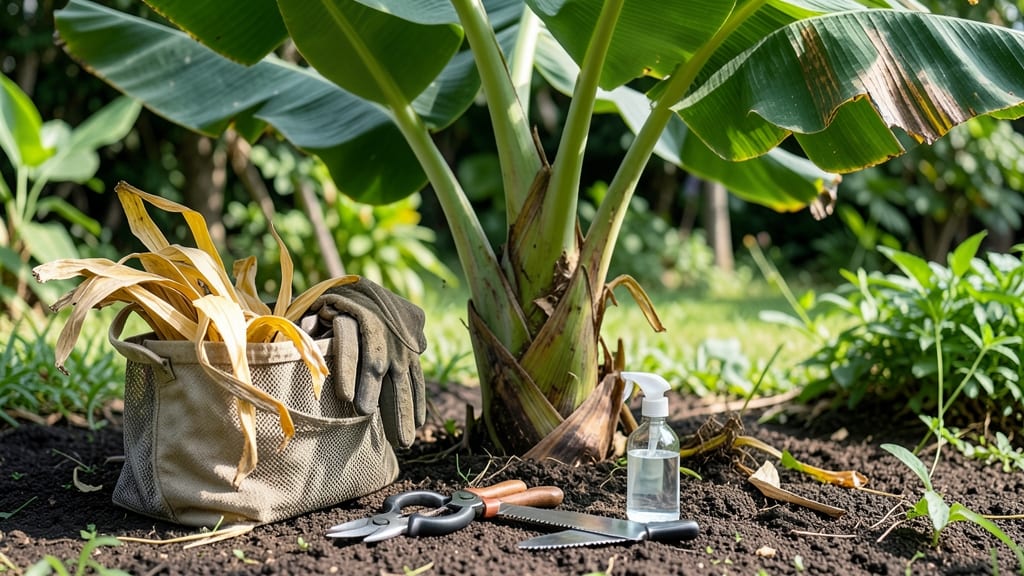
Trimming your banana tree isn’t just about keeping it tidy—it’s the secret to doubling your harvest every year. 🌿 I’ve watched my own trees go from scraggly to productive powerhouses after mastering this simple routine, and the best part? You can trim year-round with the right approach.
The key is timing and technique: prune old leaves before they turn brown, remove dead growth immediately, and never cut more than one-third of the fronds at once. You’ll need sharp pruners, a ladder (for taller trees), and a clear day to work—banana trees hate wet cuts.
Within weeks, you’ll see fresh green shoots pushing out, each one a potential future harvest.
What you end up with is a tree that looks neat and healthy while producing more fruit per season. The first flush of bananas comes from the oldest pseudostem, so timing your cuts matters—too early and you lose potential harvests; too late and you risk disease.
I’ll show you exactly when to trim for maximum yield.
This method works for both dwarf and large banana varieties, whether you’re growing in tropical climates or container gardens. The same principles apply—just adjust for your local growing conditions. Let’s get those fronds in shape!
📚 In This Guide
- What you need
- Instructions
- Tips and common mistakes
- Wrapping up and next steps
What you need
- ● Pruning shears: Sharp, bypass-style shears (for clean cuts on smaller branches). Quantity: 1 pair.
- ● Loppers: Heavy-duty, bypass or anvil-type (for thicker stems). Quantity: 1 pair.
- ● Pruning saw: Curved-tooth saw (for stubborn, thick branches). Quantity: 1.
- ● Gloves: Heavy-duty, cut-resistant (banana trees have thorns!). Quantity: 1 pair.
- ● Disinfectant: 70% isopropyl alcohol or bleach solution (1:9 ratio) (to sterilize tools between cuts). Quantity: Small bottle or spray.
- ● Rope or twine: 3/8-inch diameter (for securing heavy branches). Quantity: 1 roll (20 ft).
- ● Safety glasses: (to protect eyes from debris). Quantity: 1 pair.
- ● Extension pole: Adjustable (for reaching high branches). Quantity: 1.
- ● Ladder: Sturdy, non-slip (if branches are >6 ft tall). Quantity: 1.
- ● Pruning sealant: (to coat larger cuts and prevent disease). Quantity: Small tube.
- ● Work boots: Steel-toe or reinforced (for protection and stability).
- ● Bucket or tarp: (to collect debris and fallen fruit). Quantity: 1-2.
- ● ✅ Know your banana tree’s variety: Some types (like Musa acuminata) respond better to specific trimming techniques.
- ● ✅ Check the weather: Trim on a dry, cloudy day (avoid direct sun or rain for 24 hours before/after).
- ● ✅ Wear long sleeves/pants: Banana trees can have abrasive leaves and thorns!
- ● ✅ Have a plan: Sketch the tree’s structure beforehand to visualize cuts.
Step-by-Step guide to pruning your banana tree for optimal growth
Here's how I transform wild, unruly banana growth into a productive, manageable plant with these precise pruning techniques.
✂️ Step 1: Identify and Remove Dead or Diseased Fronds
Start by examining your banana tree for any fronds that are completely brown, yellow, or showing signs of fungal infection. These are your first targets—they're no longer contributing to the plant and can harbor pests. I always work from the outside inward, making it easier to spot healthy growth hiding behind damaged fronds.
Use clean, sharp pruning shears to cut each dead frond at its base, about 1-2 inches from the trunk. The goal is to remove the entire frond without leaving stubs. You'll notice the trunk looks cleaner immediately—this opens up airflow to the center of the plant, which prevents rot and encourages new growth.
✂️ Step 2: Trim Back Overly Long or Damaged Fronds
Next, focus on fronds that are still partially green but show signs of stress—split leaves, excessive tearing, or fronds longer than 6-8 feet. These fronds are energy drains. I like to trim them back to about half their length, cutting just above a healthy leaf node where new growth can emerge.
When making cuts, angle them slightly downward to prevent water from pooling on the cut surface. You'll see the plant's structure become more balanced, with a stronger center. This step is especially important after storms or heavy winds, when fronds can get torn and damaged.
✂️ Step 3: Prune Suckers for Better Fruit Production
Banana trees produce suckers—small shoots that grow from the base of the plant. While some are needed for propagation, too many suckers compete with the main stem for nutrients. I typically leave only 1-2 strong, healthy suckers per plant, removing the rest at the base with a clean cut.
Here's the thing—if you're growing for fruit, prioritize the main stem and one strong sucker. You'll notice the remaining suckers grow faster and stronger, with thicker stems and more vibrant leaves. This ensures your main plant puts all its energy into producing larger, healthier bunches of bananas.
✂️ Step 4: Shape the Canopy for Air Circulation and Sunlight
Once the major pruning is done, step back and assess the overall shape of your banana tree. The goal is to create an open, umbrella-like structure that allows sunlight to reach the center and air to circulate freely. I often trim the outer fronds to create a gradual slope, ensuring the top is slightly narrower than the base.
This shaping isn't just about aesthetics—it dramatically reduces the risk of fungal diseases like Panama wilt. You'll see new fronds emerge more evenly spaced, and the plant will develop a stronger, more stable structure. Regular shaping also makes future pruning easier, as you're maintaining a consistent form rather than playing catch-up.
⏰ Step 5: Schedule Seasonal Pruning for Continuous Growth
Banana trees benefit from year-round maintenance, but timing matters. In warmer climates, I prune lightly every 2-3 months to encourage continuous growth. In cooler regions, focus on late winter or early spring before new shoots emerge. You'll notice a surge in new fronds and suckers within 4-6 weeks of proper pruning.
Don't skip the post-pruning care—water deeply after trimming to help the plant recover, and apply a balanced fertilizer to support new growth. Over time, you'll develop a rhythm with your banana tree, adjusting your pruning schedule based on its response and the local climate.
Tips & tricks for year-round banana tree maintenance
Mastering the art of banana tree pruning transforms chaotic growth into a productive, healthy plant. These insights will help you avoid common pitfalls and maximize your harvest potential.
Tool Preparation: Sterilize your pruning shears with rubbing alcohol between cuts to prevent spreading disease from infected fronds to healthy ones. I keep a small spray bottle of diluted bleach (1 part bleach to 9 parts water) handy for quick disinfection between cuts on larger trees. This simple step can save your entire plant from fungal infections that spread through contaminated tools.
Visual Cues for Healthy Cuts: When trimming fronds in Step 2, look for the "V" shape where the frond meets the trunk—this is your healthy leaf node. Cutting just above this point ensures new growth emerges from a strong location rather than a weak spot. I always run my finger along the trunk to feel for these nodes before making cuts, which prevents accidental damage to potential growth points.
Sucker Management Strategy: In Step 3, if you're unsure which suckers to keep, prioritize those growing closest to the main stem but not directly in line with it. These suckers receive the most nutrients from the parent plant while still allowing airflow. I label my strongest suckers with small plant tags to track their progress—this helps me decide which to keep for propagation and which to remove for better fruit production.
Seasonal Adjustments: For cooler climates, extend the 4-6 week observation period to 8 weeks after pruning in Step 5. Cold temperatures slow metabolic processes, so new growth may take longer to appear. I monitor my trees' response by checking for new frond emergence and adjusting my pruning schedule accordingly—this prevents over-pruning in slower seasons.
Pro Tips for Banana Tree Trimming
- Mastering the art of banana tree pruning transforms chaotic growth into a productive, healthy plant.
- Tool Preparation: Sterilize your pruning shears with rubbing alcohol between cuts to prevent spreading disease from infected fronds to healthy ones.
- Visual Cues for Healthy Cuts: When trimming fronds in Step 2, look for the "V" shape where the frond meets the trunk—this is your healthy leaf node.
Frequently asked questions
about banana tree trimming—because even the pros need a little clarity now and then!When is the best time to trim a banana tree?
Trim your banana tree after it produces fruit, typically in late fall or winter (dormant season). This prevents stress during growth phases. For tropical climates, trim when the plant slows growth naturally. Avoid trimming during flowering or fruiting—this can reduce yield!
What happens if I trim at the wrong time?
Trimming during active growth (spring/summer) or while flowering can shock the plant, leading to stunted fruit production or even death. Over-trimming too early may also expose the pseudostem to pests or disease. Patience pays off!
Do I need to sterilize my pruning tools?
Absolutely!
Disinfect shears or saws with rubbing alcohol or a 10% bleach solution between cuts to prevent fungal/bacterial spread (like Fusarium wilt). Clean tools reduce the risk of infecting healthy parts of the plant.
Can I trim a banana tree too much?
Yes—over-trimming removes vital energy stores in the pseudostem. Leave at least half the trunk intact (even if it looks "ugly"). Focus on removing only dead leaves, damaged fronds, or sucker growth. Less is more!
What should I do with the trimmed branches?
Use pruned fronds as mulch (chop into smaller pieces first) or compost them. Avoid burning them—banana leaves release toxic fumes when burned. Waste not, want not!
How do I know if my banana tree needs trimming?
Watch for these signs:
- Dead or yellowing leaves (remove these first).
- Overcrowded suckers (keep 1-2 strongest per plant).
- Pests/disease (trim affected areas immediately).
Wrapping up and next steps
Trimming your banana tree isn’t just about aesthetics—it’s the secret weapon for healthier plants and bigger, juicier harvests! 🌱 Whether you’re pruning for shape, airflow, or fruit production, the key is consistency and confidence.
With the right tools, timing, and techniques, you’ll transform your banana patch into a thriving, high-yielding oasis.
Ready to level up your gardening game? Start by scheduling your next trim—whether it’s removing old fronds, shaping the trunk, or prepping for flowering. Your future banana feasts will thank you! 🍌✨