
Pruning
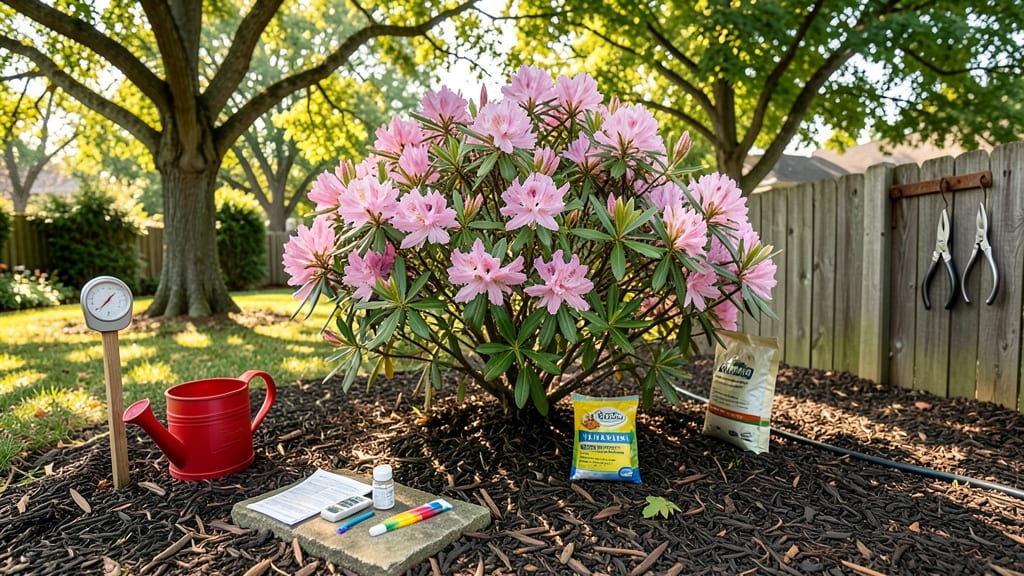
Azalea tree care outdoor thrives when you prune them year-round—not just after blooms fade. 🌸 I’ve learned that skipping this step means fewer flowers and leggy branches, but the right timing and technique transforms them into vibrant, bushy plants that bloom like clockwork every spring. Start with well-draining, acidic soil (pH 4.5–6.0) and morning sun with afternoon shade—too much direct sun scorches the delicate blooms. Water deeply once a week (more in summer heat), keeping roots moist but never soggy. The key? Pruning right after flowering (late spring) removes spent blooms while shaping the tree for next year’s growth. By mid-summer, you’ll see fresh green leaves pushing out from pruned areas, signaling the tree’s recovery. A light trim in early fall cleans up dead growth, and a final check in winter removes any frost-damaged branches. The result? A tree that stays compact, blooms profusely, and resists pests better than neglected ones. This method works for both rhododendrons and azaleas, whether you’re growing them in containers or planted in the ground. Here’s how to do it without stress—even if you’ve killed plants before.
📚 In This Guide
- What you need
- Instructions
- Tips and common mistakes
- Wrapping up and next steps
What you need
- ● Pruning shears or loppers: Sharp, bypass-style shears (for small branches) or loppers (for thicker stems up to 1-inch diameter). Disinfect with rubbing alcohol between cuts to prevent disease.
- ● Hand pruners: For delicate trimming of small stems or deadheading spent blooms.
- ● Gloves: Heavy-duty gardening gloves (nitrile-coated for grip and protection from thorns).
- ● Watering can or hose: With a gentle spray nozzle for post-pruning hydration.
- ● Mulch: 2–3 inches of organic mulch (pine bark, wood chips, or shredded leaves) to retain moisture and regulate soil temperature.
- ○ Fertilizer (optional but recommended): Slow-release acid-loving plant fertilizer (e.g., 8-3-9 or 10-10-10 with micronutrients).
- ● Or organic options like cottonseed meal or peat moss (apply in early spring).
- ● Ladder or step stool: For reaching higher branches safely (extendable ladders work best for mature trees).
- ● Pruning saw: For removing thick, woody branches (if your loppers can’t handle it).
- ● Spray bottle with diluted hydrogen peroxide (3%) or copper fungicide to treat cuts and prevent infection.
- ● Soil pH test kit: To ensure your azalea’s soil stays acidic (pH 4.5–6.0)—critical for health!
- ● Plant tie or twine: For supporting weak branches after pruning (if needed).
Instructions for year-round azalea tree pruning
Here's the simple, seasonal approach I use to keep my azaleas thriving and blooming abundantly every year.
✂️ Step 1: Prune Immediately After Spring Blooming
Wait until all flowers have faded and new leaves have formed—usually 4-6 weeks after blooming. This timing ensures you don't cut off next year's flower buds, which form on last year's wood. I always prune in late May or early June in my zone 7 climate, but adjust for your last frost date.
Remove only dead, diseased, or crossing branches first. Use sharp, clean pruners to make cuts at a 45-degree angle just above a outward-facing bud. Never remove more than 25% of the plant's total growth in one session—this keeps the tree healthy and encourages strong new growth.
☀️ Step 2: Thin and Shape During Summer Growth
In July or August, when new growth has hardened off, do a light thinning to improve air circulation. Focus on removing branches that grow inward or rub against others. You'll see these as thinner, weaker stems that don't carry leaves all the way to the tip.
Shape the tree by cutting back overgrown branches to just above an outward-facing bud. This opens up the center and lets sunlight reach all parts of the tree. I never cut more than 1/3 of any branch's length—this prevents shocking the plant and keeps it producing flowers.
🌿 Step 3: Light Pruning in Late Fall
After the first hard frost, do a light cleanup to remove any dead or diseased branches that appeared over winter. This prevents pests from overwintering in damaged wood. I do this in November before the ground freezes completely.
Remove only what's absolutely necessary—no shaping or thinning at this point. The tree is entering dormancy, and late cuts won't heal properly before winter. Focus on sterilizing your pruners between cuts by wiping them with rubbing alcohol to prevent spreading disease.
⏰ Step 4: Winter Dormancy Care (No Pruning Needed)
Leave the tree completely alone during winter months. Azaleas need this dormancy period to set next year's flower buds. The only care needed is mulching around the base with 2-3 inches of organic mulch to protect roots from freeze-thaw cycles.
Watch for winter burn—brown leaf edges caused by dry winter air. If you see this, give the tree a deep watering in late winter (before buds swell) to help it recover. Never prune during winter—new cuts won't heal properly in cold temperatures.
Tips & tricks for perfect azalea tree pruning
These simple tricks will help you maintain your azaleas like a pro without stressing over the details.
Timing is Everything: Pay close attention to the 4-6 week window after blooming in Step 1. I've learned the hard way that cutting too early removes flower buds for next season! Mark your calendar for late May/early June in zone 7, then adjust for your local last frost date. If you miss this window, wait until new leaves appear to confirm buds have already formed.
Tool Prep Matters: Before you start pruning, sterilize your pruners with rubbing alcohol—especially important in Step 3 when removing diseased branches. I keep a small bottle of 70% isopropyl alcohol in my gardening toolkit. Clean cuts heal better and prevent spreading fungal infections to healthy parts of the tree. Sharp tools also make cleaner cuts that heal faster, so invest in good quality pruners.
Visual Cues for Pruning: When shaping in Step 2, look for branches that grow inward or rub against others—they'll be thinner and weaker with leaves that don't extend all the way to the tip. These are perfect candidates for removal. For shaping cuts, imagine a pencil in your hand making the cut—you're aiming for a 45-degree angle just above an outward-facing bud that's clearly visible on the branch.
Seasonal Care Reminders: In Step 4, don't forget about winter burn prevention. After your first hard frost, apply 2-3 inches of organic mulch around the base to protect roots. I use shredded bark mulch because it breaks down slowly and improves soil structure over time. And that deep watering in late winter? It's worth the effort—your azalea will thank you with vibrant blooms next spring.
Pro Tips for Azalea Tree Care Outdoor
- These simple tricks will help you maintain your azaleas like a pro without stressing over the details.
- Timing is Everything: Pay close attention to the 4-6 week window after blooming in Step 1.
- Tool Prep Matters: Before you start pruning, sterilize your pruners with rubbing alcohol—especially important in Step 3 when removing diseased branches.
Frequently asked questions
Got questions about keeping your azalea tree thriving? Here are some of the most common concerns—and straightforward answers to help you care for your outdoor beauty with confidence!
When is the best time to prune my azalea tree?
Prune your azalea right after blooming (late spring to early summer) to encourage new growth and vibrant flowers next season. Avoid heavy pruning in fall or winter, as it can damage tender buds. Light shaping is fine in late winter if needed, but keep it minimal!
Can I prune azaleas in winter?
Light pruning in late winter (before buds swell) is okay, but avoid heavy cuts—it can stress the tree. Winter pruning is best for removing dead or crossing branches. If you must prune later, wait until after the last frost to protect blooms.
How much can I prune my azalea without harming it?
Never remove more than ⅓ of the tree’s foliage in one season. Over-pruning weakens growth and reduces flowering. Focus on shaping and deadwood removal—azaleas thrive with gentle, strategic cuts rather than drastic trims!
Why aren’t my azaleas blooming?
Poor blooms often mean over-fertilizing with high-nitrogen (which fuels leaves, not flowers) or pruning at the wrong time. Try a low-nitrogen, high-phosphorus fertilizer in early spring and prune after blooming. Also, check for pests like lace bugs or spider mites!
What’s the best way to revive a struggling azalea?
Start with proper watering (1–2 inches per week, keeping soil moist but not soggy) and mulch (2–3 inches of organic mulch) to retain moisture. If the tree looks yellow or wilted, test soil pH (azaleas love acidic soil, pH 4.5–6.0). A slow-release acid-loving plant fertilizer can help too!
Wrapping up and next steps
Caring for your azalea tree outdoors is all about patience, consistency, and a little love—just like nurturing any prized plant! 🌸 With the right year-round pruning techniques, proper soil conditions, and seasonal adjustments, your azalea will reward you with vibrant blooms and lush foliage for years to come.
Remember, every trim and feeding step brings you closer to that stunning, healthy tree you’ve always dreamed of.
Ready to take the next step? Grab your pruners, mark your calendar for seasonal checks, and enjoy the process! Your azalea’s beauty is just a few cuts away—happy gardening! 🌿✨