
Trees
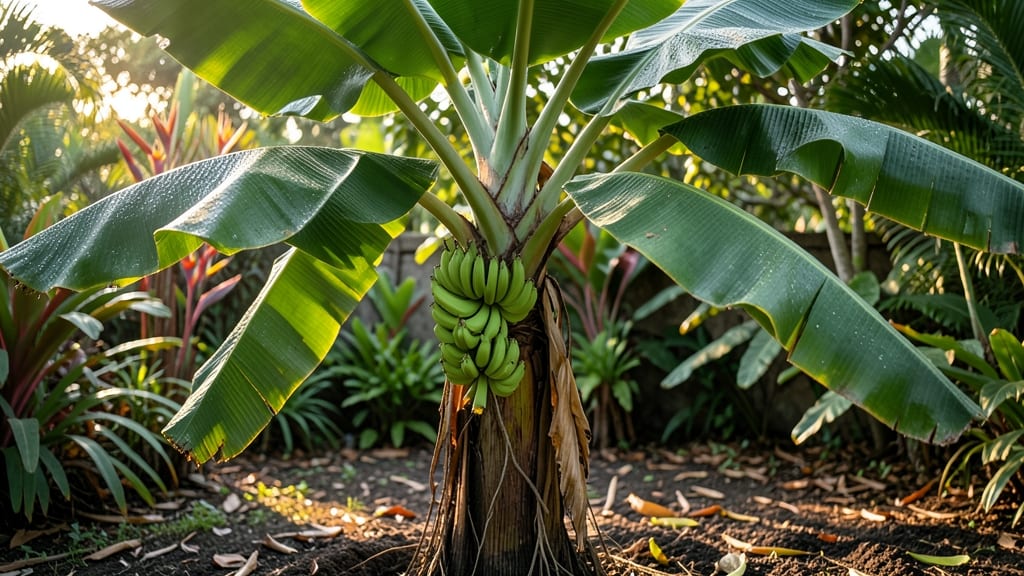
Banana trees require tropical or subtropical climates to thrive, needing consistent warm temperatures between 70–90°F, high humidity levels of 60–90%, and ample rainfall of 40–100+ inches annually. Frost-free conditions and partial shade in intense heat are essential to prevent leaf damage and stress.
These conditions mirror the banana's native tropical habitats, where steady warmth and moisture support rapid growth and fruit production. 🌿 Without proper humidity, leaves can develop brown edges, while temperatures below 50°F trigger dormancy or permanent damage.
I've seen banana trees in containers survive cooler climates by moving them indoors during winter, but even then, they need bright indirect light to compensate for reduced natural sunlight.
In regions outside the ideal USDA Zones 9–12, microclimates near water sources or south-facing walls can create micro-environments that extend growing seasons. For example, coastal areas with mild winters often support banana trees better than inland zones with similar average temperatures but more temperature swings.
💡 In This Article
- Banana Tree Temperature and Humidity Needs Explained
- Best USDA Hardiness Zones for Growing Banana Trees
Banana tree temperature and humidity needs explained
Banana trees evolved in equatorial regions where daytime temperatures hover around 80–85°F and nighttime rarely dip below 65°F. Their large, broad leaves act like transpiration engines, releasing water vapor to cool the plant—this process requires high humidity to function efficiently.
When humidity drops below 60%, the leaves struggle to regulate temperature, leading to crispy edges and stunted growth. In my experience, the most critical threshold is 40% humidity, where leaf scorch becomes visible within days.
The tropical dependence isn't just about warmth—it's about consistency. Banana trees can't handle temperature swings like citrus or avocados. A sudden drop to 50°F triggers dormancy, while 32°F or below kills the plant's meristem (growth center). The roots, which spread shallowly, are particularly vulnerable to cold soil.
In contrast, the 100°F+ heat of full sun stress the leaves by accelerating water loss, which is why partial shade is crucial in zones with intense afternoon sun.
Rainfall patterns matter just as much as temperature. Banana trees need 40–100+ inches annually, but it's not just about volume—it's about distribution. Prolonged dry spells cause the pseudostem (the "trunk") to split open, while excessive waterlogging leads to root rot.
The ideal is 1–2 inches of water weekly, either from rain or irrigation, delivered through drip systems to keep moisture at root level. I've seen banana trees in greenhouses thrive with 70% humidity and 85°F temps year-round, proving that with the right setup, even non-tropical climates can work.
Humidity isn't just about comfort—it's about photosynthesis. Banana leaves have specialized cells called hydathodes that excrete water droplets (guttation) when humidity is high, which actually helps flush out toxins. When humidity drops, these cells can't function, and the plant's ability to process nutrients declines.
The science gets even more interesting: banana flowers release ethylene gas, which requires high humidity to disperse properly. Low humidity concentrates this gas, leading to poor fruit set and smaller bunches.
What most gardeners overlook is how wind interacts with these conditions. In open tropical environments, gentle breezes help circulate humid air, but strong winds dry out leaves faster.
That's why banana trees in containers need 50–70% humidity even indoors—without proper airflow, stagnant air creates ideal conditions for fungal diseases like sigatoka leaf spot. A simple humidifier or pebble tray can make all the difference in maintaining that tropical feel.
Consider these key factors when replicating tropical conditions:
- Temperature range: Daytime 75–85°F, nighttime 65–75°F—never below 50°F
- Humidity threshold: Maintain 60–90% using misting systems or indoor humidifiers
- Watering schedule: 1–2 inches weekly, with mulch to retain moisture
- Wind protection: Use windbreaks or strategic planting near walls
The most successful banana growers I've worked with treat their plants like tropical houseguests—consistent warmth, high humidity, and gentle care. Even a small deviation can trigger stress responses that show up as yellowing leaves or failed fruit production. 🌿