
Trees
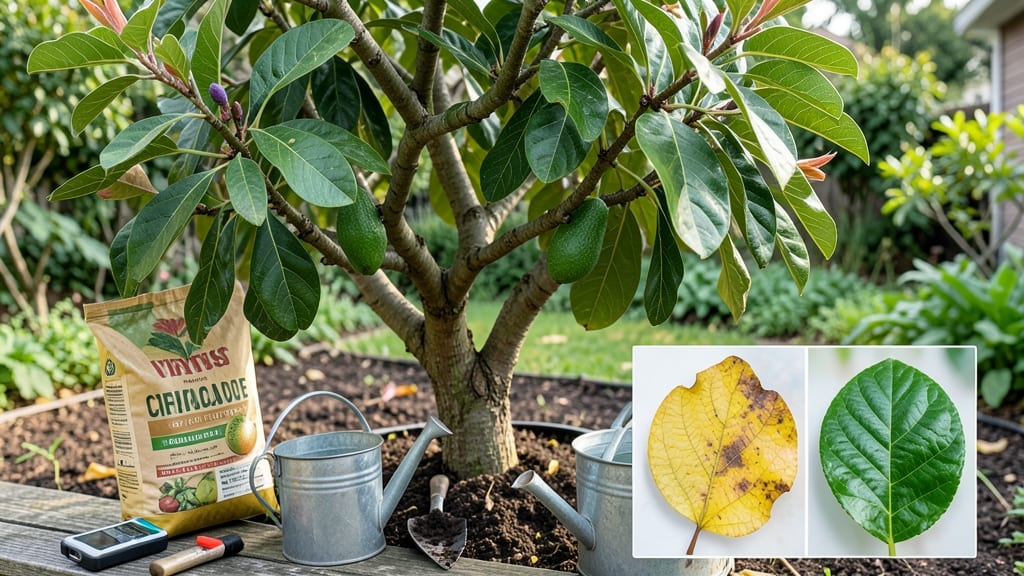
When your avocado tree leaves are turning yellow, it’s almost always a cry for help—either from overwatering or underwatering—and the fix depends on diagnosing the real issue. 🌿 I’ve seen this happen to my own tree after a well-meaning (but overzealous) watering schedule, and the difference between saving it and losing it comes down to checking the soil moisture before you panic.
Overwatering shows up as soggy soil and leaves that yellow from the bottom up, while underwatering creates crispy edges and a dry, cracked root ball.
The key is testing the soil: stick your finger 2-3 inches deep—if it’s damp, cut back on water; if it’s bone-dry, it’s time to hydrate deeply. Both problems share one solution: fixing your watering rhythm to match your tree’s needs.
Once you’ve corrected the watering, watch for improvement in 1-2 weeks. If the yellowing spreads or new leaves stay pale, it could signal nutrient deficiencies (like nitrogen or magnesium) or root rot—but that’s a different battle.
Start with the basics, and your avocado will bounce back with rich, deep-green foliage in no time.
Prevention is simple: water only when the top 2 inches of soil are dry, and always use a pot with drainage holes. This one habit keeps your tree thriving year-round—no guesswork required.
Root Causes Behind Yellowing Leaves
When your avocado tree’s leaves start turning yellow, it’s often a cry for help—your tree is struggling to thrive. Understanding the why behind the discoloration is the first step to saving it.
Below, we break down the most common culprits, backed by science, so you can diagnose the issue like a pro. 🌱🔍
Avocado trees are drought-tolerant, meaning they prefer their roots to dry out slightly between waterings. When you overwater, the roots suffocate from lack of oxygen, leading to root rot and nutrient uptake issues. Here’s how it plays out:
- Yellowing between veins: Overwatering often causes leaves to turn yellow first between the veins, while the veins stay green. This happens because excess water blocks the tree’s ability to absorb essential nutrients like nitrogen and iron.
- Mushy, foul-smelling roots: If you gently tug on the tree and the soil smells sour or the roots appear brown and mushy, root rot is likely the culprit. 🚨
- Wilting despite wet soil: A tree that’s overwatered may droop even when the soil feels damp—its roots can’t support it.
Why it happens: Avocado trees thrive in well-draining soil. When water pools around the roots, beneficial aerobic bacteria can’t survive, leading to anaerobic conditions that produce toxic byproducts. Over time, this disrupts the tree’s ability to transport water and nutrients, causing leaf yellowing.
While overwatering drowns the roots, underwatering starves them. Avocado trees are adapted to dry climates, but prolonged drought stress forces the tree to shed leaves as a survival mechanism. Here’s how to spot it:
- Uniform yellowing: Unlike overwatering, underwatering causes leaves to yellow evenly, often starting from the edges and moving inward. The leaf may also feel dry or crispy to the touch.
- Leaf drop: The tree may shed yellow leaves entirely, especially older ones, to conserve energy.
- Soil pulls away from the pot: If the soil shrinks and cracks when dry, your tree isn’t getting enough moisture.
Why it happens: Avocado trees rely on a balance of moisture and oxygen in the soil. When underwatered, the roots can’t absorb water efficiently, leading to osmotic stress. The tree’s cells lose turgor pressure (the "plumpness" that keeps leaves firm), causing them to wilt and yellow. Additionally, the tree’s nutrient transport system slows down, exacerbating the problem.
Avocado trees are tropical and thrive in warm climates. When exposed to extreme temperatures—whether too hot or too cold—they react by yellowing leaves as a protective measure. Here’s what to watch for:
- Cold damage: Temperatures below 30°F (-1°C) can cause rapid yellowing, browning, or even leaf drop. Cold stress disrupts cellular membranes, leading to chlorosis (loss of green pigment).
- Heat stress: While avocados love warmth, prolonged exposure to temperatures above 90°F (32°C) can scorch leaves, causing yellowing or browning, especially on the edges.
- Windburn: Strong, dry winds can dehydrate leaves quickly, leading to yellow or brown patches, particularly on exposed branches.
Why it happens: Temperature stress triggers the production of ethylene gas, a plant hormone that accelerates leaf senescence (aging). Cold weather can also cause oxidative damage to chloroplasts—the structures responsible for photosynthesis—leading to yellowing. Heat stress, on the other hand, increases transpiration (water loss) faster than the roots can replace it, causing dehydration and leaf discoloration.
Yellowing leaves can also signal a lack of essential nutrients. The most common deficiencies in avocado trees include:
| Nutrient | Symptoms | Why It Happens |
|---|---|---|
| Nitrogen (N) | Yellowing starts on older leaves, while new growth remains green. Severe cases may show stunted growth. | Nitrogen is crucial for chlorophyll production. A deficiency means the tree can’t synthesize enough green pigment, leading to yellowing. Common in poor or sandy soils. |
| Iron (Fe) | Yellowing between veins (interveinal chlorosis) on young leaves, while veins stay green. Often seen in alkaline soils. | Iron is necessary for chlorophyll formation, but its uptake is inhibited in high-pH soils. Even if the soil has iron, the tree can’t access it. |
| Magnesium (Mg) | Yellowing appears between veins on older leaves, with brown or dead spots developing later. | Magnesium is a central component of chlorophyll. A deficiency disrupts photosynthesis, causing yellowing. Over-fertilization with nitrogen can also leach magnesium from the soil. |
| Potassium (K) | Yellowing or browning on leaf edges (a condition called "scorch"), often with weak or stunted growth. | Potassium regulates water and nutrient transport. A deficiency weakens the tree’s ability to manage stress, leading to leaf burn and yellowing. |
Why it happens: Nutrient deficiencies occur when the soil lacks essential minerals, the pH is imbalanced (e.g., alkaline soil blocks iron uptake), or the tree can’t absorb nutrients due to root damage (e.g., from overwatering or compaction). Avocado trees are heavy feeders, so they require regular fertilization to maintain healthy growth.
While less common than water or nutrient issues, pests and diseases can also cause yellowing leaves. Here’s what to look for:
- Avocado lace bug: These pests suck sap from leaves, causing yellowing, stippling (tiny white dots), and webbing. Heavy infestations can stunt growth.
- Root-knot nematodes: Microscopic worms that attack roots, reducing the tree’s ability to absorb water and nutrients. Symptoms include yellowing leaves, stunted growth, and wilting.
- Fungal infections (e.g., anthracnose): Fungal spores thrive in warm, humid conditions, causing yellow or brown spots on leaves that may drop prematurely.
Why it happens: Pests and diseases disrupt the tree’s physiological processes. Sap-sucking insects like lace bugs remove nutrients directly from the leaves, while root-damaging nematodes or fungi block nutrient and water uptake. This leads to chlorosis (yellowing) as the tree struggles to maintain its metabolic functions.
Fixing Yellow Leaves Step by Step
Now that you’ve identified why your avocado tree’s leaves are turning yellow—whether from overwatering, underwatering, or other issues—it’s time to take action. Below are practical, step-by-step solutions tailored to each cause, plus prevention tips to keep your tree thriving.
If your avocado tree is drowning in excess moisture, act fast to prevent root rot and leaf drop.
🔥 Step 1: Stop Watering Immediately
- Pause all watering for at least 3–5 days to let the soil dry out.
- If the soil is soggy (like a damp sponge), wait even longer—up to a week—before checking again.
- Pro Tip: Stick your finger 2–3 inches deep into the soil.
If it’s moist, wait; if it’s dry, it’s time to water lightly.
🍳 Step 2: Improve Drainage Avocado trees hate soggy roots.
Fix drainage with these tweaks: - Repot if needed: If your tree is in a container, move it to a pot with drainage holes (if it doesn’t have them). - Add perlite or sand: Mix 20–30% perlite, pumice, or coarse sand into the soil to improve aeration. - Raise the pot: Place it on feet or a saucer to prevent water pooling at the bottom.
👨🍳 Step 3: Check for Root Rot
- Gently remove the tree from its pot (if in one) and inspect the roots.
- Healthy roots are firm and white; rotting roots are mushy, brown, or black.
- Trim affected roots with sterilized scissors and dust with cinnamon or fungicide to prevent spread.
- ✨ Prevention: After repotting, water only when the top 2 inches of soil are dry.
🥘 Step 4: Adjust Your Watering Routine
- Water deeply but infrequently: Avocado trees prefer dry spells between waterings.
- Morning watering is best: It allows excess moisture to evaporate during the day.
- Avoid wetting leaves: Water at the base to prevent fungal diseases like anthracnose.
Yellowing leaves from thirst are often drier and crispy at the edges. Here’s how to revive your tree:
🔥 Step 1: Water Thoroughly
- Soak the root zone until water drains from the bottom (if in a pot).
- For in-ground trees, dig a small trench around the base and water deeply.
- 💡 Pro Tip: If the soil is bone-dry, it may take 10–15 minutes of slow watering to rehydrate.
🍳 Step 2: Mulch to Retain Moisture
- Apply a 2–3 inch layer of organic mulch (wood chips, straw, or bark) around the base.
- Keep mulch 2–3 inches away from the trunk to prevent rot.
- ✨ Prevention: Mulch helps retain moisture and regulates soil temperature.
👨🍳 Step 3: Adjust Watering Frequency
- Check soil moisture daily for the first week, then every 2–3 days.
- Young trees may need watering every 2–3 days in hot weather, while mature trees can go 5–7 days between waterings.
- 🌡️ Watch for signs: If leaves droop midday but perk up at night, it’s thirsty.
If they stay wilted, it’s a more serious issue (like root damage).
🥘 Step 4: Boost Humidity (For Container Trees)
- Place the pot on a tray of pebbles with water (ensure the pot isn’t sitting in water).
- Mist leaves lightly in the morning to increase humidity without causing fungal issues.
- ✨ Prevention: Group potted avocado trees together to create a microclimate.
Yellow leaves can also signal nutrient imbalances. Here’s how to fix common deficiencies:
| Deficiency | Symptoms | Solution |
|---|---|---|
| Nitrogen (N) | Yellowing older leaves, stunted growth | Apply balanced fertilizer (10-10-10) or compost tea every 4–6 weeks. |
| Potassium (K) | Yellow edges on older leaves, weak stems | Use a potassium-rich fertilizer or banana peel tea. |
| Magnesium (Mg) | Yellow between leaf veins (chlorosis) | Sprinkle Epsom salt (1 tbsp per gallon of water) monthly. |
| Iron (Fe) | Pale yellow new leaves, small size | Apply chelated iron or iron sulfate to acidic soil. |
💡 Pro Tip: Test your soil (DIY kits are cheap!) to confirm deficiencies before guessing.
If spider mites, scale, or fungal infections are causing yellowing:
🔪 Step 1: Isolate the Tree
- Move the tree away from others to prevent spread.
- Wipe leaves with a soapy water cloth (1 tsp mild soap per gallon of water) to remove pests.
🛡️ Step 2: Apply Targeted Treatments
- For pests (mites, scale, aphids):
- Spray with neem oil (1 tsp per quart of water) every 5–7 days for 2 weeks.
- Introduce beneficial insects like ladybugs or lacewings.
- For fungal issues (like anthracnose):
- Apply copper fungicide or baking soda spray (1 tsp baking soda + 1 quart water + a drop of soap).
- Prune infected leaves and sterilize pruners with rubbing alcohol.
✨ Prevention:
- Inspect leaves weekly for early signs of pests.
- Avoid overhead watering to keep leaves dry.
- Prune for airflow—remove crowded or dead branches.
- Prune properly: Remove yellow, damaged, or crossing branches to improve airflow.
- Repot every 2–3 years: If in a container, refresh the soil to prevent nutrient depletion.
- Monitor sunlight: Avocado trees need full sun (6+ hours/day)—yellowing can signal too much shade.
- Avoid cold drafts: Keep potted trees away from AC vents or drafty windows.
Final Thought: 🌿 Patience is key! Avocado trees can take weeks to recover, but with the right care, they’ll bounce back with lush, green foliage—and maybe even a tasty harvest down the line.
Frequently asked questions
Why do some leaves turn yellow while others stay green?
This pattern often signals a nutrient deficiency or pest issue. If older leaves yellow first while new ones stay green, it’s likely a nitrogen deficiency. If young leaves yellow between veins while older ones stay green, check for iron deficiency (common in alkaline soils). For pests like lace bugs, look for tiny white dots or webbing on the undersides of leaves.
Can I save my avocado tree if the roots smell bad?
Yes, but act fast! A foul smell means root rot—trim all mushy, brown roots with sterilized scissors, repot in fresh, well-draining soil with perlite or sand, and stop watering for 5-7 days. Dust healthy roots with cinnamon or fungicide to prevent spread. Recovery takes 4-6 weeks if caught early.
How often should I fertilize an avocado tree?
Feed your tree every 4-6 weeks during growing season (spring-fall) with a balanced fertilizer (10-10-10). For container trees, use half-strength fertilizer to avoid salt buildup. In winter, reduce to once every 2 months—over-fertilizing causes yellowing and leaf drop. Always water thoroughly after applying fertilizer.
Will pruning yellow leaves help my tree recover?
Yes! Prune only the yellow or dead leaves—never healthy green ones. This redirects energy to new growth. Use sterilized pruners and make cuts at a 45-degree angle just above a leaf node. For severe cases, remove up to 1/3 of the foliage to reduce stress. Always prune in morning hours to avoid fungal infections.
Can cold weather cause permanent damage?
Temperatures below 30°F (-1°C) can damage leaves, but the tree itself may survive. New growth will emerge green once warm weather returns. To protect potted trees, move them indoors near a sunny window or wrap the pot in bubble wrap. For outdoor trees, cover with frost cloth during cold snaps. Avoid fertilizing during recovery—focus on watering lightly.