
Pruning
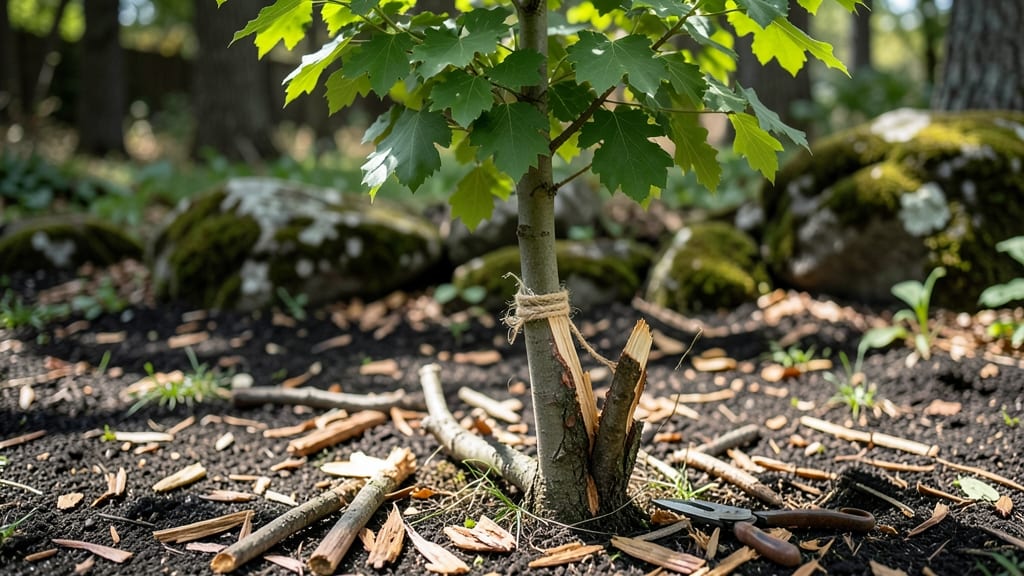
A young tree snapped in half isn’t always a death sentence—it just needs the right emergency care. ✂️ I’ve nursed back more broken branches than I’d like to admit, and the key is acting fast to stabilize the trunk before nature takes over.
The first 24 hours make all the difference in whether your tree survives or collapses under its own weight.
Most snaps happen from wind, snow, or weak branch attachment, but the good news is that trees heal surprisingly well when supported properly. You’ll need sturdy stakes, strong tape (or tree repair cloth), and a saw for any dead sections—no fancy tools required.
The goal is to create a bridge that lets the tree grow back together while keeping it upright.
By the end of this process, your tree will look like it’s holding on by a thread—but that’s exactly how it should be. With proper pruning to remove damaged wood and regular checks on the repair, you’ll see new growth within a few months.
The worst that can happen is you lose a branch; the best? A tree that outlives you.
If the break is larger than 3 inches in diameter or the tree is leaning dangerously, call an arborist. Otherwise, this DIY method works for most young trees—just be patient. Nature’s glue takes time, but it’s stronger than you think.
Underlying Causes Of Tree Failure
When a young tree snaps in half, it’s rarely a random act of nature—there’s almost always a root cause (pun intended). Understanding these factors can help you prevent future damage and even save a tree that’s already struggling.
Below, we break down the most common reasons why young trees fail structurally, along with the science behind them.
A tree’s ability to withstand stress depends on its internal architecture. In young trees, the xylem (wood) and phloem (bark layer) are still developing, making them vulnerable to failure. Here’s why:
- Thin Trunks vs. Heavy Canopies: Many young trees grow tall quickly to compete for sunlight, but their trunks don’t thicken at the same rate. This creates an imbalance—like a skyscraper with a foundation too weak to support its weight. 🏗️💥
- Poor Branch Attachment: Branches that grow at sharp angles (called included bark) create stress points where the branch meets the trunk. Over time, this weakens the connection, making the tree more prone to splitting. Think of it like a poorly glued joint in woodwork. 🔧⚡
- Genetic Weakness: Some tree species (e.g., willows, poplars, or certain fruit trees) are naturally more prone to weak wood structure. If you’re planting young trees, check their cultivar (variety) for known vulnerabilities. 🌱🔍
Actionable Fix: When planting, choose trees with straight trunks and wide crotch angles (branches that grow outward at 45°+). Avoid species with a reputation for weak wood unless you’re prepared for extra support.
Trees don’t live in a vacuum—they’re constantly battling wind, water, and temperature extremes. When these forces exceed a young tree’s limits, structural failure becomes inevitable.
| Stressor | How It Causes Damage | Red Flags |
|---|---|---|
| High Winds | The tree’s foliage acts like a sail, creating torque that bends or snaps the trunk. Young trees with shallow roots are especially at risk. 🌬️🌳 | Leaning trunk, cracked bark at the base, or sudden limb loss in storms. |
| Heavy Rain or Snow | Excessive moisture softens the soil, reducing root grip. Wet wood also becomes 30% weaker than dry wood. ❄️💦 | Mushroom growth at the base (sign of rot) or a “mushy” trunk when pressed. |
| Temperature Swings | Rapid freezing/thawing cycles crack the bark and create entry points for pests/disease. Weakened wood is more likely to split. ❄️🔥 | Vertical or horizontal bark splits, oozing sap, or dead patches on the trunk. |
Actionable Fix:
- 🌡️ Stake young trees temporarily (1–2 years max) to reduce wind sway, but don’t over-tighten—this can girdle the trunk.
- 🌧️ Improve drainage by planting on a slight slope or amending clay soil with compost.
- ☀️🌲 Avoid planting near large structures that create wind tunnels or ice buildup.
Not all tree damage is physical—some of the worst structural failures start with hidden invaders. Pests and pathogens compromise a tree’s integrity from the inside out.
- Boring Insects (e.g., Emerald Ash Borer, Woodpecker Damage): These insects hollow out the trunk, reducing structural support. A tree may look healthy above ground but be hollow like a straw inside. 🐜🪵
- Fungal Rot (e.g., Armillaria, Heart Rot): Fungi break down lignin and cellulose in the wood, turning it into a brittle, spongy mess. Rot often starts at wounds or buried limbs and spreads silently. 🍄⚠️
- Cankers (Bacterial or Fungal): These open sores on the bark disrupt the tree’s nutrient flow, leading to weak spots where the trunk can split. Cankers often appear as sunken, discolored patches. 🌟💀
Actionable Fix:
- 🔍 Inspect trunks annually for holes, sawdust-like frass (insect droppings), or oozing sap.
- 🌿 Prune properly to avoid creating entry wounds—use clean, sharp tools and make cuts at the branch collar.
- 🛡️ Apply protective treatments (e.g., borax for borers, copper fungicide for cankers) if pests are detected early.
Even the hardiest young tree can fail if planted or maintained incorrectly. Common human mistakes accelerate structural weaknesses:
- Improper Planting Depth: Burying the trunk too deep smothers the root flare (where roots meet trunk), leading to girdling roots that strangle the tree. 🌱💀
- Over-Pruning: Removing too many branches at once disrupts the tree’s energy balance, causing weak regrowth or water sprouts (fast-growing, brittle shoots). ✂️❌
- Lack of Support: Young trees need staking or cabling if they’re top-heavy or in windy areas. Without it, the trunk bends permanently, creating stress points. 🪢🌳
- Soil Compaction: Heavy foot traffic or machinery compresses soil, restricting root growth and making the tree more prone to toppling. 👟🚜
Actionable Fix:
- 📏 Plant at the correct depth: The root flare should be visible above soil level.
- 🌿 Mulch properly: Use 2–4 inches of mulch (not wood chips) to protect roots without suffocating the trunk.
- 🪢 Use temporary supports for the first 1–2 years, then remove them to encourage natural trunk strength.
Key Takeaway: Most young tree failures are preventable with the right knowledge. By addressing structural flaws, environmental stressors, biological threats, and human errors early, you
Fixing and Preventing Tree Damage
A snapped young tree can feel like a heartbreaking loss, but with the right steps, you can often save it—or at least prevent further damage.
Below are practical solutions tailored to the most common causes of a broken tree, along with prevention tips to keep your tree strong for years to come.
When a young tree snaps but doesn’t shatter, it may still have a chance to recover with proper care.
🔧 Step 1: Assess the Damage
- Check if the cambium layer (the green, growing tissue just under the bark) is still intact. If it’s exposed but not severely damaged, the tree can heal.
- Look for splits or jagged edges—these may need smoothing to prevent further tearing.
🪒 Step 2: Stabilize the Tree
- If the top half is still attached, gently tie it back together using tree repair cloth or rubber tree straps (avoid wire or metal, which can cut into the bark).
- Prop the broken sections with stakes and soft ties to keep them aligned while the tree heals.
💧 Step 3: Prune Carefully
- Remove any dead, broken, or diseased branches to reduce stress.
- Avoid heavy pruning—only trim damaged foliage to allow the tree to focus on healing.
🌿 Step 4: Support Recovery
- Water deeply but avoid oversaturating the soil.
- Apply a balanced fertilizer (low nitrogen) to encourage new growth without overstimulating the tree.
When a young tree snaps completely or into multiple pieces, salvage may not be possible—but you can still minimize further damage and prevent rot or pests.
⚠️ Step 1: Decide Whether to Remove or Save
- If the trunk is split open or the break is irregular, the tree may not recover.
- If the root system is strong and the break is clean, you can attempt bracing (though success isn’t guaranteed).
🌳 Step 2: Prevent Rot and Pests
- If keeping the tree, seal the wound with tree wound dressing (or a mix of beeswax and linseed oil) to protect against decay.
- Monitor for pests—stressed trees attract borers and fungi.
Use neem oil or horticultural oil if needed.
🚫 Step 3: Remove If Necessary
- If the tree is unstable, diseased, or beyond repair, remove it safely to prevent falling debris.
- Stump grinding may be needed if the roots are still viable (to prevent regrowth).
The best way to avoid a snapped tree is proactive care—especially for young, vulnerable specimens.
🌪️ 💡 Strengthen Against Wind & Storms
- Stake young trees during their first 1-2 years to prevent toppling in strong winds.
- Plant in sheltered spots (near fences or buildings) if your area gets frequent storms.
- Avoid planting near driveways or walkways where they’re at higher risk of accidental damage.
🌱 🌱 Choose the Right Tree for Your Climate
- Fast-growing trees (like willows or poplars) are weaker and more prone to snapping.
- Native, slow-growing species (oaks, maples, or dogwoods) have stronger wood structure.
- Check soil drainage—poor drainage weakens roots, making trees more prone to breakage.
🪓 ✂️ Proper Pruning Practices
- Remove weak branches before storms (especially those with narrow crotches).
- Avoid heavy pruning in late summer/fall—this can stress the tree before winter.
- Thin the canopy to allow better airflow, reducing wind resistance.
💧 💧 Watering & Soil Care
- Deep watering (1-2 inches per week) encourages strong root development.
- Mulch properly (2-3 inches of organic mulch, kept away from the trunk) to retain moisture and prevent root stress.
- Test soil pH—trees in poor soil (too acidic or alkaline) grow weaker.
If your tree survives the initial damage:
- Monitor growth for 1-2 years—new shoots at the base may indicate regeneration.
- Avoid heavy pruning for at least a year to let the tree stabilize.
- Consider cabling for large, multi-stemmed trees to prevent future splits.
Final Thought: While a snapped young tree can be devastating, quick action and smart prevention can make all the difference. Whether you’re saving what’s left or planting a stronger replacement, these steps will help you protect your tree—and your landscape—for years to come. 🌳💪
Frequently asked questions
Can a snapped young tree grow back together?
Yes, but only if the cambium layer (the green growing tissue under the bark) remains intact. When the break is clean and not jagged, the tree can form a callus bridge over time. Use tree repair tape or rubber straps to hold the pieces together while it heals—this gives nature a fighting chance to knit the wound closed.
How long does it take for a repaired tree to stabilize?
Most young trees show signs of recovery within 6-12 months, but full stabilization can take 2-3 years. Monitor for new growth at the break point and avoid heavy pruning during this time. If you see sprouts forming below the break, that’s a great sign the tree is regenerating.
What’s the best way to stabilize a broken tree temporarily?
Use 3-4 sturdy wooden stakes placed around the tree and secure them with soft tree ties or rubber straps—never wire or metal, which can cut into the bark. For the break itself, wrap it with tree repair cloth or rubberized tape to prevent further splitting while the tree heals.
Should I remove a snapped tree if it’s leaning badly?
If the tree is leaning more than 30 degrees or the break is irregular and open, removal is often safer. A leaning tree can become unstable, especially in wind or storms. If you’re unsure, consult an arborist—they can assess whether the root system is strong enough to support the repair.
Can I use duct tape or regular tape to repair a broken tree?
No—regular tape won’t last in outdoor conditions and can tear or degrade quickly. Use only tree-specific repair tape or rubber straps designed for flexibility and durability. These materials breathe while providing support, unlike plastic tape that can suffocate the wound.