
Pruning
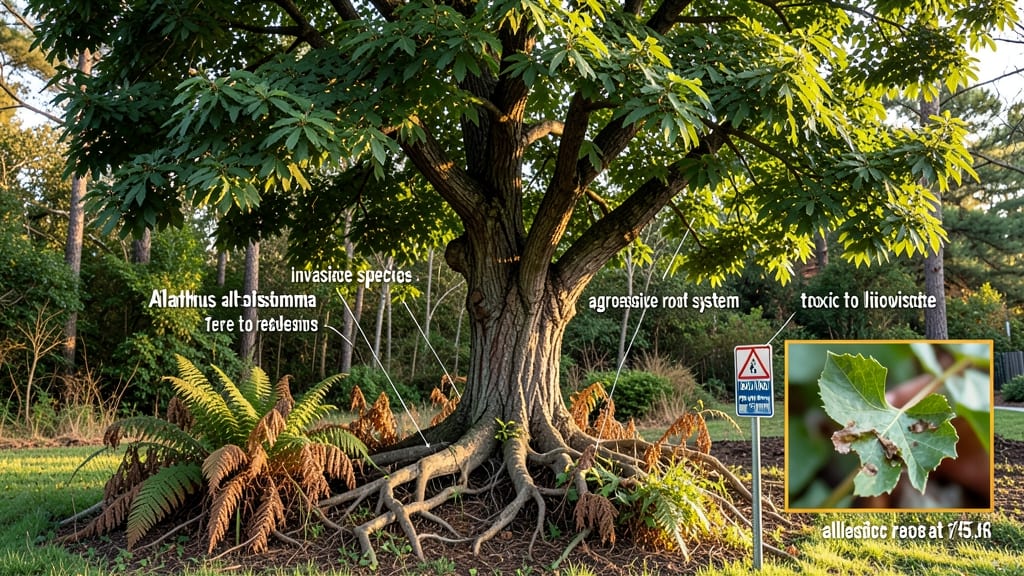
The tree of heaven is bad because it spreads aggressively, displacing native plants, and releases toxins that harm other vegetation while also attracting pests like the spotted lanternfly. Its rapid growth and invasive roots make eradication difficult once established.
The tree of heaven earns its notorious reputation through a combination of ecological dominance and biological aggression. 🌿 Its compound leaves and fast growth rate allow it to outcompete native plants for sunlight, water, and nutrients, while its chemical warfare—through root toxins—suppresses nearby vegetation.
This invasive species thrives in disturbed soils, urban areas, and along roadsides, making it particularly problematic in landscapes where it can establish dense monocultures.
Beyond its ecological harm, the tree of heaven creates practical challenges for landowners and municipalities. Its deep root system and prolific seed production make removal labor-intensive, often requiring repeated treatments.
The compounded issue of attracting pests like the spotted lanternfly further complicates management, as these insects can devastate crops and ornamental plants in the surrounding area.
💡 In This Article
- How Tree of Heaven Spreads and Outcompetes Native Species
- Identifying and Controlling Tree of Heaven Infestations
How tree of heaven spreads and outcompetes native species
The tree of heaven (Ailanthus altissima) dominates ecosystems through a combination of explosive growth and chemical warfare. Its compound leaves, arranged in clusters of 7-41 leaflets, allow it to capture sunlight more efficiently than many native trees.
What sets it apart is its growth rate—young trees can grow 3-6 feet per year, and mature specimens reach 50-75 feet with a trunk diameter of up to 3 feet. This rapid vertical expansion gives it a competitive edge in disturbed areas where native plants struggle to recover.
Beneath the surface, the real ecological damage occurs through a process called allelopathy. The tree releases toxic compounds like ailanthone and ailanthin through its roots and fallen leaves. These chemicals inhibit seed germination and root growth in nearby plants, creating a 50-foot "zone of exclusion" where few species can survive.
Studies show that these toxins can reduce native plant diversity by upstrong> 70% in infested areas, turning diverse ecosystems into monocultures. 🌱 The tree's adaptability to urban environments—thriving in sidewalk cracks and construction sites—only accelerates this disruption.
Seed production is another weapon in its invasive arsenal. A single tree can release 300,000-500,000 winged seeds annually, which are dispersed by wind up to 100 feet from the parent tree.
These seeds remain viable in the soil for up to 2 years, creating a constant seed bank that ensures new infestations. The combination of fast growth, chemical suppression, and prolific seeding makes tree of heaven nearly impossible to eradicate once established in an ecosystem.
What makes this particularly problematic is how it alters entire food webs. While the tree itself has low nutritional value, its presence attracts pests like the spotted lanternfly, which feeds on its sap but then spreads to agricultural crops.
This creates a ripple effect where the tree's dominance leads to secondary ecological and economic damage.
The tree's strong, unpleasant odor (often described as "rotten peaches" or "burning rubber") is another clue to its ecological impact—this smell comes from the same compounds that deter herbivores, allowing the tree to avoid being eaten while suppressing competitors.
Urban areas are especially vulnerable because tree of heaven thrives in compacted soils and poor conditions where native species would fail. Its ability to grow in full sun to partial shade and tolerate drought, pollution, and poor soil means it can establish itself almost anywhere humans create disturbances.
This adaptability turns it into an ecological "weed" that outcompetes native trees like oaks, maples, and hickories, which are critical for wildlife habitats and forest health.
Consider this comparison: while native trees like black cherry produce 1,000-2,000 seeds per year, tree of heaven's seed output is 150-500 times greater.
The sheer volume of seeds combined with its growth rate means that once established, tree of heaven can transform an entire landscape within 10-15 years, making it one of the most aggressive invasive species in North America. 🌳