
Size
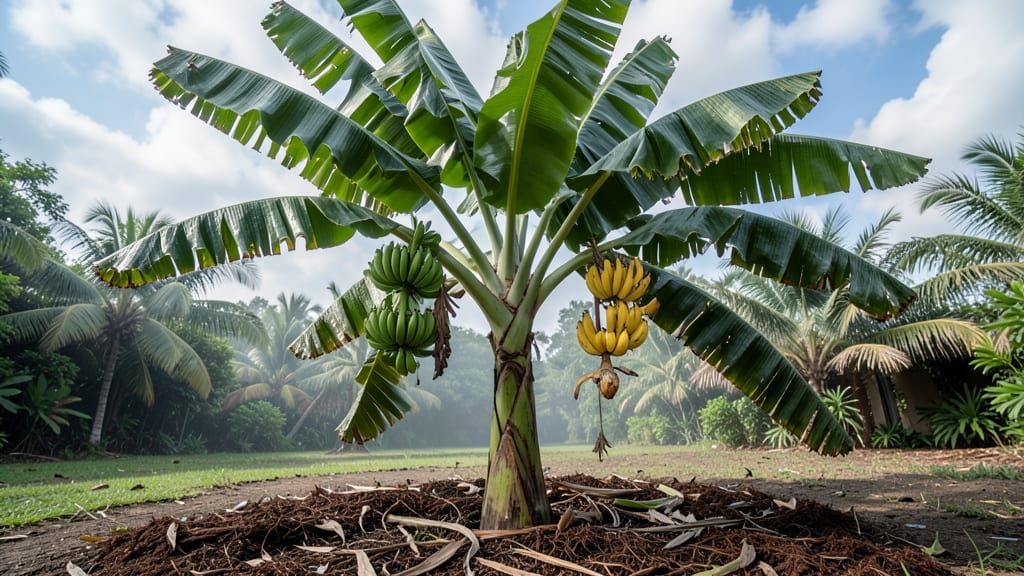
A banana tree’s size can range from a towering 30 feet in tropical climates to a manageable 6-foot potted plant on your patio.
If you’ve ever dreamed of harvesting your own bananas but wondered whether a banana tree will dwarf your backyard—or thrive in a pot—understanding their growth patterns is essential.
Some varieties stretch skyward like jungle giants, while others stay compact enough for container gardening, making them perfect for urban spaces or cooler zones.
In this guide, I’ll break down the height differences by popular variety, how climate affects growth, and the best ways to manage size—whether you’re planting outdoors or growing indoors.


How tall banana trees grow by popular variety (with height comparisons)
Banana trees are famous for their dramatic growth, but their mature size varies dramatically by variety. Some tower like jungle giants, while others stay manageable for containers or small gardens.
Choosing the right type depends on your space and climate. Dwarf varieties like Lady Finger can reach just 10-12 feet, while giant types like Red Dacca may soar to 25+ feet. Understanding these differences helps you plan spacing, support structures, and even indoor growth strategies.
Most banana trees grow rapidly, adding 3-6 feet per year in ideal conditions. Their height isn’t the only consideration—leaf spread and root depth also matter.
For example, a Dwarf Cavendish might stay under 12 feet tall but spread 6-8 feet wide, while a Gros Michel can exceed 20 feet tall with a 10-foot canopy. Always check your local frost dates, as even dwarf varieties can’t survive below 30°F.
Here’s a quick comparison of popular varieties to help you visualize their mature sizes and spacing needs:
| Variety | Mature Height (ft) | Spread (ft) | Growth Rate | Ideal Spacing (ft) | Best For |
|---|---|---|---|---|---|
| Dwarf Cavendish | 10-12 | 6-8 | Fast (3-5 ft/year) | 6-8 ft apart | Containers, small gardens |
| Lady Finger (Ice Cream) | 12-15 | 8-10 | Moderate (2-4 ft/year) | 8-10 ft apart | Urban gardens, pots (large) |
| Red Dacca | 20-25+ | 12-15 | Very fast (5-8 ft/year) | 15-20 ft apart | Large estates, tropical climates |
| Gros Michel | 18-22 | 10-12 | Fast (4-6 ft/year) | 12-15 ft apart | Tropical regions, commercial farms |
| Bluggoe | 15-18 | 8-10 | Moderate (3-5 ft/year) | 10-12 ft apart | Subtropical climates, home orchards |
The Dwarf Cavendish is my top recommendation for beginners or small spaces. It produces small, sweet bananas perfect for snacking and thrives in 15-gallon containers. Its compact size makes it ideal for patios or balconies, even in USDA Zone 10-11.
Just be prepared to bring it indoors if temperatures drop below 50°F. For larger gardens, the Lady Finger offers a balance—tall enough for dramatic foliage but manageable with pruning and support stakes.
If you’re in a tropical or subtropical climate, the Red Dacca is a showstopper. Its deep red fruit and towering height make it a conversation piece, but it requires ample space and rich soil.
I’ve seen these varieties in Hawaii and Florida, where they grow 10 feet per year with proper care. For cooler regions, Bluggoe is a hardier choice, tolerating temperatures down to 28°F briefly and producing large, starchy bananas similar to plantains.
Spacing is critical to avoid competition for nutrients and disease spread. Plant dwarf varieties 6-8 feet apart, while giant types need 15-20 feet of clearance. In containers, use at least a 20-gallon pot for dwarf varieties and prune regularly to control height.
Mulch with straw or wood chips to retain moisture and regulate soil temperature, especially
Climate and soil factors that affect banana tree size
Banana trees thrive in warm climates, but their growth speed and final height depend heavily on temperature, humidity, and sunlight. In tropical zones like Hawaii or Florida, these plants can reach 20-30 feet tall in just 2-3 years.
However, cooler climates or containers slow growth dramatically, often limiting height to 6-10 feet over several years.
Humidity plays a crucial role too—bananas need 70-90% humidity to grow optimally. Low humidity causes stunted growth, yellowing leaves, and poor fruit production. Even in dry climates, mist systems or indoor humidity trays can help mimic their natural environment.
⚠️ WARNING: COLD TEMPERATURES STUNT GROWTH ⚠️
Soil type also impacts size—bananas prefer rich, well-draining soil with a pH of 5.5-7.0. Heavy clay soils restrict root growth, while sandy soils drain too quickly. Amending with compost and organic matter ensures nutrients reach the roots, promoting faster, healthier growth.
Sunlight exposure directly affects stem thickness and fruit production. While banana trees love full sun (6+ hours daily), too much direct heat in arid climates can scorch leaves. In these areas, partial shade during peak afternoon sun helps maintain vigor without stunting growth.
Microclimates can work to your advantage. For example, planting near a south-facing wall or under a light canopy creates a warmer, more humid pocket—ideal for banana trees in cooler regions. Even a 5-10°F warmer microclimate can extend the growing season and boost fruit yield.
If you're growing bananas in containers, pot size matters. Roots need room to spread—15-20 gallon pots are ideal for dwarf varieties, while larger containers (30+ gallons) support standard types.
Smaller pots restrict root growth, leading to stunted height and poor fruiting. Always use pots with drainage holes to prevent waterlogging.
By tailoring your climate conditions and soil mix, you can encourage banana trees to reach their full potential—whether you're aiming for a backyard giant or a container-friendly houseplant. 🌿✂️🍌