
Container Gardens
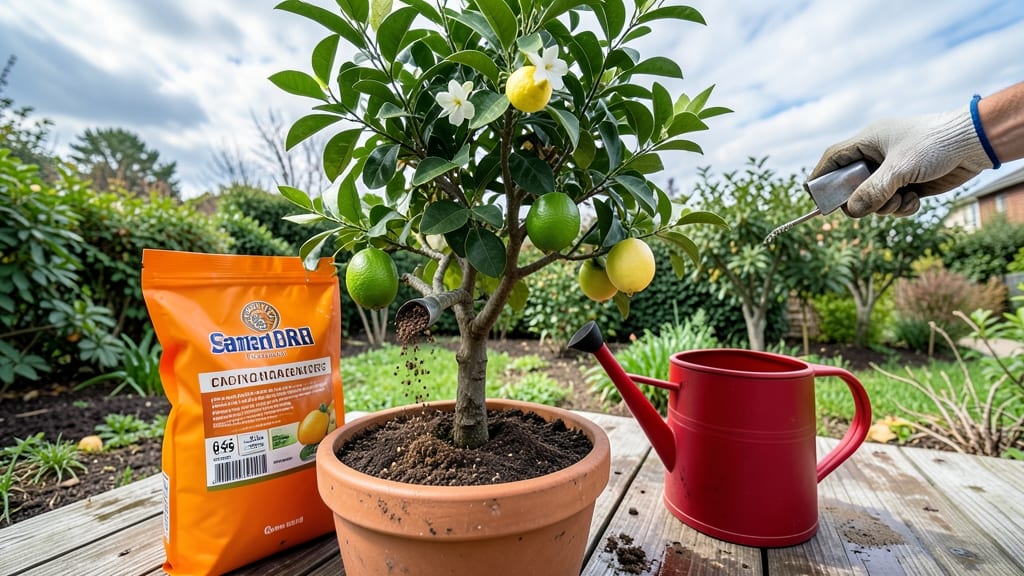
To fertilize a lemon tree in a pot at the right times means feeding it just as blooms appear and again when fruit starts to swell — missing these windows can leave you with leaves but no lemons.
Struggling to get your potted 🍋 lemon tree to produce those coveted fruits? Timing your fertilization could be the missing piece — because blooms and fruit thrive on precise nutrient schedules, not just any feeding routine.
Most gardeners overfeed in summer, which sends the tree into leaf-spurting overdrive instead of focusing on fruit. The secret is a spring flush to kickstart blooms and a fall boost to fatten up the lemons before winter.
Below, I break down the exact months to feed, what nutrients to prioritize, and how to spot when your tree is begging for more — or when it’s had enough.
Spring fertilization schedule for lemon tree blooms in pots
Spring is the make-or-break season for your potted lemon tree’s blooms and fruit. Timing your fertilizer correctly ensures your tree shifts from winter dormancy to vigorous growth—and eventually, those coveted citrus fruits. But here’s the catch: citrus trees need specific nutrients at different stages, and overdoing it can backfire.
Let’s break down the 4-step spring feeding schedule that’ll transform your tree from a leafy bush into a fruiting powerhouse.
First, wait until after the last frost (typically mid-April in Zone 6) before fertilizing. Cold soil slows nutrient uptake, and applying fertilizer too early can burn roots. Instead, focus on watering deeply and pruning dead branches to prep your tree.
Once temperatures consistently stay above 50°F (10°C), it’s time to start feeding—but not just any fertilizer. Citrus trees crave phosphorus for blooms and potassium for fruit development, so we’ll use a 10-30-20 ratio at the right moments.
Pro tip: Always water your potted lemon tree 24 hours before fertilizing. This prevents root burn and ensures nutrients soak into moist soil. For pots, drainage holes are non-negotiable—stagnant water + fertilizer = recipe for disaster. Now, let’s dive into the step-by-step spring feeding timeline that’ll maximize your blooms.
🌱 Step-by-Step Spring Fertilization for Lemon Tree Blooms
-
Step 1: Pre-Bloom Boost (Late April)
Apply a balanced citrus fertilizer (6-6-6 or 8-3-9) to kickstart growth. Use half the recommended dose to avoid shocking roots.
-
Step 2: Bloom Trigger (Mid-May)
Switch to a bloom-specific fertilizer (10-30-20) to encourage flower buds. Phosphorus (P) is key—this is the "bloom nutrient."
-
Step 3: Post-Bloom Support (Early June)
After flowers appear, feed with a low-nitrogen, high-potassium fertilizer (5-10-10) to support fruit set. Avoid high nitrogen—it promotes leaves over fruit.
-
Step 4: Light Maintenance (July)
Give a light feeding (50% dose of 6-6-6) to sustain growth. Monitor soil moisture—pots dry out faster in summer heat.
💡 Remember: Always follow up with deep watering after each feeding to activate nutrients.
Here’s why this schedule works: Citrus trees are finicky about nutrients. Too much nitrogen in spring? You’ll get leafy growth but no blooms. Too little phosphorus? Fewer flowers mean fewer lemons.
The 10-30-20 fertilizer in Step 2 is your secret weapon—the high phosphorus pushes your tree to produce more flower buds, setting the stage for a bountiful harvest.
Watch for signs of deficiency like yellowing leaves (nitrogen) or purple stems (phosphorus). If you see these, adjust your feeding immediately.
For example, if leaves turn yellow between veins, switch to a higher-nitrogen fertilizer for a week before returning to your schedule. Potted trees need extra attention—their roots are confined, so nutrients deplete faster than in-ground trees.
One common mistake? Over-fertilizing in summer. Once temperatures hit 80°F (27°C), your lemon tree’s growth naturally slows. Cut back to light feedings in July and August to avoid salt buildup in the soil, which can burn roots.
Flush the soil with water every 4-6 weeks during hot months to keep salts in check.
By following this 4-step spring schedule, you’ll give your potted lemon tree the perfect nutrient timeline for blooms, fruit set, and healthy growth. Patience is key—it can take 2-3 years for a young tree to bear fruit, but with the right feeding routine, you’ll be harvesting lemons in pots sooner than you think! 🍋
Fall fertilization strategy to maximize fruit production in potted lemon trees
As the leaves begin to change color and temperatures drop, your potted lemon tree is busy preparing for its winter dormancy—but that doesn't mean its nutrient needs disappear. Fall fertilization between September and October is your secret weapon for maximizing fruit production next season.
This late-season boost ensures the energy your tree invests in developing lemons isn't wasted on weak, underdeveloped fruit.
The key is understanding that citrus trees need phosphorus and potassium to strengthen roots and fruit development. Unlike spring, when nitrogen dominates for new growth, fall feeding shifts focus to phosphorus (P) for root vigor and potassium (K) for disease resistance and fruit quality.
A balanced 5-10-10 fertilizer or citrus-specific blend works perfectly during these months.
Timing is everything—fertilize too late, and you risk encouraging new growth that won't harden off before winter. Too early, and your tree might not use the nutrients efficiently for fruit development. The 6-week window before your first frost is ideal, typically aligning with late September to mid-October in most climates.
When to Fertilize Your Potted Lemon Tree in Fall
- Boosts fruit quality for next season
- Strengthens root systems before dormancy
- Enhances disease resistance in citrus
- Prevents nutrient deficiencies in potted soil
- Late feeding causes soft new growth vulnerable to frost
- Over-fertilizing burns roots before dormancy
- Weakens tree's ability to enter dormancy properly
- Leads to smaller fruit next season
For potted lemon trees, the fertilizer amount should be 25-50% less than spring doses. Since pots have limited soil volume, excess nutrients can leach out or burn roots.
Apply a slow-release fertilizer or organic options like bone meal (for phosphorus) and kelp meal (for potassium) to provide steady nutrition without risk.
Watch your tree's response after fertilizing—healthy yellow-green leaves and firm new shoots indicate success. If you notice yellowing between veins or leaf drop, you've overdone it. Reduce to every 8-10 weeks in fall, and completely stop fertilizing once temperatures drop below 50°F (10°C).
Remember, the goal isn't just more fruit, but better fruit. By feeding strategically in fall, you're setting the stage for larger, sweeter lemons next season—while keeping your potted tree healthy through winter. The effort now pays off in juicy rewards come spring! 🍋