
Pruning
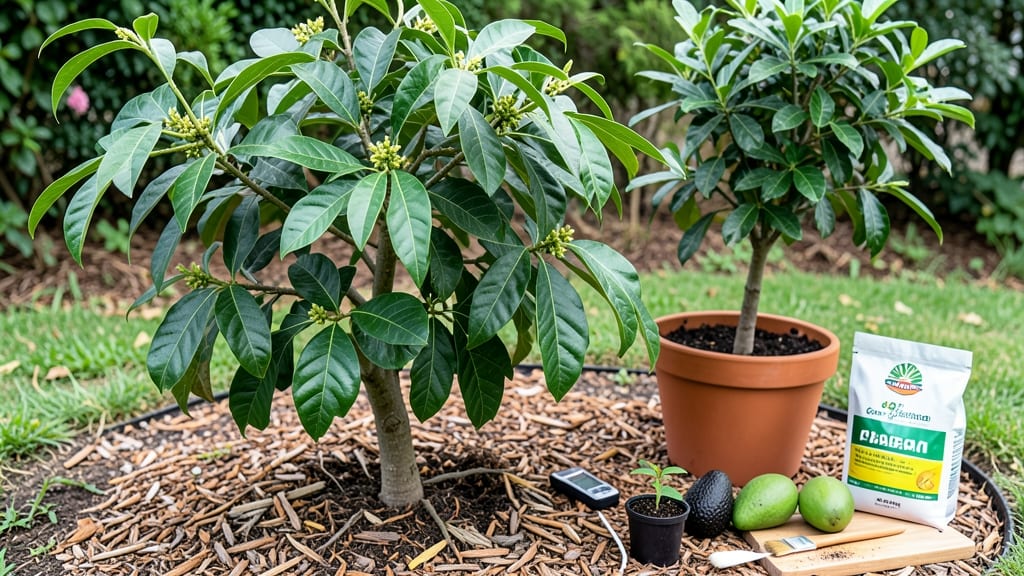
Getting an avocado tree to bear fruit takes more than just water and sunlight—it’s a game of patience, precision, and perfect conditions. 🌱 I’ve watched my own tree go from a stubborn sapling to a fruiting powerhouse, and the difference comes down to mimicking its natural tropical environment as closely as possible.
Most people give up after two years, but with the right approach, you’ll see those first creamy-green fruits forming by year three or four.
The secret isn’t just about sunlight or soil—it’s about creating the ideal balance. Avocados need 6+ hours of direct sun daily, well-draining soil with a pH between 6 and 7, and temperatures that stay above 50°F year-round.
Indoor growers often struggle because drafts, inconsistent light, and dry air throw off the tree’s natural rhythm. Even outdoor trees in cooler climates need winter protection to avoid shock.
Once you’ve got the basics right, the real magic happens with pollination. Avocados are tricky—they need a second tree (or hand-pollination) to set fruit. Even then, young trees focus on growth before bearing, so pruning in early spring to shape the canopy helps redirect energy.
The payoff? A single tree can produce 50+ pounds of fruit once it matures, and the first harvest is worth every wait.
This method works for both container-grown and in-ground trees, though outdoor plants tend to fruit faster. The key is consistency—no skipped waterings, no sudden temperature swings, and no rushing the process. Here’s how to set yours up for success without the common mistakes that leave trees barren year after year.
📚 In This Guide
- What you need
- Instructions
- Tips and common mistakes
- Wrapping up and next steps
What you need
- ● Avocado Seed or Sapling: From seed: 1 large, healthy avocado pit (preferably from a Hass variety).
- ● From nursery: 1–2-year-old avocado sapling (Hass, Fuerte, or Reed recommended).
- ● Potting Mix: 1–2 bags (10–20 lbs) of well-draining cactus/succulent mix or a blend of 50% potting soil + 50% perlite/pumice.
- ● Container or Garden Plot: For seedlings: 6–8" pot (drainage holes required!).
- ● For mature trees: 15+ gallon container or in-ground space with 6+ feet of width.
- ● Fertilizer: Balanced 10-10-10 or 20-20-20 fertilizer (organic options like fish emulsion or composted manure work too!).
- ● Pruning Tools: 1 pair sterilized pruning shears (for shaping and removing dead branches).
- ● 1 sharp bypass pruner (for larger branches).
- ● Watering Can or Hose: With a gentle spray nozzle (avocado roots hate soggy soil!).
- ● Mulch: 2–3 inches of organic mulch (straw, wood chips, or bark) to retain moisture.
- ● 🌡️ Grow Lights: LED full-spectrum bulb (if indoor growing in low-light areas).
- ● 💡 pH Test Kit: To monitor soil pH (ideal range: 6.0–7.0).
- ● 🛡️ Pest Control: Neem oil or insecticidal soap (for aphids/mites).
- ● 📏 Measuring Tape: To track tree height and pruning precision.
- ● 🌿 Pollination Aid: Small paintbrush (for hand-pollinating flowers if indoors).
Step-by-step guide to encouraging fruit on your avocado tree
Here's how I've learned to coax fruit from stubborn avocado trees—it's all about patience and the right conditions.
🌱 Step 1: Provide the Perfect Light Environment
Avocado trees need full sun—at least 8 hours daily—to set fruit. Place your tree near a south-facing window or under grow lights if indoors. I keep mine within 4 feet of a sunny window during winter when light is weaker. Without enough sun, leaves stay pale and small, and buds won't develop.
If your tree starts leaning toward the light, rotate the pot quarter-turn weekly to keep growth even. You'll notice new leaves emerging darker green and more compact when light is ideal. In containers, partial shade can still work, but fruit production will be sparse—think of it as a trade-off for survival.
☀️ Step 2: Mimic Tropical Conditions with Temperature and Humidity
Avocado trees thrive in 65-85°F temperatures. Below 55°F, growth slows dramatically, and above 90°F, leaves burn. I keep mine near a heat source in winter and move it outside only after last frost when nights stay above 60°F. If you live in a cooler climate, a greenhouse or indoor grow space is your best bet.
Humidity matters too—50% or higher prevents leaf drop and bud formation. Mist leaves daily in dry climates or place the pot on a pebble tray with water to boost moisture. Watch for curled leaves or brown tips; these are your cues to increase humidity immediately.
💧 Step 3: Master the Watering Balance
Overwatering kills avocado trees faster than underwatering. Let the top 2 inches of soil dry out between waterings—stick your finger in to check. When the soil feels dry but not bone-dry, water deeply until it drains from the bottom. I use a watering can with a long spout to reach the roots without splashing leaves.
Yellowing leaves often mean overwatering, while crispy edges signal underwatering. Adjust your schedule seasonally: water every 5-7 days in summer and every 10-14 days in winter. Mulch the soil surface with 2 inches of organic mulch to retain moisture and regulate temperature—this simple step cuts watering needs by half.
✂️ Step 4: Prune for Shape and Fruit Production
Prune in late winter or early spring before new growth starts. Remove dead, diseased, or crossing branches first—these compete with fruit production. Then, trim back overly leggy growth to encourage bushier shape. I cut just above a leaf node where new branches can form, using clean, sharp pruners to avoid tearing bark.
Aim for an open center that lets light penetrate to inner branches. Fruit forms on new wood, so avoid heavy pruning after summer—you'll sacrifice next year's crop. After pruning, feed with a balanced fertilizer (like 10-10-10) to support recovery and bud formation.
🍈 Step 5: Pollinate and Wait for Fruit
Avocado trees are self-pollinating, but you can boost success with a soft paintbrush to transfer pollen between flowers. Do this early morning when flowers are open. I also keep my tree near a window with gentle breezes to mimic natural pollination. After flowering, reduce water slightly—this stress can help fruit set instead of leaf growth.
Fruit takes 6-12 months to mature, depending on variety. Look for small green bumps where flowers were—these are your first signs of fruit. Be patient: A healthy tree may take 3-5 years to bear consistently. If buds form but drop, check for pests, low humidity, or uneven watering—these are the usual culprits.
Tips & tricks for perfect avocado tree fruit production
These simple adjustments make all the difference when coaxing fruit from your avocado tree.
Light Positioning: That 8 hours of sun is non-negotiable, but placement matters too. I've found placing my tree within 4 feet of a south-facing window maximizes winter light. For indoor grow lights, use full-spectrum bulbs 6-12 inches above the leaves—closer for seedlings, farther for mature trees. Watch for leaf burn at the tips if lights are too close, which means you've gone too far.
Temperature Transition Strategy: Moving your tree outside after last frost? Do it gradually! Start with just 2 hours per day when night temps stay above 60°F, then increase by 1 hour daily. Sudden exposure to cooler nights can shock the tree and cause bud drop. I keep mine on a patio overnight for the first week to acclimate.
Watering Visual Cues: The "top 2 inches dry" rule works, but here's what I watch for: When the soil feels like a wrung-out sponge (not dusty, not wet), it's time. For summer watering, I use the "drip test"—if water runs through in 10 minutes, you're good. In winter, I reduce to every 14 days and check for that slight weight difference in the pot.
Pruning Recovery Boost: After your late-winter prune, give your tree a nutrient kick to compensate for the stress. I mix 1 tablespoon of 10-10-10 fertilizer with the first watering after pruning. This supports new growth where fruit will form. Avoid fertilizing after summer pruning—it encourages leaf growth over fruit development.
Pro Tips for Get An Avocado Tree To Bear Fruit
- These simple adjustments make all the difference when coaxing fruit from your avocado tree.
- Light Positioning: That 8 hours of sun is non-negotiable, but placement matters too.
- Temperature Transition Strategy: Moving your tree outside after last frost?
Frequently asked questions
Got questions about coaxing fruit from your avocado tree? Here are some of the most common ones—and their answers!
How long does it take for an avocado tree to bear fruit?
Patience is key! Most avocado trees take 3–5 years to produce fruit from seed, while grafted varieties may fruit in 1–3 years if given ideal conditions. Factors like sunlight, soil quality, and proper care speed up the process. Pro tip: Keep your tree healthy, and it’ll reward you sooner!
Why isn’t my avocado tree flowering or fruiting?
Common culprits include insufficient sunlight (avocados need 6+ hours of direct sun daily), poor pollination (hand-pollinate if bees are scarce), or nutrient deficiencies (test soil for nitrogen, potassium, and zinc). Young trees may also prioritize growth over fruit. Check for pests or disease too!
Can I grow an avocado tree indoors and still get fruit?
Indoor avocado trees (grafted varieties) can produce fruit, but it’s tricky! They need bright, indirect light (south-facing window or grow lights), high humidity, and consistent warmth (65–80°F). Outdoor trees thrive better, but with dedication, indoor trees can flower—just don’t expect heavy yields. Try a dwarf variety for smaller spaces!
What’s the best way to pollinate an avocado tree by hand?
Use a soft paintbrush or cotton swab to transfer pollen from male flowers (smaller, on the stem) to female flowers (larger, at the base of new growth). Do this early morning when flowers are open. Repeat daily for 3–5 days to maximize fruit set. Bonus: Plant two trees for cross-pollination!
Do avocado trees need a dormant period to fruit?
Most avocado trees thrive in warm climates (USDA Zones 9–11) and don’t need dormancy—they fruit year-round in ideal conditions. However, cool-season varieties (like ‘Hass’) may benefit from mild winters (50–60°F) to trigger flowering. If you’re in a colder zone, grow in containers and move indoors in winter!
What can I do if my avocado tree only produces small, misshapen fruit?
Small or deformed fruit often signals nutrient imbalances (try Epsom salt for magnesium or citric acid for zinc), over-pruning (reduce aggressive cuts), or poor pollination. Thin out excess fruit to 3–4 inches apart so the tree focuses energy on quality. Check for pests like mites or avocado lace bugs too!
Can I grow an avocado tree in a pot, and how big should it be?
Yes! Use a 5-gallon container minimum (bigger = better for roots). Ensure it has drainage holes and repot every 2–3 years into a 15–20 gallon pot for mature trees. Choose a lightweight, well-draining mix (cactus soil + perlite). Dwarf varieties like ‘Mexicola’ are perfect for containers!
Wrapping up and next steps
Growing an avocado tree to fruition is a rewarding journey that blends science, patience, and a little green thumb love! Remember, the key lies in consistent care—providing the right light, soil, and nutrients, while avoiding common pitfalls like overwatering or neglecting pruning.
With time and dedication, your tree could soon be heavy with delicious, creamy avocados! 🌱
Ready to take the next step? Monitor your tree’s progress and adjust care as needed—whether it’s tweaking sunlight exposure or fertilizing. And if you’re feeling ambitious, why not plant a second tree to encourage pollination? Happy growing! 🌟