
Pruning
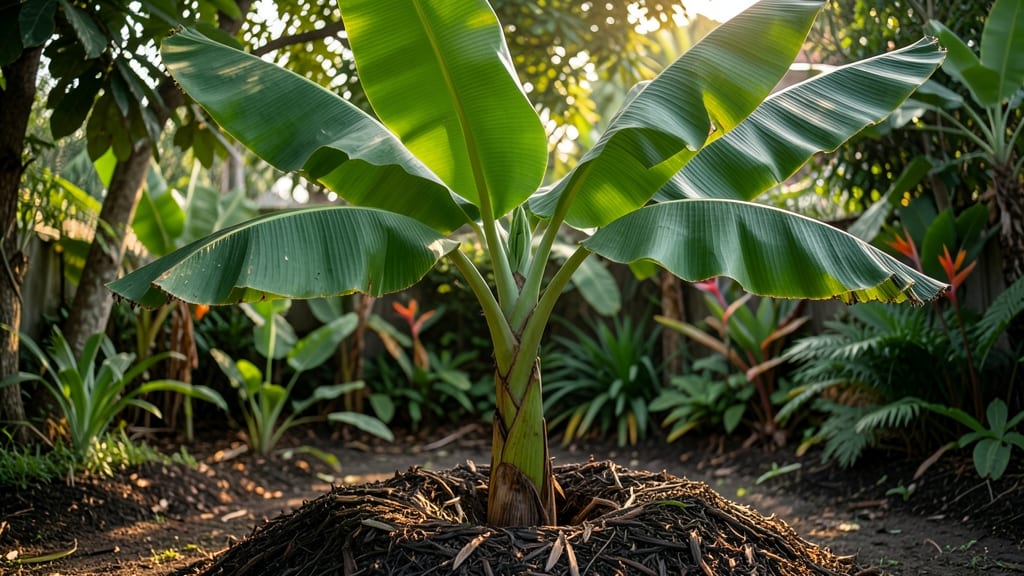
Banana trees are scientifically called Musa, the genus name covering all edible and ornamental varieties—from dessert bananas to cooking plantains. They belong to the Musaceae family and are technically giant herbaceous plants, not true trees.
The name Musa comes from the Arabic word for banana, reflecting its ancient origins in Southeast Asia. 🌱 Unlike true trees, these plants grow from underground rhizomes and lack woody stems, making them more like oversized herbs.
This classification explains why they grow so quickly—some varieties can reach 20 feet tall in a single season! The diversity within the genus is staggering, with over 70 species, each adapted to different climates and uses.
What's fascinating is how the term Musa unifies plants we often think of separately—like the sweet dessert bananas and the starchy plantains. 🍌 While they may look different, they all share the same botanical roots (pun intended).
This genus also includes ornamental varieties prized for their striking foliage, proving how versatile these plants truly are.
💡 In This Article
- Botanical Classification of the Musa Genus
- Popular Banana Tree Varieties and Their Uses
Botanical classification of the Musa genus
The Musa genus gets its name from the Arabic word māwz, which ancient traders used to describe these tropical plants. 🌿 Scientifically, Musa belongs to the Musaceae family, a group that includes only about 70 species—making it one of the most specialized plant families.
What makes these plants unique is their growth structure: instead of developing woody stems like true trees, they grow from massive underground rhizomes that can weigh up to 100 pounds in mature plants.
Here's where it gets fascinating: botanists classify Musa as a giant herb because it lacks true wood. The "trunk" you see is actually a pseudostem—a tight sheath of leaf bases that can grow 25-30 feet tall in some varieties.
This structure provides support while allowing the plant to store water and nutrients efficiently in tropical climates. The leaves themselves can reach 8-10 feet long, with veins so prominent they look like miniature rivers running through green canvases.
The evolutionary advantage of this growth pattern is clear: these plants thrive in warm, humid environments where rapid growth is essential. 🌱 Unlike true trees that develop slowly through secondary growth (adding wood layers), Musa plants grow primarily through primary growth—elongating their leaves and stems quickly to reach sunlight.
This is why you can see a banana plant go from seedling to flowering stage in just 9-12 months, a pace that would make true trees jealous.
What's often overlooked is how this classification affects cultivation. Since Musa plants don't develop true wood, they're more vulnerable to wind damage compared to trees. Farmers in hurricane-prone regions use techniques like staking or planting in windbreaks to protect these delicate giants.
The rhizome system also makes them surprisingly resilient—even if the pseudostem is damaged, new shoots can emerge from the underground network.
This botanical classification explains why Musa plants are so diverse in appearance and function. 🌟 While all species share this herbaceous growth pattern, their leaf shapes, fruit sizes, and seed structures vary dramatically—from the small, seedless dessert bananas to the large, seedy plantains.
Even the ornamental varieties, like the red Musa velutina, showcase how this single genus can produce plants that look completely different but share the same fundamental biology.
The Musaceae family's specialization is what makes Musa so interesting to botanists. Unlike many plant families that contain hundreds or thousands of species, Musaceae focuses entirely on these banana relatives, creating a perfect example of evolutionary convergence where different species adapt to similar tropical niches while maintaining distinct characteristics.