
How To
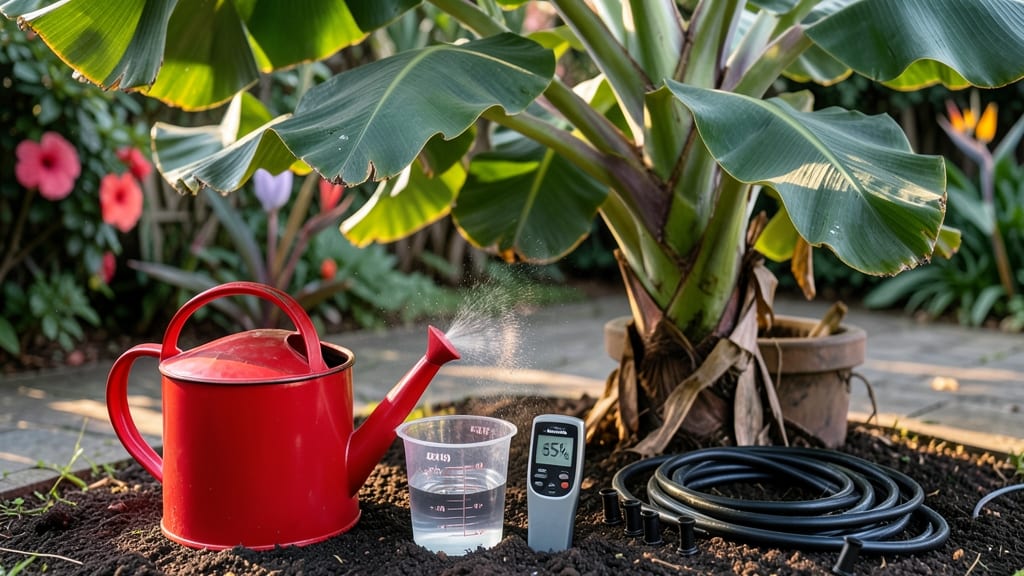
A banana tree needs about 1-2 gallons of water per day to stay thriving, but that number changes as it grows and with your local climate.
Picture this: your 🍌 thrives on consistent moisture—but overwatering or underwatering can kill it just as fast. The key is understanding how much water your banana tree truly needs based on its stage of growth and where you live.
Young banana trees in pots dry out faster than mature ones in the ground, while tropical zones demand more frequent watering than subtropical areas. Even the soil type plays a role—sandy soil drains quickly, while clay holds moisture longer.
Below, I break down the exact watering schedule for each growth stage, how to adjust for your climate, and the telltale signs your banana tree is thirsty—or drowning.
Daily water requirements for banana trees by growth stage
Banana trees are tropical powerhouses that demand consistent moisture to thrive, but their water needs change dramatically as they grow. A seedling in a nursery pot requires daily hydration to establish roots, while a mature 10-foot tree can stretch its watering schedule to every 2-3 days.
The key? Understanding how root depth and soil type affect water absorption at each stage.
For example, clay soil holds moisture longer than sandy soil, meaning you’ll water less frequently in heavy clay but risk root rot if you overdo it. Meanwhile, container-grown banana trees dry out faster due to limited root space, often needing water every 1-2 days regardless of maturity.
Let’s break down the exact daily water requirements for each growth phase.
At the seedling stage, your banana tree’s roots are shallow but fragile. Watering 0.5–1 gallon daily ensures they don’t dry out, but avoid soggy soil—root rot is a silent killer.
Use a spray bottle or gentle stream to mimic tropical rainfall, keeping the soil consistently moist without waterlogging. Mulch with straw to retain humidity and reduce evaporation.
As your banana tree enters the juvenile phase (6–24 months), its roots dive deeper, typically reaching 12–36 inches below the surface.
Here, you’ll increase water volume to 1–2 gallons every 2–3 days, depending on your soil type. Loamy soil strikes the perfect balance, while sandy soil demands more frequent watering. Monitor the top 2 inches of soil—if it’s dry, it’s time to water.
Mature banana trees (2+ years old) have extensive root systems that can stretch 3–5 feet deep, allowing them to access moisture from lower soil layers. However, this doesn’t mean they’re drought-proof! A mature tree needs 2–4 gallons every 3–5 days, with deeper watering sessions to encourage root growth.
In clay-heavy soil, you might stretch this to 7–10 days, but always check for dryness before watering.
Container-grown banana trees are a special case—their limited root space means they dry out faster than in-ground plants. Regardless of maturity, water every 1–2 days with 0.5–2 gallons per session. Use pots with drainage holes and a well-draining cactus or tropical mix to prevent waterlogging.
If the top inch of soil feels dry, it’s time to water—containers heat up quickly, accelerating moisture loss.
Pro tip: Morning watering is ideal for banana trees, as it reduces evaporation and fungal risks. Avoid evening watering, which can leave leaves damp overnight, inviting leaf spot diseases.
If you’re in a hot, dry climate, consider drip irrigation or soaker hoses to deliver water directly to the roots without wetting the foliage.
Watch for signs of
Adjusting water needs for different climate zones
Your banana tree’s daily water needs shift dramatically based on your climate zone. In tropical regions like Hawaii or Costa Rica, high humidity and frequent rainfall mean you may only need to water every 2-3 days—unless it’s a dry spell.
Meanwhile, in subtropical zones like Florida or California, daily watering is often necessary during summer months to prevent stress. Even in temperate zones (like Zone 9b), winter droughts can require adjustments to keep roots hydrated.
Humidity plays a critical role: High humidity (70%+) reduces evaporation, so your tree retains moisture longer. In contrast, low humidity (under 50%)—common in desert-like climates—demands more frequent watering to compensate. Temperature also matters: Hotter days (above 90°F) can double water loss through transpiration, while cooler weather slows the process.
Let’s break down the specifics for each zone to keep your banana tree thriving.
In tropical climates, where rainfall is frequent and humidity stays high, your banana tree may only need supplemental watering every 2-3 days. Focus on deep watering to encourage root growth downward rather than shallow, frequent watering.
Monitor soil moisture by sticking your finger 2 inches deep—if it’s dry, water thoroughly. Mulching with organic matter (like straw or wood chips) helps retain moisture and mimics the tree’s natural habitat.
For subtropical zones, such as parts of Florida or Southern California, daily watering is often essential during peak summer months when temperatures exceed 90°F. Use a soaker hose or drip irrigation to deliver water directly to the root zone, reducing evaporation.
In coastal areas with salt spray, flush the soil monthly with fresh water to prevent salt buildup, which can stress the roots. Adjust to every other day in cooler months or during rainy periods.
In temperate climates (like Zone 9b in Southern Arizona or parts of Texas), watering schedules must adapt to seasonal changes. During summer, water daily or every other day, while winter months may only require watering once a week unless drought conditions persist.
Use a moisture meter to avoid guesswork—banana trees in containers dry out faster than those in the ground, so check soil moisture more frequently.
Regardless of your climate, always water in the early morning (before 10 AM) to minimize fungal risks and maximize absorption. Avoid evening watering, as damp foliage overnight can lead to leaf spot diseases.
If you’re unsure about your zone’s specific needs, observe your tree’s leaves: Yellowing edges signal underwatering, while dark, mushy spots indicate overwatering. Adjust accordingly to keep your banana tree healthy and productive.