
Companion Plants
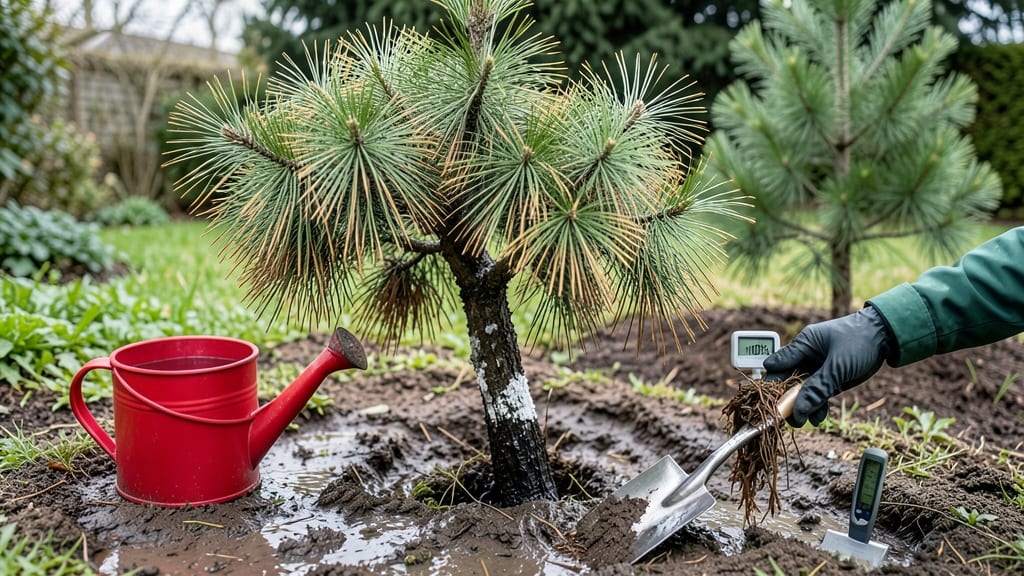
What does an overwatered pine tree look like?
Your pine tree's yellow needles and drooping branches might not be drought—overwatering creates a silent killer most gardeners miss. 🌲 The first sign is needles turning pale yellow or brown at the tips, often paired with a foul, damp smell at the base.
Unlike healthy pines with stiff, vibrant green needles, overwatered ones feel soft and mushy when touched, a clear sign roots are drowning.
Root rot hides underground but reveals itself through stunted growth and mushrooms sprouting from the soil. The tree may also develop a sheen of sap on the trunk or branches, a desperate attempt to push out excess moisture.
Compare it to a healthy pine: firm trunk, upright posture, and needles that stay attached for years. Overwatered trees shed needles in clumps, especially in wet weather.
Fixing it starts with cutting back water immediately—let the top 2-3 inches of soil dry completely between waterings. Improve drainage by adding 1-2 inches of coarse sand or gravel to the root zone and consider raising the tree slightly with landscape fabric.
Prune only dead branches first; healthy green needles signal the tree can recover with proper care.
Recovery takes 4-6 weeks of consistent adjustments, but the key is patience. Monitor the soil moisture with your finger—if it's damp past 2 inches deep, you're still overwatering. With better airflow and less soggy soil, your pine will start regrowing fresh, bright green needles within a season.
Root of the Problem
Overwatering a pine tree isn’t just about giving it too much love—it’s often a mix of well-intentioned gardening mistakes, environmental factors, and even soil science gone wrong. Let’s dig into the real reasons your pine tree might be drowning in its own waterlogged roots.
A pine tree’s roots need oxygen to thrive, but soggy soil suffocates them by displacing air with water. Here’s why this happens:
- Clay-heavy soil: Clay particles pack tightly, trapping water like a sponge that never dries. Pine trees prefer well-draining soil (sandy loam or amended loam) to prevent root rot.
- Compacted ground: Foot traffic, construction, or heavy rainfall can compress soil, reducing pore space for water to escape. Test it: Dig a 6-inch hole—if water pools after 30 minutes, drainage is poor.
- Improper planting depth: Burying the root flare (the swollen base of the trunk) too deep traps moisture around the roots, mimicking a swampy environment.
💡 Pro Tip: Amend heavy soil with compost or perlite to improve aeration. For container-grown pines, use pots with drainage holes and a cactus/succulent mix.
Pine trees are drought-tolerant once established—they evolved to handle dry conditions! Yet, many gardeners fall into these traps:
- Watering on a schedule: Pines don’t need weekly drinks. Instead, water deeply but infrequently (every 1–2 weeks, depending on climate) to encourage deep root growth.
- Ignoring weather cues: Rainy seasons or high humidity mean the soil stays moist longer. Check soil moisture before watering—stick your finger 2 inches down; if it’s damp, wait.
- Using sprinklers or hoses: Surface watering wets needles and soil unevenly, leading to fungal diseases (like Phytophthora) and shallow root systems.
✨ Actionable Fix: Switch to drip irrigation or soaker hoses to deliver water directly to the root zone. Aim for 1–1.5 inches per week total (including rain).
Potted pine trees are especially vulnerable because their root systems are confined. Common issues include:
- Small or plastic pots: Roots outgrow the container, circling and strangling themselves. Plastic pots retain moisture longer than terracotta or fabric grow bags.
- No drainage holes: Water pools at the bottom, creating a permanent soggy zone where roots rot.
- Overpotting without repotting: Adding fresh soil on top without removing old, compacted soil traps excess moisture at the base.
🔥 Quick Rescue:
- Upgrade to a pot 2–3 inches larger in diameter with drainage holes.
- Use a fast-draining mix (50% pine bark, 30% perlite, 20% sand).
- Water only when the top 1–2 inches of soil are bone-dry.
Sometimes, Mother Nature plays a role. Pine trees in these conditions are at higher risk of overwatering:
- Low-lying or swampy areas: Natural water accumulation (from poor site selection) keeps roots waterlogged year-round.
- Heavy rainfall + dense shade: Shady spots slow evaporation, while frequent downpours overwhelm the soil’s ability to drain.
- Urban heat islands: Pavement and buildings trap heat, increasing humidity around the tree and reducing evaporation rates.
🌡️ Adaptation Tip: If your pine is in a problematic spot, raise the planting bed with a mound of amended soil or install a French drain to redirect excess water.
Most overwatering issues stem from misunderstood needs or unseen soil conditions. The good news? Once you identify the cause, fixing it is often as simple as adjusting your watering routine or amending the soil. Next, we’ll cover how to spot the damage before it’s too late.
Revive Your Pine Tree: Step-by-Step Fixes
Overwatering can turn your pine tree into a soggy, sad sight, but the good news is that with the right approach, you can nurse it back to health. Below are practical, actionable solutions tailored to the root causes of overwatering—so you can get your pine tree thriving again without guesswork.
If your pine’s needles are turning yellow or brown due to excess moisture, act fast to prevent further damage.
🔥 Step 1: Check the Soil First
Before doing anything, assess how wet the soil really is. - Stick your finger 2–3 inches deep into the soil.
If it feels damp or mushy, your tree is getting too much water. - Use a moisture meter for accuracy—ideal soil should read between 40–60% moisture for pines.
🍳 Step 2: Adjust Your Watering Routine Pines hate "wet feet."
Follow this no-fail watering schedule: - Water deeply but infrequently—once every 7–10 days (more in extreme heat, less in rain). - Water in the morning to allow excess moisture to evaporate. - Avoid overhead watering (like sprinklers), which can cause needle rot. Water at the base instead.
👨🍳 Step 3: Improve Drainage Immediately
Poor drainage is the #1 reason pines drown.
Fix it with these quick upgrades: - Add organic matter: Mix in compost or pine bark fines (2–3 inches) to improve aeration. - Raise the soil level: If your tree is in a depression, mound soil around the base to prevent pooling. - Consider a raised bed: For container pines, ensure pots have drainage holes and use gravel at the bottom.
⏰ Step 4: Let the Soil Dry Out
If the soil is already soggy:
- Stop watering entirely for 1–2 weeks to let excess moisture evaporate.
- Use a fan on low near the tree (if indoors) to speed up drying.
Root rot is a silent killer—once it sets in, recovery is tough. Prevent it with these moves:
💡 Pro Tip: Test for Root Rot
Gently dig around the roots (1–2 inches deep). Healthy roots are firm and light brown; rotten roots are mushy, black, or smell foul.
🔪 Step 1: Prune Damaged Roots (If Necessary)
If you spot rot:
- Sterilize pruners with rubbing alcohol.
- Trim away black, mushy roots with clean cuts.
- Do NOT over-prune—only remove what’s clearly dead.
🌿 Step 2: Boost Soil Aeration
Compacted soil traps moisture. Break it up gently:
- Aerate the soil with a hand fork (avoid deep digging near roots).
- Mulch properly: Use 2–3 inches of pine-friendly mulch (like pine straw or wood chips) 3 inches away from the trunk to prevent rot.
🎯 Step 3: Choose the Right Fertilizer
Overwatered pines often need a nutrient boost to recover. Use:
- Slow-release, acidic fertilizer (like 10-10-10 or 16-4-8) in early spring.
- Avoid high-nitrogen fertilizers—they encourage leafy growth but weaken roots.
Once your pine is back on track, prevent future overwatering with these easy habits:
| Problem | Solution | Prevention Tip |
|---|---|---|
| Heavy clay soil | Amend with sand or perlite | Test soil drainage before planting. |
| Frequent rain | Water only when topsoil is dry | Install a rain gauge to track moisture. |
| Poor container drainage | Upgrade pots with holes | Use terracotta or fabric grow bags. |
| Overzealous watering | Set reminders (phone alerts work!) | Use a moisture sensor for automation. |
You’ll know your fixes are working when you see: ✅ New green needles growing at the tips. ✅ Firm, white roots when you check soil moisture. ✅ Less yellowing and more vibrant color.
Remember: Pines are tough—they just need good drainage, less water, and patience. With these steps, your tree will be back to its sturdy, evergreen self in no time! 🌲💚
Frequently asked questions
How can I tell if my pine tree's yellow needles are from overwatering vs. drought?
Check the soil first: overwatered pines have soft, mushy needles that pull away easily, while drought-stressed needles stay attached but feel dry and crispy. Overwatered trees also develop a musty smell at the base, whereas droughted pines have brown tips only on older needles.
Will my pine tree recover if the needles have already turned brown?
Yes, but only if you act quickly! New growth will emerge from the green inner needles—never remove them completely. Focus on fixing drainage and reducing water. With proper care, you'll see fresh bright green needles within 4-6 weeks.
Can I use a fan to help dry out an overwatered pine tree?
For container pines, place a fan on low setting near the pot to increase airflow and evaporate excess moisture. For in-ground trees, position it to blow across the canopy (not directly at the trunk). This mimics natural drying conditions and prevents fungal growth.
What's the best mulch to use for recovering pine trees?
Use pine straw or wood chips (2-3 inches deep) but keep it 3 inches away from the trunk to prevent rot. Avoid organic mulches like shredded leaves that compact and hold moisture. The key is creating a dry mulch layer that protects roots while allowing water to evaporate.
How often should I water my pine tree after recovery?
Water deeply but infrequently—once every 7-14 days depending on climate. Always check soil moisture first: stick your finger 2-3 inches deep. If damp, wait. For established trees, 1-1.5 inches per week (including rain) is ideal.