
Watering
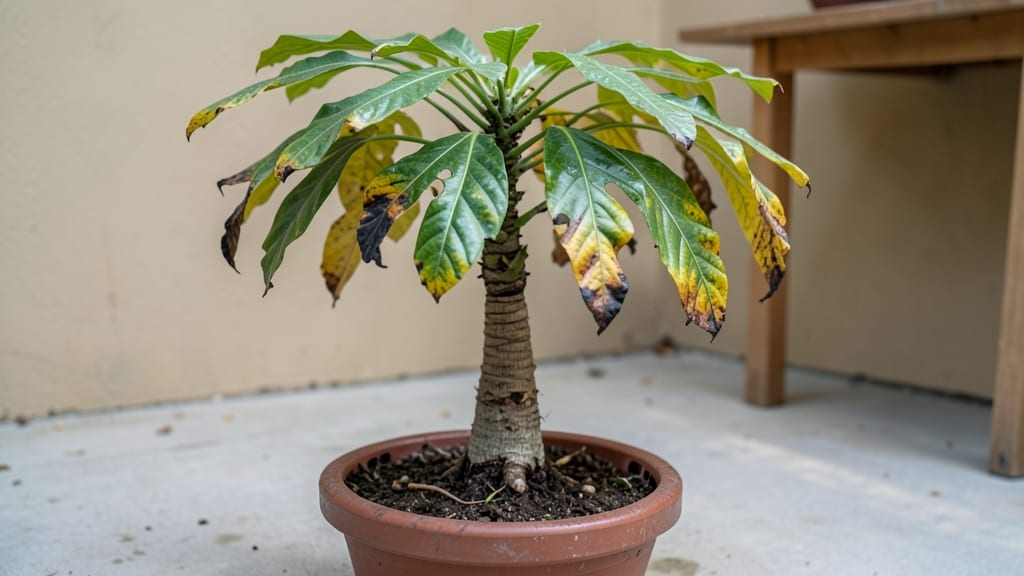
What does an overwatered money tree look like? It reveals its distress with yellowing leaves that start at the bottom and creep upward like a slow-motion warning. 🌱 I’ve seen this happen more times than I’d like—especially when well-meaning gardeners assume "more water is always better." The leaves turn mushy to the touch, stems soften like overcooked pasta, and the soil stays soggy even days after watering. That’s your plant screaming for help.
Root rot is the real villain here, turning healthy roots brown and slimy instead of firm and white. The first sign? Leaves that drop faster than you can say "drainage issues."
My money tree once lost half its foliage in two weeks because I ignored the wilting and assumed it needed more water. The fix isn’t complicated—just let the top 1-2 inches of soil dry out completely before watering again. A well-draining potting mix with perlite or orchid bark helps too.
You’ll know you’re on the right track when new growth appears within 3-4 weeks of adjusting care. The leaves stay a vibrant green, stems firm up, and the soil stays lightly moist—not swampy.
Prevention is easier than recovery: stick your finger in the soil before watering. If it’s damp below 1 inch, wait another day.
Even if your money tree looks like it’s on its last legs, don’t give up. With proper drainage and a consistent watering schedule, these resilient plants bounce back—often stronger than before. The key is acting fast. Trust me, your plant will thank you with lush, happy growth.
Common Causes of Overwatering
Overwatering your money tree (Pachira aquatica) isn’t just a gardening mistake—it’s a silent killer that disrupts the plant’s delicate balance. When roots drown in excess moisture, they struggle to absorb oxygen, leading to a cascade of problems.
Below are the key reasons why your money tree might be getting too much water—and how to fix them before it’s too late.
The most obvious (and common) cause is simply watering too often. Money trees thrive in well-draining soil and prefer to dry out slightly between waterings. When you water on a rigid schedule—like every few days—without checking soil moisture, you risk oversaturating the roots.
Why it happens:
- Poor soil aeration: Compacted or heavy soils (like clay) hold water longer, suffocating roots.
- Lack of drainage: Pots without drainage holes trap water, creating a swampy environment.
- Overzealous care: New plant owners often assume "more water = happier plant," but money trees are drought-tolerant once established.
💡 Pro Tip: Stick your finger 1-2 inches into the soil—if it’s damp, wait. If it’s dry, water thoroughly until it drains from the bottom.
Even if you’re not watering excessively, a pot without drainage holes turns every watering session into a root-drowning event. Water pools at the bottom, starving roots of oxygen and inviting fungal infections like Phytophthora or Pythium.
Why it happens:
- Decorative pots without holes: Many stylish planters lack drainage, forcing water to sit.
- Using saucers as catchalls: While saucers collect excess water, they don’t solve the root zone’s moisture problem.
- Repotting without checking: If you transfer a plant to a new pot without holes, old habits die hard—and so do roots.
⚠️ Warning Sign: If your money tree’s soil stays soggy for more than 24 hours after watering, it’s a red flag.
Not all soils are created equal. Money trees need fast-draining, airy mixes to prevent waterlogging. Heavy, peat-based soils or garden soil (which compacts easily) trap moisture, choking the roots.
Why it happens:
- Using potting mix alone: Standard mixes retain too much water for money trees.
- Amending soil incorrectly: Adding too much compost or peat increases moisture retention.
- Ignoring perlite/sand: These amendments improve drainage but are often skipped.
🔧 Fix It: Repot with a 50/50 mix of potting soil and perlite or orchid bark for optimal airflow.
High humidity or low light can trick your money tree into thinking it’s thirsty when it’s not. In humid conditions, soil stays moist longer, delaying evaporation. Meanwhile, low light reduces transpiration (the plant’s natural water-release process), making it harder for excess water to evaporate.
Why it happens:
- Humid climates or bathrooms: Moist air slows soil drying.
- Placing near AC units or drafts: Uneven drying creates wet spots in the soil.
- Overcrowding plants: Grouping pots together traps humidity around roots.
🌡️ Adjustments:
- Move your money tree to a bright, indirect spot (east or north-facing windows are ideal).
- Use a hygrometer to monitor humidity—keep it below 60% for optimal growth.
If your money tree’s roots are circled tightly around the root ball or physically damaged (from repotting mishaps), they can’t absorb water efficiently. This leads to water pooling in the pot, increasing the risk of rot.
Why it happens:
- Not repotting every 1-2 years: Roots outgrow the pot, strangle themselves, and lose function.
- Aggressive root pruning: Cutting too many roots during repotting shocks the plant.
- Using pots too small for the plant’s size: Restricted space = poor water distribution.
🔄 Solution: Repot into a slightly larger container (1-2 inches wider) with fresh, well-draining soil.
Seasonal shifts—like spring rains or winter heating—can disrupt your watering routine. Sudden downpours or indoor heating dry out air but keep soil damp, confusing your plant’s hydration needs.
Why it happens:
- Spring showers: Outdoor money trees get extra moisture from rain.
- Indoor heating: Dry air makes soil dry faster, but overcompensating with water can drown roots.
- Winter dormancy: Growth slows, so watering needs drop—but many keep the same schedule.
📅 Seasonal Adjustments:
- Spring/Fall: Water when the top 1 inch of soil is dry.
- Summer: Increase frequency slightly (but still check soil).
- Winter: Reduce watering by 30-50%—let soil dry out more between waterings.
Many plant owners wait too long to act on symptoms like yellowing leaves or mushy stems. By the time you notice root rot, it’s often irreversible. Overwatering is a gradual process, and catching it early is key.
Why it happens:
- Mistaking wilting for thirst: Droopy leaves can signal both overwatering and underwatering.
- Not checking roots regularly: Until rot spreads, the soil may look fine on the surface.
- Assuming "more water = green leaves": Money trees hate soggy conditions—they’ll show stress before they show love.
👀 Act Fast: If leaves yellow or stems soften, stop watering immediately and let the soil dry out completely.
Revive Your Money Tree: Step-by-Step Fixes
Overwatering can feel like a death sentence for your money tree (Pachira aquatica), but with the right care, you can nurse it back to health—even if it’s looking sad and soggy.
The key is acting fast and adjusting your watering habits permanently. Below, we’ll break down the fixes by symptom, so you can target the exact issue your plant is facing.
Before you do anything else, stop watering immediately. Wet soil accelerates root rot, and once it sets in, it’s hard to reverse. Here’s how to assess the damage:
- 🔍 Dig or Gently Remove the Plant – Carefully take your money tree out of its pot (if it’s small) or loosen the topsoil if it’s large.
Look for: - Healthy roots: Firm, white, or light tan with a slight sheen. - Rotten roots: Mushy, black, or brown with a foul smell. - Healthy but waterlogged roots: Pale and limp but not mushy.
- 💦 Rinse the Roots (If Needed) – If the roots are still firm but coated in salts or grime, rinse them gently under lukewarm water (not cold). Let them air-dry for 10–15 minutes before repotting.
- 🪒 Trim the Bad Bits – Use sterilized scissors or pruning shears to snip off any black, mushy, or hollow roots. Cut back to healthy tissue—don’t leave stubs.
> 💡 Pro Tip: If more than 30% of the roots are rotten, your plant may not recover. But if it’s just a few, it can bounce back with proper care!
Money trees are drought-tolerant—they’d rather be underwatered than overwatered. Here’s how to get it right:
🔥 Fix: The "Finger Test" Method
- 👆 Stick your finger 1–2 inches into the soil. If it’s damp, wait.
If it’s bone-dry, it’s time to water. - 💧 Water Only When the Top 50% of Soil is Dry – This prevents soggy roots and fungal growth. - ⏰ Watering Schedule: - Spring/Summer: Every 10–14 days (or when soil is dry). - Fall/Winter: Every 3–4 weeks (growth slows, so less water is needed).
🍳 Fix: Improve Drainage (Non-Negotiable!)
A money tree will not thrive in a pot without drainage.
If yours lacks holes: - 🔨 Drill 2–3 holes in the bottom of the pot (use a drill bit slightly smaller than a pencil). - 🪴 Repot into a container with drainage – Terracotta or ceramic pots help wick away moisture faster than plastic.
🌡️ Fix: Use the Right Soil Mix
Overwatering often happens because the soil holds too much moisture.
Fix it with: - 🌿 A well-draining mix: Combine: - 50% potting soil (lightweight, not garden soil). - 30% perlite or pumice (for aeration). - 20% orchid bark or coco coir (helps with drainage). - ⚠️ Avoid peat-heavy mixes – They stay wet too long and suffocate roots.
Now that you’ve fixed the watering, give your money tree extra TLC to help it recover.
☀️ Fix: Light & Humidity Balance
- 💡 Bright, Indirect Light – Move your plant to a south- or east-facing window (avoid harsh afternoon sun).
- 💦 Humidity Help – Money trees love 40–50% humidity.
If your air is dry: - 🌧️ Mist leaves lightly 2–3 times a week (avoid soaking). - 🏠 Use a pebble tray – Fill a tray with water and pebbles, then place the pot on top (ensure the pot isn’t sitting in water).
🍃 Fix: Prune Damaged Foliage
- ✂️ Trim Yellow or Brown Leaves – Use clean scissors to snip at the base of dead leaves.
This helps the plant focus energy on new growth. - 🌱 Encourage New Growth – If your money tree has bare stems, it may need a hard prune. Cut back to a healthy node (a bump where leaves used to grow), and it may sprout new branches!
💪 Fix: Fertilize Lightly (If Needed)
- 🌱 Wait 4–6 weeks before fertilizing after repotting.
- 🍽️ Use a balanced, diluted fertilizer (like 10-10-10) once a month in spring/summer. Skip fertilizer in fall/winter—your plant is resting!
The best way to save your money tree? Never let it get soggy again. Here’s how to stay on track:
| Mistake | Prevention Tip |
|---|---|
| Watering on a schedule | Water only when dry—ignore calendars! |
| Using the wrong pot | Always use pots with drainage holes. |
| Compacted or heavy soil | Mix in perlite or bark to keep soil fluffy and fast-draining. |
| Ignoring wilting signs | Check soil moisture weekly—don’t wait for leaves to droop! |
| Overcrowded roots | Repot every 2–3 years to refresh soil and prevent root-bound stress. |
> ✨ Pro Tip: If you’re really worried about overwatering, try the "soak-and-dry" method: > 1. Water thoroughly until it drains from the bottom. > 2. Empty the saucer immediately—never let your plant sit in water. > 3. Wait until the soil is dry before watering again.
After 4–6 weeks of proper care, you should see: ✅ New leaves emerging at the tips. ✅ Firmer stems (no more mushy spots). ✅ Healthy, glossy green leaves (no more yellowing).
If you don’t see improvement, your plant may have suffered too much root damage. But don’t give up—sometimes, even severely neglected money trees can regrow from a single healthy stem with patience!
💡 Remember: Money trees are forgiving if you catch overwatering early. The key is drainage, patience, and consistency. Once you nail the watering routine, your plant will thrive—and maybe even bring you good luck (and better green thumbs)! 🌿💚
Frequently asked questions
How can I tell if my money tree is overwatered vs. underwatered?
Overwatered money trees show yellowing leaves starting at the bottom that feel mushy when touched, while underwatered ones have crispy brown edges and dry, papery leaves. The key difference? Overwatered soil stays damp for days, while underwatered soil feels bone-dry. Check by sticking your finger 1-2 inches deep—if it's wet, you're overdoing it.
What should I do if my money tree has root rot from overwatering?
First, stop watering immediately and gently remove the plant to inspect roots. Trim away any black, mushy roots with sterilized scissors, then repot in fresh, well-draining soil mix (50% potting soil + 50% perlite). Place the pot in bright, indirect light and wait until the top 2 inches of soil feel dry before watering again. Recovery takes 4-6 weeks.
Can I save a money tree that's completely wilted from overwatering?
Yes, but act fast! Cut back all yellow/brown leaves and check roots for rot. If 30% or fewer roots are healthy, it may recover. Repot in fresh, airy soil and place in bright, indirect light while letting soil dry completely between waterings. With patience, new growth often appears within 3-4 weeks.
How often should I water my money tree to prevent overwatering?
Water only when the top 1-2 inches of soil feel completely dry—typically every 10-14 days in spring/summer and every 3-4 weeks in fall/winter. Always use pots with drainage holes and empty saucers after watering. The "finger test" is foolproof: if soil feels damp at 1 inch deep, wait one more day.
What's the best soil mix to prevent overwatering?
Use a fast-draining blend of 50% potting soil, 30% perlite/pumice, and 20% orchid bark or coco coir. This prevents compaction and improves airflow to roots. Avoid peat-heavy mixes—they retain too much moisture. For extra insurance, add a handful of charcoal to deter fungal growth.