
Plants
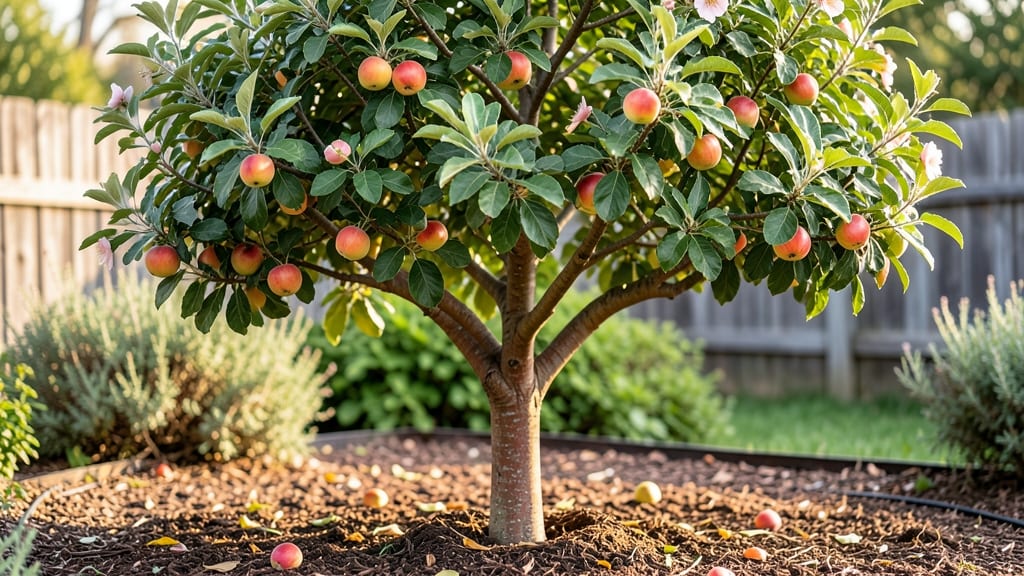
A nectarine tree looks like a compact peach tree with smooth, reddish-brown bark and glossy, lance-shaped leaves. Its fruit resembles fuzzy-free peaches—round to slightly oval, typically 2-3 inches wide, with vibrant orange-yellow skin and a velvety texture when ripe.
A nectarine tree's most striking feature is its smooth, hairless skin on the fruit, which sets it apart from peaches. 🌿 Unlike peach trees that develop fuzzy bark as they mature, nectarine bark remains consistently smooth, even in older trees.
The leaves are another dead giveaway—they're slightly narrower than peach leaves, with a more pointed tip that gives them that classic lance shape. I always notice how the fruit's skin takes on a sun-kissed glow when fully ripe, making it stand out against the tree's reddish-brown trunk.
What's fascinating is how the fruit's appearance changes as it ripens. Early in the season, nectarines often look pale green, but they gradually develop that signature orange-yellow hue. The size can vary slightly depending on the variety, but most stay in that familiar 2-3 inch range.
One pro tip I've learned is to check the stem attachment—when it separates easily from the fruit, that's your cue it's ready to pick.
💡 In This Article
- Nectarine Tree vs Peach Tree: Key Visual Differences
- Identifying Nectarine Fruit Before Harvesting
Nectarine tree vs peach tree: key visual differences
The most obvious distinction between nectarine and peach trees lies in their bark texture. While peach trees develop a rough, fuzzy bark as they mature—often resembling sandpaper—nectarine bark remains smooth and sleek throughout its life.
This difference isn't just cosmetic; it's a genetic trait where nectarines lack the fine hairs (trichomes) that peaches develop. 🌳 The bark's reddish-brown hue appears on both trees, but nectarine bark maintains its silky smoothness even in 30+ year-old specimens, while peach bark becomes increasingly textured.
Leaf shape provides another clear identifier. Nectarine leaves are typically 1-3 inches long and 0.5-1 inch wide, with a more pronounced lance shape—think of an elongated oval with a sharp point at the tip. Peach leaves tend to be slightly broader and more rounded at the edges.
The undersides of nectarine leaves often have a subtle silver-gray fuzz (though not as dense as peach leaves), which can help distinguish them when examining the tree from below. Both trees produce glossy green leaves, but nectarine leaves have a slightly thicker, waxier coating that helps reduce water loss.
Branch structure also differs subtly. Nectarine trees tend to have a more upright, vase-shaped growth habit compared to peach trees, which often spread wider. This compact structure makes nectarine trees ideal for smaller gardens or orchards with limited space.
The branches themselves are slightly thinner, and the spacing between leaves is often more uniform. One interesting detail is how nectarine branches develop smaller lenticels (pores for gas exchange) compared to peaches, giving them a slightly smoother appearance under close inspection.
When it comes to fruit, the lack of fuzz is the most noticeable difference. While peaches develop a fine velvet-like coating from trichomes, nectarines remain completely smooth. This isn't just about appearance—the absence of fuzz makes nectarines easier to clean and often slightly sweeter.
The fruit's skin color progression is another clue: nectarines typically start bright green and transition through yellow to a deep orange-red blush when fully ripe, while peaches often develop more golden-yellow tones with red only on sun-exposed sides.
Seasonal growth patterns offer additional clues. Nectarine trees tend to bloom slightly earlier than peaches—typically by 5-7 days—and their blossoms are often more pale pink rather than the deeper red of peach flowers.
The flowers themselves are slightly smaller, with 5 petals (standard for stone fruits) but with a more delicate appearance. This earlier bloom can sometimes make nectarines more susceptible to late spring frosts, which is why many growers plant them in slightly sheltered locations.
For the most accurate identification, examine all these features together. Start with the bark's smoothness, then check leaf shape and branch structure. Finally, look at the fruit's surface texture and color progression. These combined traits create a distinctive profile that makes nectarine trees instantly recognizable to experienced fruit growers. 🌱