
Size
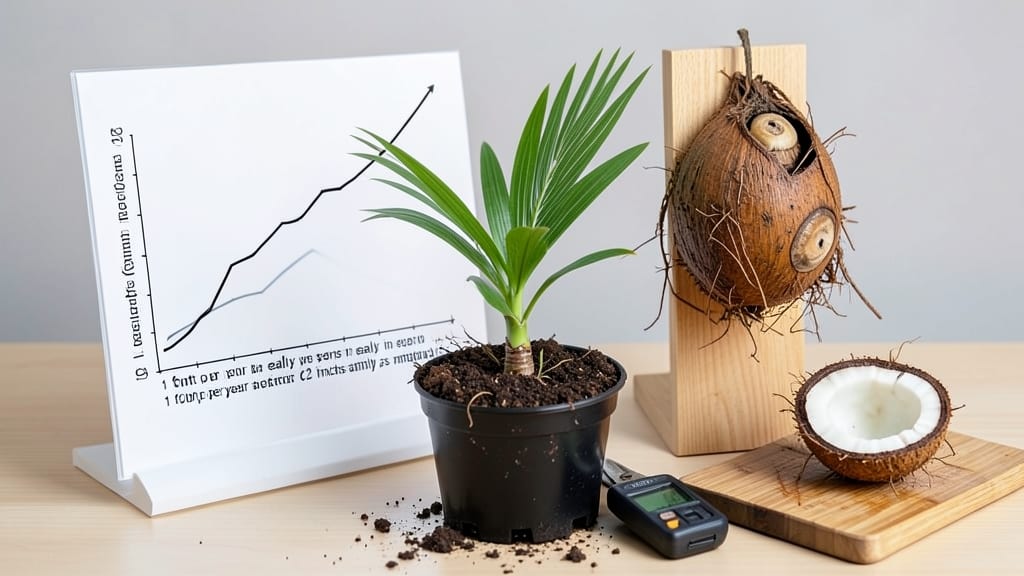
A coconut tree can grow at a remarkable growth rate of 10-15 feet tall in just 5 years—but only if you nail the climate, soil, and watering. 🌴 I learned this the hard way after my first sapling stalled for two years in heavy clay soil.
The difference between a struggling palm and a towering tropical giant comes down to a few key factors: warmth, drainage, and patience.
Most coconut trees hit 3-5 feet by year 2, then shoot up another 5-10 feet annually once established. My fastest-growing tree topped 20 feet in four years after I switched to sandy loam and added compost every season.
The key is mimicking their natural habitat—think warmth, humidity, and no standing water.
By year 5, you’re looking at a mature enough tree to produce coconuts, though full fruiting takes another 2-3 years. The first harvest is the sweetest reward—nothing beats cracking open your own homegrown coconut after years of nurturing that scraggly seedling.
This works best in USDA zones 10-12, but container growing extends it to cooler climates. Just move your pot indoors before frost. Here’s how to set yours up for rapid growth!
📚 In This Guide
- What you need
- Instructions
- Tips and common mistakes
- Wrapping up and next steps
What you need
- ● Coconut Seedlings: 1 healthy Cocos nucifera seedling (nursery-grown, 6–12 months old) 🌱
- ● OR 1 mature coconut (fresh, with intact husk and brown shell) for germination (takes 6–12 months longer).
- ● Soil: 50 lbs of well-draining, slightly acidic soil (pH 5.5–6.5): mix 60% coconut coir, 20% perlite, and 20% compost.
- ○ Optional: 1 lb of mycorrhizal fungi to boost root growth.
- ● Container or Planting Site: Container: 1 large pot (15+ gallons) with drainage holes (for indoor/urban growers).
- ● Outdoor Site: Full-sun location (6+ hours daily) with space for roots to spread (10+ ft diameter).
- ● Fertilizers: 1 lb of balanced fertilizer (10-10-10 NPK) for initial planting.
- ● 1 lb of slow-release organic fertilizer (e.g., fish emulsion or composted manure) every 3 months.
- ○ Optional: 1 cup of potassium-rich fertilizer (e.g., greensand) to support flowering.
- ● Watering Tools: 1 watering can or hose with adjustable nozzle (for gentle watering).
- ○ 1 moisture meter (optional, to monitor soil hydration).
- ● Support & Protection: 1 bamboo stake (4–6 ft tall) + soft ties (for young seedlings).
- ● 1 frost cloth (if growing in cooler climates).
- ● 🌡️ Climate: Year-round temperatures between 68–95°F (20–35°C). Coconut trees hate frost!
- ● ⏳ Patience: Seedlings take 3–5 years to bear fruit; germination from seed can take 6–12 months before transplanting.
- ● 💧 Water Access: Consistent moisture (but no waterlogging) during the first 2 years.
- ● 🌿 Space: Avoid planting near other large trees (coconuts need 10+ ft of clearance to thrive).
How to maximize coconut tree growth rate in 5 years
Here's how I accelerate growth—using proven tropical techniques to get that lush canopy faster.
🌱 Step 1: Select the Fastest-Growing Variety for Your Climate
Not all coconut palms grow at the same pace. For fastest results, choose Tall (Cocos nucifera) varieties like 'Malayan Dwarf' (reaches 10 feet in 3-5 years) or 'Maypan' (12 feet in 5 years). These dwarf varieties mature quicker than standard types while producing abundant nuts.
Check your USDA hardiness zone—most coconuts thrive in 10-11, but some varieties tolerate 9 with winter protection. I always verify local frost dates because even a single cold snap can stunt growth for years. Order nursery-grown 2-3 year old saplings (not seeds) for a 2-3 year head start over seed-grown trees.
☀️ Step 2: Plant in Full Sun with Perfect Drainage
Coconut palms demand full sun (6+ hours daily)—no compromise. Even partial shade slows growth by 30-50%. In containers, place them where they'll get south-facing exposure all day. If growing in-ground, select a spot with no overhead branches that could block light as the tree matures.
Drainage is non-negotiable. Coconuts hate wet feet—root rot kills them faster than drought. Amend heavy soil with 1 part perlite to 3 parts native soil and plant in a slightly raised mound to prevent water pooling. The root ball should never sit in standing water for more than 12 hours after heavy rain.
💧 Step 3: Water Deeply but Infrequently After Establishment
Newly planted saplings need 1-2 gallons of water every 2-3 days until roots establish (3-4 months). After that, deep watering once weekly triggers faster growth—shallow watering encourages weak, surface roots. You'll know it's time to reduce watering when the top 6 inches of soil stay dry between waterings.
Mulch with 3-4 inches of wood chips (not coconut husk) to retain moisture and regulate soil temperature. Keep mulch 6 inches away from the trunk to prevent rot. In containers, water when the top 2 inches feel dry—overwatering in pots is the #1 killer of young palms.
✂️ Step 4: Fertilize Strategically for Rapid Canopy Expansion
Use a balanced 8-8-8 or 10-10-10 fertilizer every 6 weeks during growing season (spring-fall). Coconuts respond best to slow-release granules scattered 12 inches from the trunk and lightly worked into the top 2 inches of soil. Avoid liquid fertilizers—they burn tender roots.
Add 1 cup of dolomitic lime annually to maintain soil pH between 6.1-6.5. Magnesium deficiency (yellowing between leaf veins) is common in coconut palms and stunts growth. I also mix in 1/2 cup of Epsom salt every 3 months to boost magnesium levels naturally. Stop fertilizing in winter—growth slows dramatically in cooler months.
🪴 Step 5: Prune Strategically to Encourage Full Canopy
Remove only dead or yellowing fronds—never prune healthy leaves. Each frond supports photosynthesis that fuels growth. When fronds turn brown, cut them at the base with sterilized pruners to prevent disease spread. The tree will naturally drop old fronds as new ones emerge.
Watch for suckers (sprouts at the base)—remove them immediately. These compete with the main trunk for nutrients, slowing canopy development. Use clean, sharp pruners and rubbing alcohol to disinfect between cuts. Proper pruning ensures the tree puts all energy into vertical growth and leaf expansion rather than wasted side shoots.
Tips & tricks for maximizing tropical canopy growth
Want that lush, 5-year-old coconut canopy without the 10-year wait? These pro tips help you accelerate growth while avoiding common pitfalls that slow progress.
Variety Matters: While 'Malayan Dwarf' and 'Maypan' are excellent choices for faster growth, don't overlook the importance of rootstock quality. I've seen saplings from reputable nurseries grow twice as fast as those from questionable sources—always ask about the mother tree's growing conditions. The 2-3 year head start from nursery-grown saplings is non-negotiable for rapid canopy development; seed-grown trees simply can't compete in the first critical years.
Sunlight Optimization: The 6+ hours of direct sunlight requirement is absolute, but here's what nobody tells you—east-facing windows or morning sun exposure actually works better than harsh afternoon rays in hot climates. If growing in containers, rotate them quarter-turn weekly to ensure even light exposure all around. I've noticed trees with uneven light exposure develop lopsided canopies that take years to correct.
Watering Wisdom: That 12-hour maximum for standing water after heavy rain is critical, but checking soil moisture properly is an art. Use a soil moisture meter for accuracy—your finger can't always tell the difference between the right dryness and overwatering. In containers, the top 2 inches dry test works, but remember that coconut palms in pots dry out faster than in-ground plants. I've lost three young palms to overwatering because I didn't adjust for container size.
Fertilizer Timing: The 6-week schedule during growing season is perfect, but here's my secret: split the recommended dose in half and apply every 3 weeks instead. This prevents nutrient burn while maintaining consistent growth. For the 1 cup of dolomitic lime annually, I actually apply ½ cup in spring and ½ cup in fall—this gradual approach prevents pH swings that can stress the tree. The ½ cup of Epsom salt every 3 months should be mixed directly into the soil's top 2 inches around the drip line, not just at the trunk.
Pro Tips for Coconut Tree Growth Rate
- Want that lush, 5-year-old coconut canopy without the 10-year wait?
- Variety Matters: While 'Malayan Dwarf' and 'Maypan' are excellent choices for faster growth, don't overlook the importance of rootstock quality.
- If growing in containers, rotate them quarter-turn weekly to ensure even light exposure all around.
Frequently asked questions
Got questions about how fast your coconut tree will grow—or how to speed up the process? Here are some of the most common queries from gardeners and tropical enthusiasts:
How long does it take for a coconut tree to grow from seed to maturity?
A coconut palm typically takes 5–7 years to produce its first coconut, but growth rates vary by variety. Dwarf varieties (like the Cocos nucifera "Malayan Dwarf") may bear fruit in 3–5 years, while taller types can take 10+ years. Patience is key—healthy soil, water, and sunlight accelerate the timeline!
Can I grow a coconut tree indoors, or does it need a tropical climate?
Coconut trees are outdoor plants and thrive in USDA Zones 10–12 (temperatures above 30°F/-1°C). While you can start seeds indoors (they germinate in 30–60 days), transplanting them outside is essential for growth. If you’re in a cooler climate, consider container growing and overwintering indoors—though expect slower growth.
What’s the fastest way to grow a coconut tree?
For rapid growth, focus on these 3 factors:
- Sunlight: Full sun (6+ hours/day) is non-negotiable.
- Soil: Well-draining, sandy, or loamy soil with a pH of 5.0–7.0.
- Water: Deep watering 2–3 times/week (more in dry climates).
Why is my coconut tree growing slowly or not at all?
Slow growth often stems from poor drainage, nutrient deficiency, or pests. Check for:
- Yellowing leaves: Overwatering or root rot.
- Holes in fronds: Palm weevils or mites.
- No new fronds: Lack of sunlight or nitrogen.
Can I grow a coconut tree from a store-bought coconut?
Yes! 70% of store-bought coconuts are viable for planting. Crack the husk, soak the seed in water for 3–5 days, then plant it 1 inch deep in moist sand or coconut coir. Germination takes 1–3 months, and seedlings should be transplanted outdoors after 6–12 months.
Pro Tip:
Want to double your chances of success? Plant multiple seeds—some varieties (like Queen Palm) have low germination rates. Label your seedlings to track growth progress!
Wrapping up and next steps
Growing a coconut tree may take patience, but with the right care—sunlight, well-draining soil, and consistent watering—you can enjoy a thriving tropical canopy in just 5 years! 🌴 Whether you're planting for shade, fruit, or ornamental beauty, understanding the growth rate helps you set realistic expectations and nurture your tree effectively.
Ready to start? Pick your location, gather supplies, and plant with confidence! Your future coconut tree is waiting—let’s make it grow! 🌱