
Plants
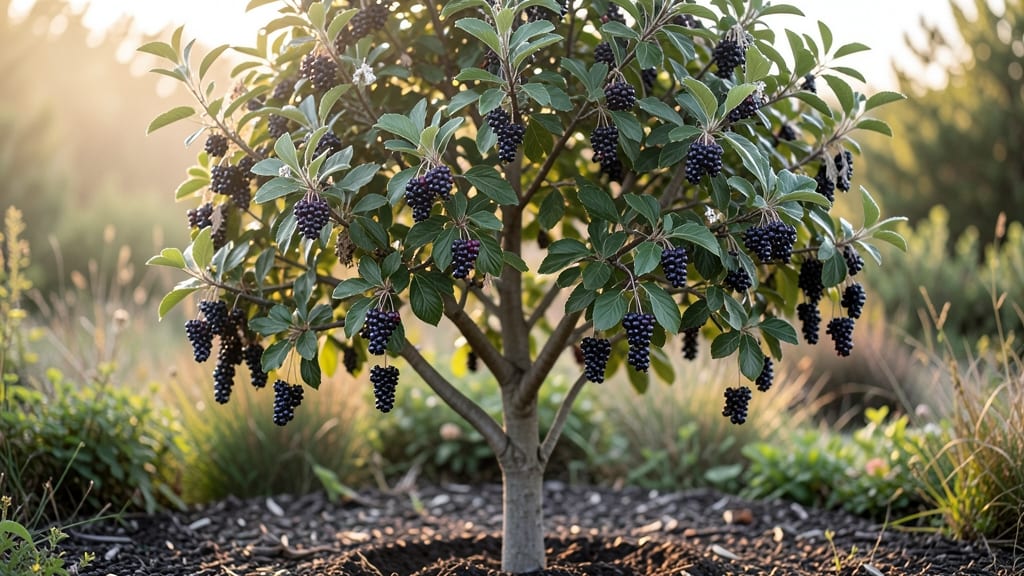
A chokeberry tree looks like a compact, multi-stemmed shrub or small tree with glossy dark green leaves, white spring flowers, and clusters of deep red to black berries. Its bark is grayish-brown and smooth when young, becoming more rugged with age, and it typically grows 6 to 15 feet tall with a rounded, dense canopy.
A chokeberry tree stands out with its distinctive growth habit—often forming thickets of slender stems that create a bushy silhouette. 🌿 The leaves, oval-shaped with serrated edges, turn brilliant red in fall, making it a standout ornamental plant.
What really catches the eye are the berry clusters, which start vibrant red and darken to nearly black as they ripen, persisting well into winter. Unlike many fruit-bearing trees, chokeberries thrive in both sun and partial shade, adapting well to different landscapes.
This adaptability, combined with its year-round visual interest, explains why gardeners and landscapers favor chokeberry shrubs. The white spring blooms provide early-season color, while the winter berries offer structure and texture when most plants have gone dormant.
Even the bark tells a story—young trees have smooth grayish-brown skin that develops a more textured appearance as they mature, adding to the tree's rugged charm.
💡 In This Article
- Identifying Chokeberry Tree Features by Season
- How to Tell Chokeberry Apart from Similar Shrubs
Identifying chokeberry tree features by season
Spring is when chokeberry trees announce their presence with showy clusters of white flowers that appear before the leaves fully emerge. These blooms, measuring about 0.5-1 inch wide, form dense, pyramid-shaped clusters along the stems, creating a frothy, almost snow-like effect against the emerging foliage.
The flowers have 5 petals and a subtle, sweet fragrance that attracts early pollinators like bees and butterflies. What's unique is how these flowers often persist for 2-3 weeks—longer than many ornamental shrubs—before giving way to the summer foliage.
By summer, the tree's oval-shaped leaves (typically 1.5-3 inches long) dominate the scene, showcasing their glossy dark green hue and finely serrated edges. These leaves grow opposite each other along the stems, creating a layered, almost quilted appearance when viewed from above.
The real showstopper arrives in late summer when the berries begin ripening—starting as bright red spheres that gradually darken to a deep purple-black, resembling tiny, glossy marbles. Each berry contains 5-10 seeds and measures about 0.3-0.5 inches in diameter.
Autumn transforms the chokeberry into a fiery spectacle as its leaves shift from green to vibrant red or orange, sometimes even purple, depending on the variety. This color change occurs due to anthocyanin pigments that develop in response to cooler temperatures and shorter daylight hours.
The berries, now fully mature, remain attached to the branches well into winter, providing year-round interest and a food source for birds like cedar waxwings and robins. The contrast between the deep red leaves and black berries creates a striking visual effect that's hard to ignore in any landscape.
Winter reveals the tree's architectural beauty as the bare branches display their persistent berries and textured bark. Young bark appears smooth and grayish-brown, but as the tree matures, it develops a more rugged, exfoliating pattern with vertical ridges that add depth to its winter silhouette.
The berries themselves remain firm and glossy until eaten by wildlife or harvested by humans, often lasting until late winter or early spring. This persistence makes chokeberry an excellent choice for wildlife-friendly gardens, as it provides food when few other native plants do.
What makes chokeberry truly distinctive is its multi-season appeal. While many shrubs offer beauty in just one or two seasons, chokeberry delivers visual interest year-round—from spring blooms to summer foliage, autumn color, and winter berries.
The tree's compact growth habit (typically 6-15 feet tall) makes it ideal for small gardens, while its adaptability to various soil types and light conditions expands its versatility.
Whether planted as a specimen tree, hedge row, or mixed border, chokeberry's changing appearance keeps it engaging throughout the seasons.