
Plants
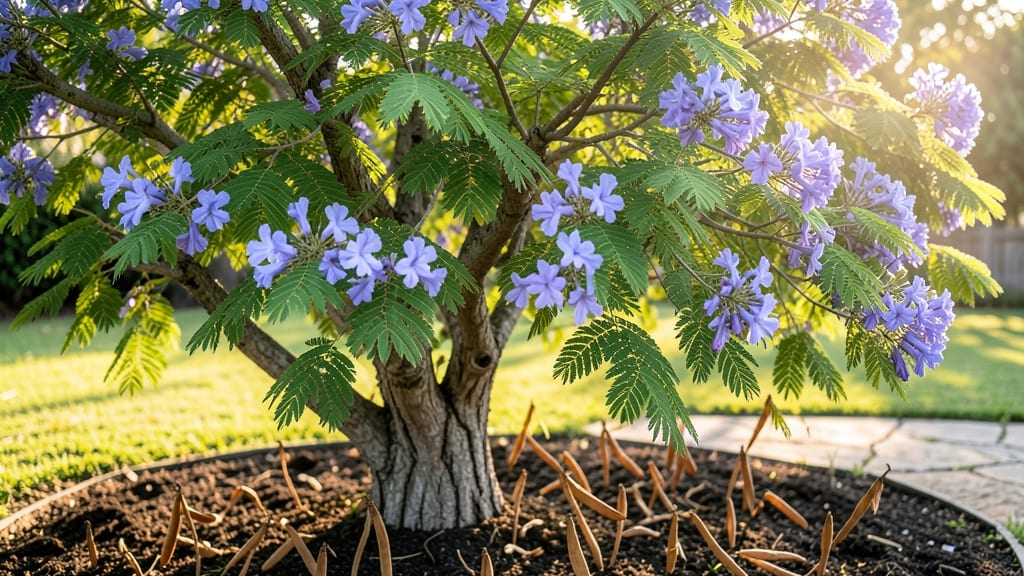
A jacaranda tree looks like a tropical dream with its lavender-blue, trumpet-shaped flowers that bloom in dense clusters, compound fern-like leaves with feathery fronds, and smooth gray bark. The tree grows into a broad, rounded canopy that can reach 30-50 feet tall, showcasing its stunning springtime display.
A jacaranda tree's signature blooms are what first catches your eye—those clusters of trumpet-shaped flowers hang like cascading waterfalls, typically in shades of violet, purple, or lavender. 🌸 The flowers grow in dense, drooping clusters that can reach up to 12 inches long, creating a dramatic canopy effect.
Beyond the flowers, the tree's compound leaves resemble ferns, with multiple leaflets arranged along a central stem, giving it a lush, tropical appearance even when not in bloom.
The bark is another standout feature—smooth and grayish-brown, often developing a slightly textured surface as the tree matures. This contrast between the vibrant flowers and the muted bark adds to the tree's visual appeal.
While the jacaranda is often associated with spring blooms, its foliage remains attractive year-round, making it a prized addition to gardens and urban landscapes.
💡 In This Article
- Identifying Jacaranda Flowers, Leaves, and Bark
- Jacaranda Tree Varieties and Landscaping Uses
Identifying jacaranda flowers, leaves, and bark
The jacaranda's signature flowers are actually clusters of individual blossoms that form a stunning, cascading effect. Each flower measures about 1-1.5 inches long with five petals that curve backward into that classic trumpet shape. The color palette ranges from soft lavender to deep violet, though some varieties produce near-white blooms.
What's fascinating is how these flowers emerge directly from the trunk and branches, creating a three-dimensional floral display that can blanket the tree in bloom.
The compound leaves are another key identifier—each leaf consists of 10-20 pairs of small, oval-shaped leaflets arranged in a feathery pattern along a central stem. These leaflets measure about 0.5-1 inch long and have a slightly waxy texture that gives them a fresh, almost velvety appearance.
When new growth emerges, the leaves often have a bronze tint before maturing to a deeper green. 🌿 The entire leaf structure resembles a fern, which is why jacarandas are sometimes called "blue fern trees" in some regions.
The bark plays a subtle but important role in identification—it starts smooth and gray when young but develops a slightly rougher texture with age. This contrast between the vibrant flowers and the muted bark creates a visual harmony that makes the tree instantly recognizable.
What many people don't realize is that the bark contains a natural protective layer that helps the tree resist pests and drought, which is why jacarandas thrive in both tropical and subtropical climates.
Seasonal changes are dramatic with jacarandas. The spring bloom period typically lasts 2-4 weeks, during which the tree can produce up to 200,000 flowers in a single season.
After flowering, the tree enters a dormant phase where it sheds its leaves, but the smooth bark remains an attractive feature year-round. The flowers themselves have a faint, sweet fragrance that's most noticeable in the early morning hours.
Here's what to look for when identifying a jacaranda in person:
- Flowers: Dense clusters of trumpet-shaped blooms in purple-blue hues, hanging downward
- Leaves: Compound with 10-20 pairs of small, oval leaflets arranged like a feather
- Bark: Smooth gray when young, developing slight texture with age
- Growth habit: Rounded canopy that spreads wider than it grows tall
The tree's height varies by species, but most mature jacarandas reach 30-50 feet with a spread of 25-40 feet, creating a broad, umbrella-like canopy that provides excellent shade. This growth pattern makes them ideal for large gardens or as street trees in warm climates. 💫