
Flowers
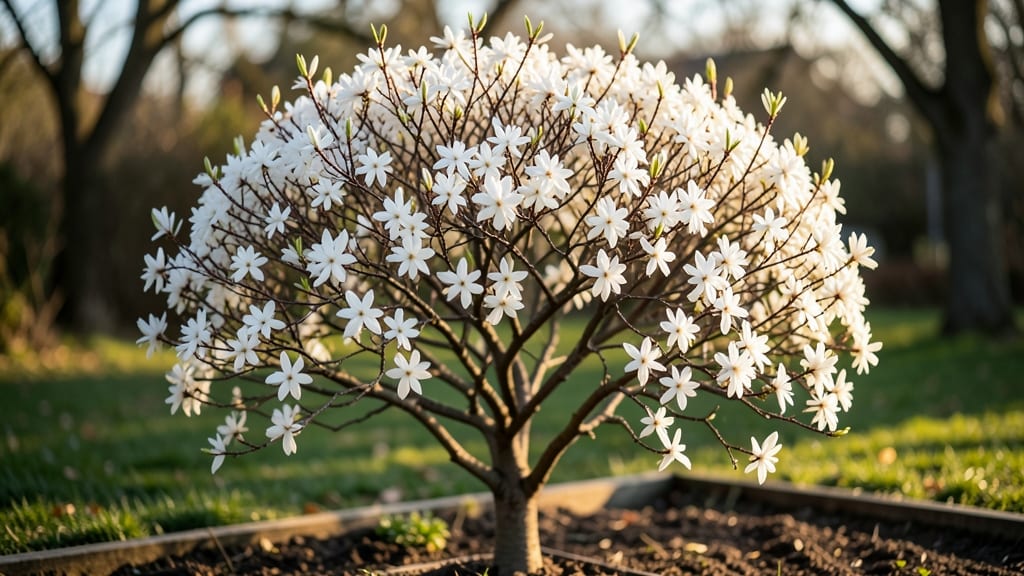
When you want a tree with white star-shaped flowers to steal the show, Magnolia stellata is the star performer. 🌟 This Japanese star magnolia bursts into bloom in early spring, covering branches with delicate, fragrant white stars that look like snowflakes caught in motion.
Unlike many spring bloomers, it flowers before the leaves emerge, creating a breathtaking display that lasts for weeks.
The best part? It thrives in small spaces, making it perfect for urban gardens or as a dramatic focal point in a mixed border. Plant it where its cascading branches can be admired from multiple angles—near a patio, along a walkway, or as a centerpiece in a front yard.
Just give it partial shade and well-drained soil, and it’ll reward you with years of effortless elegance.
Pair it with spring bulbs like daffodils or tulips for early color, and let its glossy summer foliage provide texture through the seasons. In fall, the leaves turn a soft yellow before dropping, revealing the graceful structure of the branches—ideal for winter interest.
This tree doesn’t just bloom; it transforms your garden into a living work of art.
If you’re working with limited space or want a tree that delivers year-round interest, Magnolia stellata delivers—without the fuss. It’s the kind of plant that makes neighbors stop and stare, and once it’s established, it practically takes care of itself.
Here’s how to set it up for success in your garden.
Nature’s Starburst Triggers Explained
If you’ve ever admired a tree adorned with white star-shaped blooms and wondered why it produces such striking flowers—or why some years it seems to struggle—you’re not alone. These floral masterpieces aren’t just a coincidence; they’re the result of a carefully orchestrated biological dance between genetics, environment, and seasonal cues.
Let’s break down the science behind why these trees burst into starry splendor (or sometimes don’t).
Most trees with white star-shaped flowers—like the Cercis canadensis ‘Alba’ (white Eastern redbud) or Magnolia stellata—inherit their floral design from a combination of genetic traits passed down through generations. Here’s how it works:
- Floral Morphology Genes: Specific genes control the shape, size, and symmetry of petals. In star-shaped flowers, genes like APETALA3 (AP3) and PISTILLATA (PI) work together to create the classic five-petal structure (or multiples thereof), while other genes determine petal edges and color.
- Albinism or Pigment Mutations: The "white" in these flowers often stems from a lack of anthocyanin pigments (which create reds/purples) or flavonoids (yellows/oranges). Some trees naturally produce white flowers due to recessive alleles that suppress pigment production.
- Hybrid Vigor: Many star-flowered trees are cultivars or hybrids bred for specific traits. For example, Magnolia ‘Jane’ combines the starry blooms of Magnolia stellata with disease resistance from other species, ensuring both beauty and durability.
💡 Pro Tip: If you’re growing a grafted tree (like many ornamental varieties), the white flowers are a result of the scion (top part) genetics—not the rootstock. This means even if the root system is hardy, the floral display depends entirely on the grafted variety.
Timing is everything for these trees. Their star-shaped flowers typically appear in early spring, but the exact trigger depends on a mix of environmental factors:
| Factor | How It Works | Actionable Impact |
|---|---|---|
| Chill Hours | Many star-flowered trees (e.g., redbuds, magnolias) require a period of dormancy in cold temperatures to "reset" their biological clock. This is measured in chill hours—typically 500–1,000 hours below 45°F (7°C). | If your area has mild winters, the tree may bloom later or sparsely. Consider microclimate adjustments (e.g., planting near a north-facing wall for cooler conditions). |
| Day Length (Photoperiod) | Some trees respond to increasing daylight in late winter/early spring, which signals the production of florigen—a hormone that triggers flowering. | In tropical or low-latitude regions, these trees may bloom erratically or not at all. Supplement with artificial light (e.g., LED grow bulbs) if growing indoors. |
| Temperature Swings | A warm spell followed by a cold snap can shock the tree into blooming. For example, a sudden drop to 30°F (-1°C) after a 60°F (15°C) day can prompt buds to open. | If your spring is too warm too soon, buds may open prematurely and get frost damage. Use frost cloth to protect vulnerable trees. |
⚠️ Watch Out: Global warming is disrupting chill hours in many regions. Some star-flowered trees may start blooming earlier but produce fewer flowers if the cold requirement isn’t met.
Not all years are equal for these trees. Environmental stressors can delay, reduce, or even prevent the star-shaped bloom spectacle. Here’s what’s likely sabotaging your tree:
💧 Water Woes: Too Much or Too Little
Water stress—whether from drought or overwatering—directly impacts flower production:
- Drought Stress: Trees like Magnolia stellata are shallow-rooted and drought-sensitive. When soil moisture drops below 40%, the tree prioritizes survival over reproduction, aborting flower buds.
- Overwatering: Soggy roots suffocate the tree, preventing nutrient uptake. This leads to weak bud formation and smaller, less vibrant flowers.
- Solution: Aim for consistent moisture—about 1–1.5 inches of water per week. Use mulch (2–3 inches) to retain soil moisture and regulate temperature.
🌿 Nutrient Deficiencies: Missing the Recipe
Flowers are energy-intensive to produce, and a tree needs the right nutrients to pull it off:
- Nitrogen (N): Supports leafy growth but too much can delay flowering. A balanced 10-10-10 fertilizer in early spring encourages blooms.
- Phosphorus (P): Critical for root and flower development. A deficiency (yellowing leaves, weak stems) means fewer buds.
- Potassium (K): Helps stress resistance and flower color vibrancy. Lack of K can lead to pale or misshapen petals.
- Micronutrients: Boron and calcium are key for cell wall formation in petals. A soil test can reveal gaps.
🔥 Quick Fix: Apply a slow-release granular fertilizer in early spring, followed by a liquid bloom booster (high in phosphorus) when buds form.
🐛 Pests and Diseases: Silent Saboteurs
Hidden threats can devour buds or infect the tree before it even blooms:
- Bud Blight (e.g., Botryosphaeria): Fungal infections cause buds to blacken and drop. Prune infected branches in dormant season and sterilize tools with 70% alcohol.
- Japanese Beetles: These pests skeletonize leaves and chew flower buds. Handpick them or use neem oil sprays.
- Scale Insects: Sap-sucking pests weaken the tree, reducing flower production. Treat with horticultural oil in late winter.
🛡️ Prevention Tip: Inspect trees in late winter for egg masses or early signs of pests. Early intervention = more stars next season!
Understanding these triggers puts you in the driver’s seat for cultivating a show-stopping star-flowered tree. Whether it’s tweaking your
Revive Your Starry Bloom Tree
A tree adorned with white star-shaped flowers can transform any garden into a breathtaking vertical masterpiece—but only if it thrives. Whether your tree is struggling with pests, poor growth, or lackluster blooms, these practical solutions will help you restore its health and beauty.
Below, we’ve matched common issues to easy fixes, along with prevention tips to keep your tree flourishing for years.
Cause: Insufficient sunlight, improper pruning, or nutrient deficiencies often stunt blooming.
Fix: 🔥 Boost Sunlight Exposure
- Ensure your tree gets at least 6 hours of direct sunlight daily. If shaded by taller plants or structures, consider relocating it or thinning nearby foliage.
- Pro Tip: 💡 If moving isn’t an option, supplement with grow lights (12–14 hours/day) during shorter winter days.
🍳 Fertilize for Blooms
- Use a balanced, slow-release fertilizer (10-10-10 or 20-20-20) in early spring before buds form.
- For phosphorus-rich blooms, switch to a 5-10-10 formula in late summer.
- Avoid over-fertilizing—this can lead to leafy growth at the expense of flowers.
👨🍳 Prune Strategically
- Trim dead or crossing branches in late winter or early spring (before new growth).
- Never prune in fall—this can encourage late-season growth vulnerable to frost damage.
- Shape lightly to improve airflow, reducing disease risk.
Cause: Aphids, spider mites, or fungal infections (like powdery mildew) can weaken your tree and distort flowers.
Fix: 🔪 Spot-Treat Pests Immediately
- Aphids/Spider Mites: Spray with neem oil (mix 1 tbsp neem oil + 1 tsp mild soap + 1 quart water). Reapply every 5–7 days until pests vanish.
- Scale Insects: Scrape off infested areas with a plastic scraper, then treat with horticultural oil.
- Prevention Tip: 🌡️ Encourage beneficial insects (ladybugs, lacewings) by planting marigolds or dill nearby.
🍄 Combat Fungal Issues
- Powdery Mildew: Apply baking soda spray (1 tsp baking soda + 1 quart water + a drop of soap) weekly until cleared.
- Root Rot: Improve drainage by amending soil with perlite and avoid overwatering.
- Prevention Tip: ✨ Water at the base (not overhead) to keep foliage dry.
Cause: Overwatering, compacted soil, or nutrient imbalances can stress your tree.
Fix: ⏰ Adjust Your Watering Routine
- Water deeply but infrequently—aim for 1–1.5 inches per week (check soil moisture 2 inches down).
- Mulch heavily (2–3 inches of organic mulch) to retain moisture and regulate temperature.
- Warning: 🚨 Yellow leaves? This could signal overwatering—let the top inch of soil dry out between waterings.
📊 Test and Amend Soil
- If soil is clay-heavy, mix in compost or coconut coir to improve aeration.
- For nutrient deficiencies, use a chelated iron supplement (for yellowing) or Epsom salt (for magnesium deficiency).
- Prevention Tip: 💪 Get a soil test every 2–3 years to tailor fertilizers.
To keep your star-shaped bloomer thriving:
- Feed annually in early spring with a balanced fertilizer.
- Monitor for pests monthly during growing seasons.
- Prune lightly in late winter to maintain shape and airflow.
- Protect from frost in winter by wrapping young trees or using burlap shields.
With these steps, your tree will reward you with vibrant white star flowers year after year—making it the dramatic vertical focal point you dreamed of! 🌸✨
Frequently asked questions
What are the most popular trees with white star-shaped flowers?
The Magnolia stellata (Japanese star magnolia) is the most iconic, but other stunning options include the Cercis canadensis 'Alba' (white Eastern redbud) and Chionanthus virginicus (white fringe tree). Each offers unique blooming times and garden uses—magnolias shine in early spring, while fringe trees bloom in late spring and have fragrant foliage.
Why do some years produce more flowers than others?
Flower production depends on chill hours (cold winter periods), sunlight exposure, and soil nutrients. Trees like magnolias need 500–1,000 hours below 45°F to set buds properly. If winters are too mild or summers are droughty, buds may abort. A balanced fertilizer in early spring can help boost next year’s display.
Can these trees grow in containers or small spaces?
Yes! Dwarf varieties like Magnolia 'Royal Star' (6–8 feet tall) or Cercis canadensis 'Lavender Twist' thrive in large containers (20+ gallons). Use well-draining potting mix and repot every 2–3 years. Place in partial shade for best results, and water when the top inch of soil feels dry.
How do I protect white star flowers from pests?
Japanese beetles and spider mites love these blooms! Handpick beetles or use neem oil (mix 1 tbsp neem + 1 quart water) to deter pests. For fungal issues like powdery mildew, spray with a baking soda solution (1 tsp baking soda + 1 quart water) weekly. Always water at the base to keep foliage dry.
What plants pair well with white star-flowered trees?
Try underplanting with spring bulbs like daffodils or tulips for early color contrast. For summer interest, add Hosta or Heuchera for texture, and Clethra alnifolia (summersweet) for late-season blooms. Ferns like Dryopteris add lush greenery to highlight the starry flowers.