
Flowers
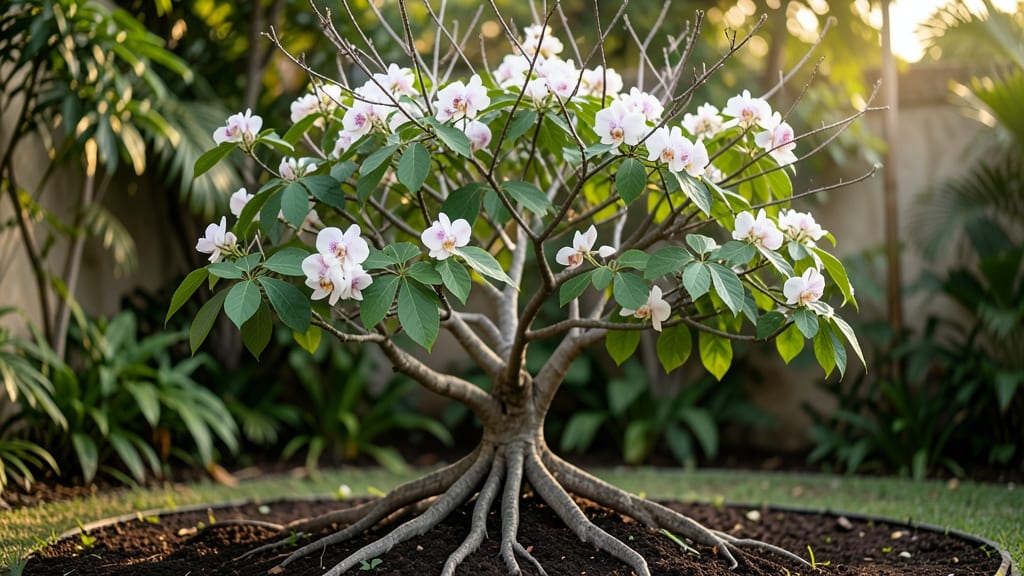
White orchid-like flowers cascading from a tree sounds like something out of a fantasy novel—but it’s real, and it thrives in your own backyard. 🌸 The Bauhinia blakeana (Hong Kong orchid tree) brings drama with its waxy white blooms that resemble orchids, and it’s surprisingly low-maintenance for its showstopping presence.
What makes it even better? It loves partial sun, so it’s perfect for spots where other shade trees would struggle.
This tree isn’t just about the flowers—its unique two-lobed leaves add texture year-round, and in autumn, the foliage turns a soft yellow-green. Pair it with dwarf hydrangeas for a soft contrast or Japanese maples to echo its elegant structure.
The key is planting it where its branches can arch gracefully over patios or walkways, creating a dreamy, romantic vibe without needing full sun.
With minimal pruning and regular watering (especially in its first year), you’ll get months of blooms from spring through summer. The fragrance is subtle but intoxicating—like a whisper of jasmine on a warm breeze.
It’s the kind of tree that makes neighbors stop and stare, and once it’s established, it’s practically indestructible.
Best for USDA zones 9-11, but if you’re outside that range, consider growing it in a large container and bringing it indoors during winter. The trade-off? A little extra effort for a tree that feels like a tropical escape year-round. Ready to add this stunner to your garden?
Natural Triggers for Blooming
The sight of a tree adorned with delicate white orchid-like flowers is a breathtaking display, but have you ever wondered why it happens? These stunning blooms are the result of a carefully balanced interplay of environmental and biological factors. Let’s break down the key reasons behind this floral spectacle.
Most trees with white orchid-like flowers—such as the Plumeria or Fringe Tree (Chionanthus)—follow a strict seasonal rhythm. These blooms are triggered by:
- Day Length (Photoperiodism): Many flowering trees respond to changes in daylight hours. As days grow longer in spring or shorter in fall, the tree’s internal clock signals it’s time to bloom. For example, Plumeria often flowers in late spring or early summer when daylight stretches beyond 12 hours.
- Temperature Shifts: A period of cool weather (like winter chills) can break dormancy and prime the tree for blooming. Some varieties, such as the Fringe Tree, may need a cold snap to trigger flower buds.
Pro Tip: 🌡️ If your tree isn’t blooming, monitor its exposure to seasonal temperature drops—sometimes a light frost or cooler nights can kickstart the process!
Not all light is created equal. Trees with white orchid-like flowers typically thrive in partial sun, meaning they need a mix of direct sunlight and shade. Here’s why:
- Moderate Sunlight (4–6 Hours/Day): Too much harsh sun can scorch delicate petals, while too little shade may weaken the tree’s energy reserves. The ideal balance ensures vibrant blooms without stress.
- Morning Sun, Afternoon Shade: Many of these trees prefer dappled sunlight, such as under a canopy or near a building’s east-facing wall. This mimics their natural habitat in forests or coastal areas.
Watch Out: ⚠️ If your tree is in full shade, it may produce fewer flowers. Try relocating it to a spot with filtered light for better results.
Healthy blooms start with a well-fed tree. Water and nutrients play critical roles:
- Consistent Moisture (But Not Soggy Soil): Orchid-like flowering trees often need even moisture, especially during bud formation. Drought stress can cause buds to drop, while waterlogged roots may lead to root rot and poor flowering.
- Balanced Fertilizer: A slow-release, low-nitrogen, high-phosphorus fertilizer (like a 5-10-10 blend) encourages blooming. Too much nitrogen promotes leafy growth at the expense of flowers.
- Micronutrients Matter: Deficiencies in magnesium, calcium, or boron can stunt flower production. A soil test can reveal if your tree needs a boost.
Pro Tip: ✨ Mulch around the base of the tree to retain moisture and regulate soil temperature—this mimics natural forest conditions and supports steady blooming.
Not all trees bloom with white orchid-like flowers—it’s often in their _DNA_. Some key traits include:
- Hybridization: Many ornamental trees, like the Bradford Pear (which has orchid-like white blooms), are cultivated hybrids bred specifically for showy flowers. Their genetics prioritize floral displays over fruit production.
- Epiphytic Adaptations: Trees like Plumeria (often called "Frangipani") evolved in tropical climates where they grow as epiphytes (on other plants). Their blooms are an energy investment to attract pollinators in competitive environments.
- Age and Maturity: Young trees may take 3–5 years to reach full blooming potential. Patience is key—some varieties, like the Fringe Tree, don’t produce their signature white plumes until they’re well-established.
Fun Fact: 🌸 Some trees, like the Crabapple, produce more flowers in their second or third year as they allocate energy to reproduction rather than growth.
By understanding these natural triggers—seasonal cues, light exposure, proper care, and genetic traits—you can create the perfect conditions for your tree to burst into a dazzling display of white orchid-like blooms year after year.
Revive & Protect Your Blooming Tree
If your tree with delicate white orchid-like flowers isn’t thriving, don’t worry—most issues have simple fixes! Below, we’ve mapped common problems to practical solutions, so you can restore its beauty and keep it flourishing for years. Plus, we’ll share pro tips to prevent future setbacks.
If your tree’s leaves are yellowing or wilting despite damp soil, root rot may be the culprit. Overwatering or compacted soil traps excess moisture, suffocating roots.
How to Fix It: 🔥 Step 1: Assess the Soil
- Gently dig around the base (1–2 inches deep) to check for soggy, foul-smelling soil. If it’s mushy, root rot is likely.
🍳 Step 2: Improve Drainage - Amend the soil with organic matter (compost or coconut coir) to loosen it.
For heavy clay soil, mix in perlite or sand (20% of the soil volume). - Pro Tip: If repotting, choose a pot with drainage holes and elevate it on a saucer to prevent water pooling.
👨🍳 Step 3: Adjust Watering Habits
- Let the top 1–2 inches of soil dry out between waterings. Stick your finger in—if it’s dry, it’s time to water.
- Water deeply but less frequently (e.g., once a week in summer, every 10–14 days in winter).
⏰ Step 4: Trim Damaged Roots (Advanced)
- For severe rot, carefully prune blackened or mushy roots with sterilized scissors. Replant in fresh, well-draining soil.
Prevention:
- Use a well-draining potting mix (e.g., 60% peat/compost, 30% perlite, 10% sand).
- Avoid soggy spots—ensure the tree isn’t planted in a low-lying area where water pools.
White orchid-like blooms love partial shade (4–6 hours of filtered sunlight daily). Too much sun scorches leaves, while too little weakens growth.
How to Fix It: 🔥 Step 1: Observe Leaf Signs
- Brown crispy edges? → Too much direct sun.
- Leggy stems, sparse blooms? → Needs more light.
🍳 Step 2: Adjust Placement
- Move indoors near a bright, east-facing window or outdoors under dappled shade (e.g., under a sheer curtain or tall trees).
- For outdoor trees, use a lightweight shade cloth (30–50%) in peak afternoon sun.
👨🍳 Step 3: Gradual Acclimation
- If transitioning from indoor to outdoor, harden off the tree over 1–2 weeks by exposing it to sunlight in incremental steps.
Prevention:
- Monitor sunlight exposure seasonally—summer sun is stronger than winter light.
- Rotate the tree occasionally for even growth (if potted).
White orchid-like trees are prone to powdery mildew or leaf spot if humidity is high or airflow is poor. Look for white fuzzy patches or dark spots on leaves.
How to Fix It: 🔥 Step 1: Prune Infected Areas
- Snip off yellowed or spotted leaves with sterilized pruners (wipe with rubbing alcohol between cuts).
🍳 Step 2: Boost Airflow
- Space plants 3–4 feet apart (if in a garden) or thin crowded foliage in pots.
- Use a small fan on low setting near the tree for 10–15 minutes daily to reduce humidity.
👨🍳 Step 3: Apply Fungicide
- Spray with a baking soda solution (1 tsp baking soda + 1 quart water + a drop of dish soap) every 7–10 days.
- For severe cases, use neem oil (1 tbsp per quart of water) as a natural fungicide.
🌡️ Step 4: Prevent Future Outbreaks
- Water early in the day so leaves dry quickly.
- Avoid overhead watering—use a drip irrigation system or water at the base.
Prevention:
- Space plants properly to allow airflow.
- Clean up fallen leaves regularly to reduce spores.
Pale leaves, slow growth, or few flowers? Your tree might be hungry! These bloomers thrive with balanced nutrients, especially phosphorus (for flowers) and potassium (for root health).
How to Fix It: 🔥 Step 1: Test the Soil
- Use a DIY soil test kit (available at garden centers) or send a sample to a local extension service for a full analysis.
🍳 Step 2: Fertilize Smartly
- For potted trees: Use a balanced liquid fertilizer (10-10-10 or 20-20-20) every 4–6 weeks in growing season (spring–fall).
- For garden trees: Apply a slow-release granular fertilizer (like 10-10-10) in early spring and mid-summer.
- Pro Tip: Avoid high-nitrogen fertilizers (like lawn food)—they promote leafy growth but fewer blooms.
👨🍳 Step 3: Organic Boosts
- Mix compost or worm castings into the top 2–3 inches of soil for a slow-release nutrient boost.
- For phosphorus (key for blooms), add bone meal (1 tbsp per square foot of soil) in early spring.
Prevention:
- Feed consistently—don’t skip fertilizing during the growing season.
- Flush the soil annually (water thoroughly to remove excess salts from fertilizers).
Spider mites, aphids, or scale insects can drain your tree’s energy, leading to weak growth and fewer blooms. Check for sticky residue (honeydew), tiny webs, or chewed leaves.
How to Fix It: 🔥 Step 1: Isolate & Inspect
- Move the tree away from others to prevent spread. Check the undersides of leaves and stems for pests.
🍳 Step 2: Blast Off Pests
- Strong water spray: Hose down the tree with water to dislodge mites and aphids (repeat every 3–4 days).
- Insecticidal soap: Mix 1.5 tbsp mild castile soap per quart of water and spray every 5–7 days until pests vanish.
👨🍳 Step 3: Introduce Beneficial Insects
- Release ladybugs or lacewings (available at garden centers) to naturally control aphids and mites.
🌡️ Step 4: Prevent Recurrence
- Neem oil spray (1 tbsp per quart of water) monthly as a preventive.
- Encourage natural predators by planting marigolds or basil nearby.
Prevention:
- Inspect new plants before bringing them home.
- Avoid over-fertilizing—weak plants attract pests.
With these targeted fixes, your white orchid-like tree will bounce back stronger—and you’ll enjoy its elegant blooms for seasons to come! 🌸✨
Frequently asked questions
What are the most common trees with white orchid-like flowers?
The Bauhinia blakeana (Hong Kong orchid tree) is the most famous, but others include Plumeria (Frangipani), Tabebuia (pink trumpet tree with white varieties), and Fringe Tree (Chionanthus). Each has unique shapes—some with waxy petals, others with feathery plumes.
Can these trees grow in containers, or do they need to be planted in the ground?
Many varieties like Bauhinia and Plumeria thrive in large containers (15+ gallons) for 2-3 years before needing ground planting. Use well-draining soil and ensure the pot has drainage holes. Move containers indoors during winter if you're in colder zones (USDA zones 8 and below).
How do I encourage more blooms on my white orchid-like tree?
Focus on three key factors: light (4-6 hours of morning sun), fertilizer (use a low-nitrogen, high-phosphorus blend like 5-10-10), and pruning. Cut back dead blooms immediately after they fade to stimulate new growth. Avoid heavy pruning in late summer as it can reduce next year's flowers.
Are these trees fragrant? If so, what do they smell like?
The fragrance varies by species. Plumeria has a sweet, tropical jasmine scent, while Bauhinia blakeana offers a light, citrusy aroma. Tabebuia varieties are typically unscented. For strongest fragrance, plant near patios or seating areas where you can enjoy the aroma up close during blooming season.
What's the best way to prune these trees to maintain their shape?
Prune after flowering season (late winter/early spring) to shape the tree while it's dormant. Use clean, sharp shears to make cuts at a 45-degree angle just above a leaf node. For Bauhinia, avoid heavy pruning as it can reduce next year's spectacular blooms. Remove only dead or crossing branches to maintain airflow and light penetration.