
Light Requirements
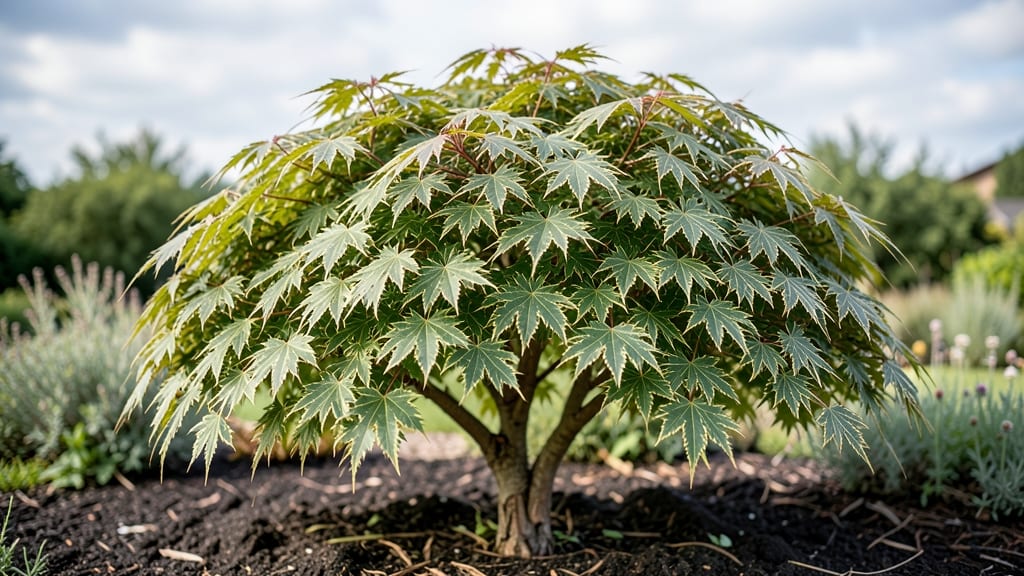
That striking contrast of a tree with dark and light green leaves transforms any shade garden into a living painting. 🌿 The Japanese maple Acer palmatum 'Butterfly' stands out with its delicate, creamy-white edges and deep green centers—perfect for creating focal points that draw the eye year-round.
Its graceful form and subtle movement in the breeze make it a natural conversation starter, especially when planted near a seating area or garden path.
This tree thrives in partial shade, making it ideal for spots where sunlight is limited but you still want bold visual impact. Pair it with hostas or ferns to echo the soft green tones while letting the variegation pop against darker foliage.
The contrast becomes even more dramatic in autumn when the leaves shift to warm hues, extending the season's interest well beyond summer.
For borders, try the variegated holly (Ilex crenata 'Golden Glow'), which offers a dense, evergreen backdrop with golden-yellow edges. Its compact size works beautifully along walkways or as a low hedge. Both trees add texture and movement, ensuring your garden feels dynamic even on still days.
The key to showcasing their foliage drama? Keep nearby plants from stealing the spotlight—opt for airy grasses or delicate perennials that complement rather than compete. With the right placement, these trees become the stars of your shade garden, offering beauty through every season.
📚 In This Guide
- What you need
- Instructions
- Tips and common mistakes
- Wrapping up and next steps
What you need
- ● Tree of choice: 1 Dappled Willow (Salix caprea 'Pendula') or Japanese Maple (Acer palmatum) (check for variegated cultivars like 'Bloodgood' or 'Emerald Lace').
- ● OR seeds from a trusted supplier (if starting from scratch—note: many variegated trees are grafted and won’t grow true from seed!).
- ● Planting site: Partial to full shade (4–6 hours of indirect light daily).
- ● Well-draining soil (amend with compost if needed—no soggy roots!).
- ● Tools: 1 garden trowel or shovel (for digging).
- ● 1 pruning shears (sterilized with rubbing alcohol).
- ● 1 wheelbarrow or bucket (for soil/compost).
- ● 1 watering can or hose with a gentle spray nozzle.
- ○ Soil amendments (optional but helpful): 5 gallons of organic compost or peat moss (to improve drainage).
- ● 1 cup of slow-release fertilizer (10-10-10 or acid-loving plant formula for maples).
- ● Mulch (2–3 inches of pine bark or shredded leaves to retain moisture).
- ● Tree stakes + soft ties (if planting in windy areas).
- ● Epsom salt (1 tbsp dissolved in water monthly for magnesium—great for yellowing leaves!).
- ● Decorative rocks or edging (to define the planting area).
- ● Shade cloth (if your garden gets unexpected sun spikes).
How to select and plant a variegated tree for stunning year-round contrast
Here's how to pick and plant a tree with dark and light green leaves for bold, low-maintenance shade.
🌱 Step 1: Choose the Right Variegated Tree for Your Space
Look for trees with natural variegation like Emerald Gold Hawthorn or Variegated Hornbeam. These thrive in partial shade and deliver striking dark-green-and-cream foliage year-round. Avoid trees labeled "sun lovers"—they'll burn the light-colored leaves in your shade garden.
Measure your space: mature height matters. A 15-foot tree fits small yards, while 20-25-foot varieties need room to spread their dramatic foliage. Check the root spread too—some variegated trees have aggressive roots that need space to avoid crowding nearby plants.
🪴 Step 2: Prepare the Planting Site for Optimal Growth
Dig a hole twice as wide as the root ball but only as deep. This prevents soil compaction around the roots. Mix the native soil with 20% compost to improve drainage—variegated trees hate soggy roots, which can cause leaf scorch.
Test your soil's moisture retention. Stick your finger 6 inches deep—if it feels dry after a week, your site needs better water retention. Amend with peat moss if needed. The goal is soil that drains well but holds moisture for 3-5 days between waterings.
☀️ Step 3: Plant at the Correct Depth and Stake for Support
Remove the tree from its container and loosen any circling roots with your fingers. Place it in the hole so the top of the root ball sits 1 inch above ground level. This prevents stem rot from sitting water. Fill around the roots with your amended soil, pressing gently to remove air pockets.
Stake only if needed—most variegated trees have strong root systems. If staking, use 2 stakes on opposite sides and tie with soft fabric strips. Water deeply to settle the soil, then add 2-3 inches of mulch around the base, keeping it 6 inches away from the trunk to prevent rot.
💧 Step 4: Water and Monitor for First-Year Establishment
Water deeply every 3-5 days until the tree shows new growth in 4-6 weeks. You'll know it's established when the soil stays moist 4 inches down between waterings. Overwatering is the #1 killer of variegated trees—yellowing leaves usually mean too much moisture.
Fertilize lightly in spring with balanced 10-10-10 fertilizer. Variegated trees need less food than their solid-green counterparts. Watch for leaf burn—if the light-green sections turn brown, you're overdoing it. A handful of compost around the base in early spring is often enough.
✂️ Step 5: Prune for Shape and Health in Late Winter
Wait until dormant season (late winter) to prune. Remove any dead branches first, then shape the tree by cutting just above outward-facing buds. Never remove more than 25% of the canopy at once—variegated trees are sensitive to heavy pruning.
Look for branches growing toward the center. These compete for light and weaken the tree's structure. Cut them back to a strong lateral branch. You'll see the variegation pop more dramatically after pruning—this is your reward for careful shaping.
Tips & tricks for perfect year-round variegated foliage
These simple strategies will help you maximize the dramatic contrast of your shade garden's star performer.
Tree Selection: When choosing between Emerald Gold Hawthorn or Variegated Hornbeam, consider your space's microclimate. Hawthorns handle wetter soils better, while Hornbeams tolerate drier conditions. I always check the nursery tag for "partial shade" confirmation—full shade varieties often lose their light foliage over time. The key is matching the tree's natural light requirements to your garden's actual sunlight patterns.
Soil Prep Strategy: That 20% compost amendment in Step 2 is non-negotiable for variegated trees. I like to mix in a handful of worm castings too—it boosts microbial activity that helps roots absorb moisture efficiently. For clay-heavy soils, add perlite to improve aeration while maintaining that crucial 3-5 day moisture retention window. The goal is creating a sponge-like environment that keeps roots happy without drowning them.
Planting Depth: That 1-inch above ground level position in Step 3 is critical—it prevents stem rot while allowing the roots to establish properly. I've seen too many newly planted variegated trees suffer from being buried too deep. After planting, press the soil gently around the base to eliminate air pockets, then water deeply to settle everything in place. This step makes all the difference in preventing early stress.
Pruning Technique: When pruning in late winter, I always make my cuts just above outward-facing buds at a 45-degree angle. This encourages new growth in the right direction. For variegated trees, I never cut into the variegated sections—always remove entire branches that lose their pattern. The result? More dramatic foliage contrast year after year.
Pro Tips for Tree With Dark And Light Green Leaves
- These simple strategies will help you maximize the dramatic contrast of your shade garden's star performer.
- Tree Selection: When choosing between Emerald Gold Hawthorn or Variegated Hornbeam, consider your space's microclimate.
- Soil Prep Strategy: That 20% compost amendment in Step 2 is non-negotiable for variegated trees.
Frequently asked questions
Got questions about those stunning trees with dark and light green leaves? You’re not alone! Here are some of the most common queries—and their answers—to help you find the perfect shade-loving star for your garden.
Why do some trees have variegated (dark and light green) leaves?
Variegation occurs when a tree’s leaves have different pigmentation due to genetic mutations or sunlight exposure. The lighter green or yellow patches often contain less chlorophyll, while the darker green areas produce more. This creates a striking contrast while still allowing the tree to photosynthesize efficiently. Think of it as nature’s way of adding drama to your shade garden!
How long does it take for a variegated tree to show its full color?
Patience is key! Young trees may start with mostly dark green leaves as they focus on root and trunk growth. Full variegation typically appears within 2–5 years, depending on the species. For faster results, choose mature nursery-grown trees—just ensure they’re well-acclimated to your climate before planting.
Can I grow a variegated tree in full shade?
Many variegated trees thrive in shade, but their color intensity may fade in deep shade. Opt for species like Daphniphyllum or Fatsia japonica, which handle low light beautifully. If your spot is very dark, supplement with a dwarf grow light (12–14 hours/day) to maintain vibrancy.
What should I do if my tree’s variegation starts fading?
Fading can happen due to over-fertilization, stress, or poor light. First, reduce nitrogen-heavy fertilizers (they encourage dark green growth). Next, check for pests or disease—yellowing edges or spots? Prune affected areas immediately. Finally, ensure the tree gets filtered sunlight (dappled light works best for most variegated varieties).
Are there low-maintenance alternatives to variegated trees?
Yes! If you love the look but want less upkeep, consider:
- Hostas (variegated varieties like ‘Francee’)
- Caladiums (stunning foliage, annual but easy)
- Japanese Maple ‘Bloodgood’ (deep red-purple leaves, minimal fuss)
- Hydrangeas (some cultivars have silver or cream variegation)
Wrapping up and next steps
Transforming your shade garden into a vibrant, year-round masterpiece is easier than you think!
Trees like the Dappled Willow or Japanese Maple bring that stunning contrast of dark and light green leaves, adding depth and drama without needing direct sunlight. 🌿✨ Their unique foliage not only enhances beauty but also creates a serene, inviting space perfect for relaxation.
Ready to take the next step? Start by researching the best variety for your climate and soil, then plant with confidence—your garden will thank you! For extra inspiration, sketch a rough layout or consult a local nursery expert to refine your vision.