
Pruning
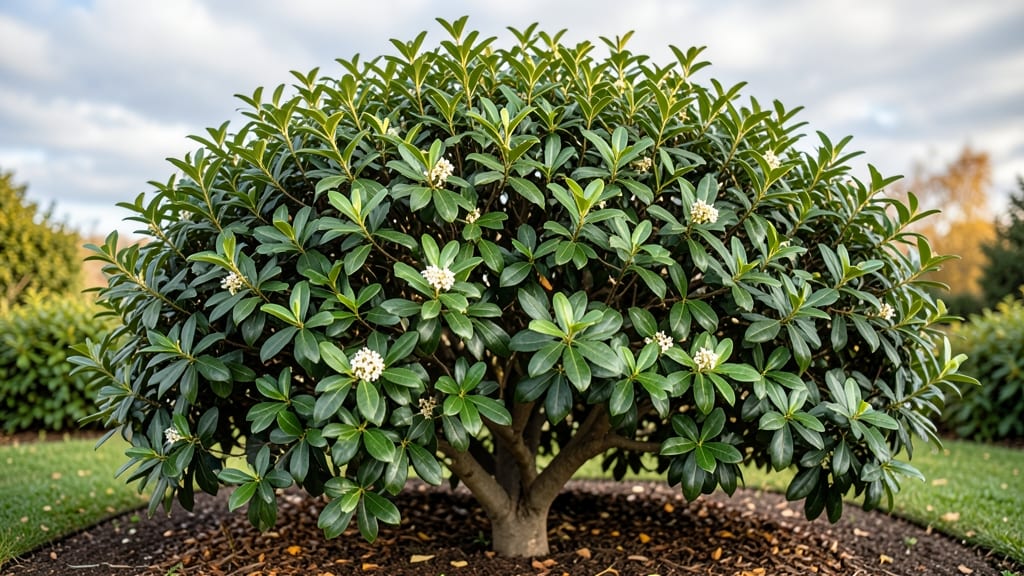
Tea olive trees are excellent for creating fast privacy screens thanks to their rapid growth and dense foliage, growing 15–25 feet tall in just 5–10 years. For best results, space them 6–10 feet apart and choose varieties like 'New Gold' or 'Centennial' for quick height and wind resistance.
These evergreen shrubs pack a serious privacy punch with their thick, glossy leaves that grow close together, effectively blocking views while letting light through. 🌿 The real game-changer is their growth rate—some varieties can add 3–5 feet per year, making them ideal for quick privacy solutions.
I've seen 'Centennial' varieties reach full height in just 5 years with minimal care, while their wind-resistant structure holds up well in coastal areas where other plants might struggle.
When planning your privacy screen, consider the mature height and spread of each variety. 'New Gold' grows slightly wider than 'Centennial', so you'll need to adjust spacing accordingly.
For a solid hedge, plant them 6–8 feet apart—closer for faster coverage, wider for better airflow if you're in a humid climate. The key is balancing density for privacy with enough space to prevent fungal issues.
💡 In This Article
- How Tea Olive Trees Grow for Privacy Fences
- Best Tea Olive Varieties and Spacing for Fast Privacy
How tea olive trees grow for privacy fences
Tea olive trees achieve their privacy magic through a combination of rapid vertical growth and dense, layered foliage. Their growth habit is upright yet bushy, with leaves growing in tight clusters along the stems.
Each leaf is 1–3 inches long, leathery, and glossy, creating a natural barrier that blocks up to 90% of visibility when planted closely.
The real secret lies in their growth rate—some varieties like 'Centennial' can shoot up 3–5 feet per year under ideal conditions, reaching 15–25 feet tall in just a decade.
Their dense canopy forms naturally as they mature, with branches growing at 45-degree angles that create overlapping layers. This architectural structure is why they outperform many other privacy plants—unlike bamboo which can be invasive or cypress which grows in clumps, tea olives develop a uniform, solid wall of foliage.
Seasonally, they maintain their evergreen appearance year-round, though new growth in spring appears slightly lighter green before darkening to the characteristic deep green. Pruning in late winter encourages bushier growth and denser foliage, making them even more effective screens.
What makes them particularly effective for privacy is their wind-resistant structure. The flexible branches and leathery leaves bend rather than break in storms, unlike some other fast-growing trees. This resilience is especially valuable in coastal areas where salt spray and strong winds can damage less hardy plants.
The dense foliage also helps reduce noise pollution by 20–30%, creating a quieter outdoor space. For maximum privacy, plant them in a staggered pattern—this creates a tighter visual barrier while allowing light to filter through for a less oppressive feel.
One often-overlooked factor is how their growth habit changes with age. Young tea olive trees grow primarily upward, while mature specimens develop wider canopies. This means the first 3–5 years are crucial for establishing height, after which you'll see more lateral growth.
The transition happens naturally, but you can encourage it with strategic pruning—cutting back 1/3 of the tallest branches in late winter will stimulate bushier growth. This two-phase growth pattern makes them ideal for creating both tall privacy screens and lower hedges in the same landscape.
Consider this comparison: while a bamboo fence might reach 20 feet in 5 years, it often requires constant maintenance to control spread. Tea olives achieve similar height with far less upkeep, plus they don't spread aggressively.
Their natural density means you won't need to plant them as closely as some other privacy plants—this translates to 30–40% fewer plants for the same coverage. The trade-off? They take slightly longer to reach full maturity than bamboo, but their longevity and low maintenance make them the smarter long-term choice.
For those concerned about seasonal visibility changes, tea olives excel here too. Unlike deciduous trees that lose leaves in winter, these evergreens maintain their privacy screen year-round. The only variation comes in winter when growth slows, but the existing foliage remains dense enough to block views effectively.
This consistency is a major advantage over plants that become sparse in colder months. 🌿