
Pruning
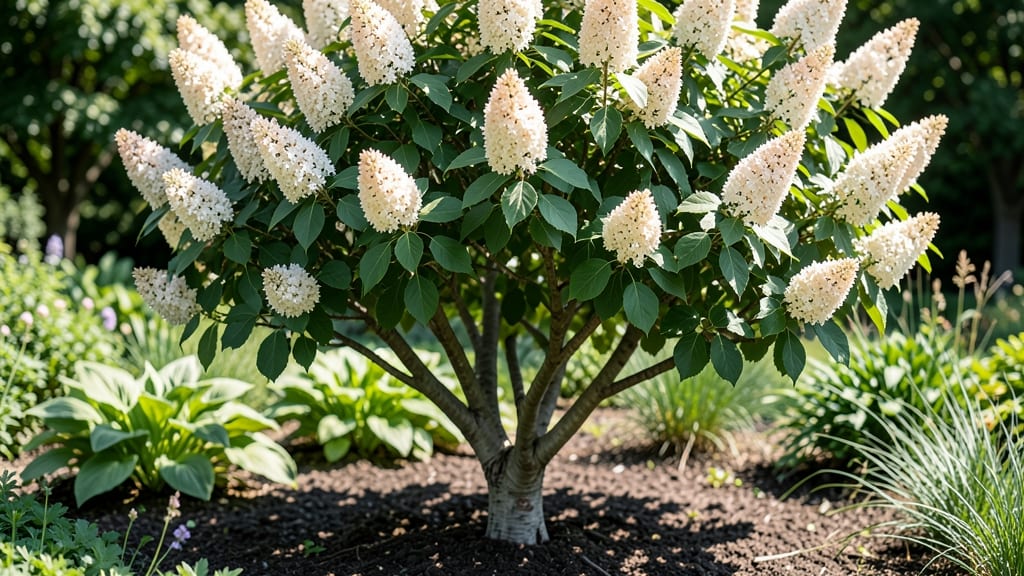
Pruning your Summer Snow Japanese tree lilac at the right time unlocks showstopping spring blooms—and I’ve learned the hard way that timing is everything. 🌸 This fragrant giant thrives in Zones 3-8, but its dormant-season trim (late winter or early spring) sets the stage for lush, fragrant blooms that perfume your yard for weeks.
The key? Prune after the last frost but before new growth appears, or you’ll cut off next year’s flowers.
You’ll need sharp bypass pruners, a ladder (these trees grow 15-20 feet tall), and a glove—because those thorns don’t play nice. Focus on removing dead, crossing, or overcrowded branches, cutting just above a outward-facing bud.
For older trees, thin the center to improve airflow, which prevents fungal issues. A 30-minute session now means three weeks of intoxicating blooms in spring, and fewer headaches from tangled branches later.
The payoff? A tree that looks like it belongs in a Kyoto garden, not your backyard. The creamy-white flowers (each with 12-20 petals!) smell like vanilla and honey, and the foliage turns a stunning gold in fall.
Pair it with dwarf conifers for contrast or spring bulbs at its base—just keep the bulbs away from the roots, or they’ll compete for nutrients. This isn’t just pruning; it’s sculpting a living masterpiece.
One pro tip: Mark your calendar for late February in cold climates or early March in warmer zones. And if you’re in a drought-prone area, mulch heavily—Summer Snow tolerates dry spells once established, but young trees need deep watering every 10-14 days.
The first year after planting is when you’ll see the most dramatic growth, so don’t skimp on the care now for blooms later.
📚 In This Guide
- What you need
- Instructions
- Tips and common mistakes
- Wrapping up and next steps
What you need
- ● Pruning shears: Bypass pruners (sharp, clean, and sterilized with rubbing alcohol or bleach solution) – 1 pair.
- ● Loppers: For thicker branches (½"–1.5" diameter) – 1 pair.
- ○ Pruning saw: For branches >1.5" in diameter – 1 saw (optional but handy for mature lilacs).
- ● Gloves: Heavy-duty, cut-resistant – 1 pair (to protect from thorns!).
- ● Disposable pruning bags: For collecting clippings – 1–2 bags (or a bucket lined with a plastic bag).
- ● Rubbing alcohol (70%+) or bleach solution: For sterilizing tools between cuts – small bottle.
- ○ Permanent marker: For labeling cuts (optional, if saving cuttings) – 1.
- ● Timing: Prune during late winter to early spring (before buds swell)—ideal temps: 40–50°F (4–10°C).
- ● Weather check: Choose a dry, calm day (no rain for 24 hours post-pruning).
- ● Safety gear: Sunglasses and long sleeves (to avoid sap irritation).
- ● Tree assessment: Inspect for dead/diseased branches before pruning.
- ● Hand pruners: For precision trimming of small branches – 1 pair.
- ● Tree wound dressing: Pruning sealant (controversial but useful for large cuts) – small tube.
- ● Notebook: To sketch pruning plan or track growth – 1.
- ● Compost bin: For recycling healthy clippings.
Step-by-step pruning guide for Summer Snow Japanese tree lilac
This is how I transform a leggy, overgrown Japanese tree lilac into a showstopping spring bloomer.
✂️ Step 1: Time Your Pruning for Dormant Season
Prune your Summer Snow Japanese tree lilac late winter to early spring, just as buds begin to swell but before new growth emerges. This timing ensures you remove last year's spent blooms while preserving next season's flower buds hidden along the stems. I always mark my calendar for February to March in most climates—wait until temperatures consistently stay above 30°F at night to avoid frost damage.
If you prune too early, you risk cutting off flower buds before they form. If you wait too late, you encourage leggy growth. Watch for bud swell—those plump, rounded buds along the stems signal it's time. In warmer climates, you can prune as late as early April, but never after buds break open.
✂️ Step 2: Remove Dead, Diseased, or Crossing Branches First
Start by eliminating dead, diseased, or damaged branches—these are easy to spot as they're brown, brittle, or oozing sap. Next, look for crossing or rubbing branches that create wounds where pathogens can enter. I use sharp bypass pruners to make clean cuts just outside the branch collar (the swollen area where the branch meets the trunk). This prevents unsightly stubs and promotes faster healing.
Don’t skip this step—even healthy lilacs benefit from better airflow. Remove any branches growing inward or downward, as these compete with upward growth and block sunlight. Aim to open up the center of the plant so light reaches all branches evenly. You’ll notice the plant’s natural shape emerge as you work.
✂️ Step 3: Thin Out Overcrowded Areas for Airflow
Japanese tree lilacs thrive when they receive good air circulation, which this step ensures. Look for areas where branches are too close together—this is where fungal diseases like powdery mildew love to hide. Select 1-2 of the thickest, healthiest branches in each cluster and prune the rest back to their origin. I like to step back every few minutes to visualize the plant’s structure; it’s easier to see what to remove from a distance.
Thinning isn’t about reducing size—it’s about selective removal to encourage stronger growth. Never cut more than one-third of the plant’s total volume in a single season. If you do, you risk shocking the lilac and weakening its ability to produce blooms. Watch for new shoots emerging from the base—these indicate the plant is responding well to the pruning.
☀️ Step 4: Shape the Lilac for Balanced Growth
Now it’s time to refine the shape. Japanese tree lilacs naturally grow in a rounded, vase-like form, so I focus on maintaining that silhouette. Start by identifying the main scaffold branches—these are the largest, sturdiest branches that form the plant’s framework. Prune any branches that grow at sharp angles (less than 45 degrees) from the trunk, as these are more prone to breaking.
Use your pruners to shorten overlong branches by cutting just above a bud or side branch. Aim to create a graduated effect, where branches get progressively shorter as you move up the plant. This encourages a fuller, more compact shape. Step back frequently to check your progress—you’re looking for a balanced, open center with no dense clusters.
🌱 Step 5: Clean Up and Fertilize for Spring Growth
After pruning, sterilize your tools with rubbing alcohol to prevent spreading disease. Remove all pruned branches and debris from the area—this reduces hiding spots for pests and pathogens. I also apply a balanced, slow-release fertilizer (10-10-10) around the base of the plant, following the package instructions. This gives the lilac the nutrients it needs to recover and prepare for spring blooming.
Water deeply after fertilizing to help the roots absorb nutrients. Mulch the base with 2-3 inches of organic mulch (like shredded bark) to retain moisture and regulate soil temperature. Avoid piling mulch against the trunk—keep it 2-3 inches away to prevent rot. Within 4-6 weeks, you’ll see new growth emerging from the pruned areas, signaling the lilac is healing and preparing for its spring display.
Tips & tricks for perfect Summer Snow Japanese tree lilac pruning
Real talk: Pruning your Japanese tree lilac can feel intimidating, but these pro tips will help you achieve that showstopping spring display without hesitation.
Timing is Everything: The February to March window is non-negotiable for your Summer Snow variety. I can't stress enough how critical this is—those plump, rounded buds along the stems are your visual cue. If you're in a warmer climate, you can push it to early April, but never wait until buds break open. I've seen gardeners miss this window completely and end up with sparse blooms the following year. Trust me, mark your calendar now!
Tool Selection Matters: Sharp bypass pruners are your best friend for clean cuts that heal properly. I've ruined more cuts than I'd like to admit using dull tools—those jagged edges invite disease. Always sterilize your tools with rubbing alcohol before and after pruning to prevent spreading pathogens between cuts. And remember, the branch collar (that swollen area where branches meet the trunk) is your guide—cut just outside it for the cleanest results.
Visualize the Final Shape: Step back every few minutes while working—this is how you avoid over-pruning and create that balanced vase shape. I like to imagine the plant's natural growth pattern: main scaffold branches should be sturdy and spaced evenly, with smaller branches creating that graduated effect. If you're unsure, take a photo before you start so you can reference the original structure as you work.
Fertilizer Timing Tip: Apply that 10-10-10 balanced fertilizer immediately after pruning, but don't forget to water deeply first. This helps the roots absorb nutrients more effectively. I've noticed lilacs that get fertilized right after pruning show new growth within 4-6 weeks, while those that wait too long take much longer to recover. The key is giving your plant the nutrients it needs right when it's most vulnerable after the pruning process.
Pro Tips for Summer Snow Japanese Tree Lilac
- Real talk: Pruning your Japanese tree lilac can feel intimidating, but these pro tips will help you achieve that showstopping spring display without hesitation.
- Timing is Everything: The February to March window is non-negotiable for your Summer Snow variety.
- Tool Selection Matters: Sharp bypass pruners are your best friend for clean cuts that heal properly.
Frequently asked questions
about pruning Summer Snow Japanese Tree Lilac—because even experts need a little clarity! Here are answers to the most common questions to help you trim with confidence.When is the best time to prune for summer blooms?
The ideal time is late winter to early spring before new growth begins—typically February to March in most climates. This ensures you’re not cutting off next year’s flower buds, which form on old wood. Pro tip: Avoid pruning after blooms appear, as this can reduce next season’s floral display.
How much can I trim without harming the tree?
For Summer Snow Japanese Tree Lilac, you can safely remove up to one-third of the plant’s total growth per year. Focus on thinning out crowded branches and shaping the canopy. Avoid heavy pruning—this tree blooms on old wood, so drastic cuts may reduce flowers. Think “less is more”!
What if I miss dormant season pruning? Can I still trim later?
Yes, but with caution! If you skip dormant season pruning, wait until right after flowering (late spring) to do light maintenance. Avoid heavy cuts—this could stress the tree and reduce next year’s blooms. Key rule: Never prune in fall, as new growth may not harden off before winter.
Are there alternatives if my tree isn’t blooming well?
If your Summer Snow has sparse blooms, check these first:
- Sunlight: Ensure it gets 6+ hours of direct sun daily.
- Soil: Amend with compost for better drainage.
- Fertilizer: Use a balanced, slow-release formula in early spring.
- Age: Young trees (under 3 years) may need patience to establish.
What should I do if my cuts bleed or ooze sap?
Sap bleeding (called “weeping”) is normal but can attract pests. To minimize it:
- Prune on a dry, cool day (avoid hot afternoons).
- Use clean, sharp tools to make precise cuts.
- Seal larger cuts (over ½ inch) with pruning sealant (optional for small trees).
Wrapping up and next steps
Pruning your summer snow Japanese tree lilac during its dormant season is the secret to vibrant, abundant blooms come spring! By following the right techniques—like shaping, thinning, and removing dead wood—you’ll ensure a healthier plant and a stunning floral display. 🌸
Ready to transform your garden? Grab your tools, mark your calendar for late winter or early spring, and give your lilac the care it deserves. Your future blooms will thank you!
- Next step: Schedule your pruning session and start with a clean workspace.
- Bonus tip: Take before-and-after photos to track your lilac’s progress!